


Tune in to listen
Bounce FM

Right now, the film has given itself less room to fail than it started with.
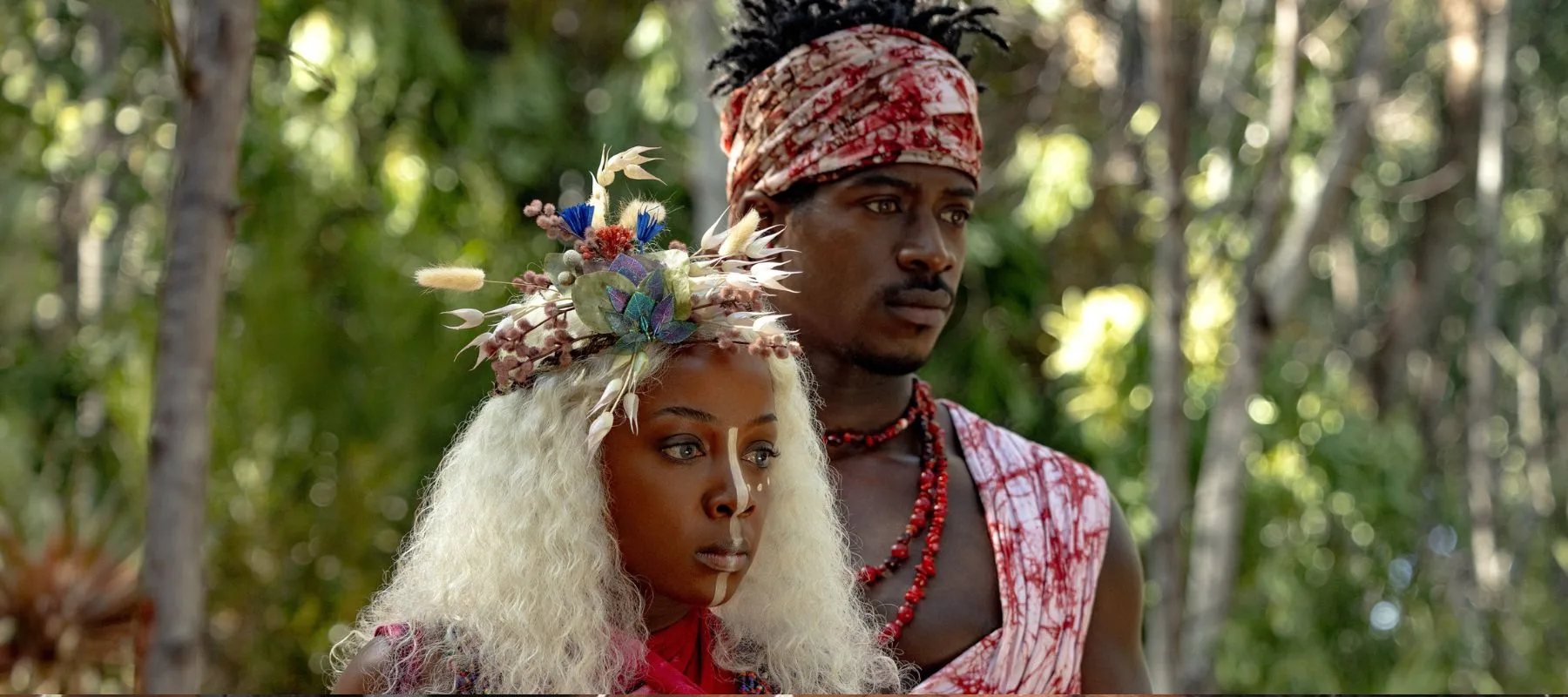
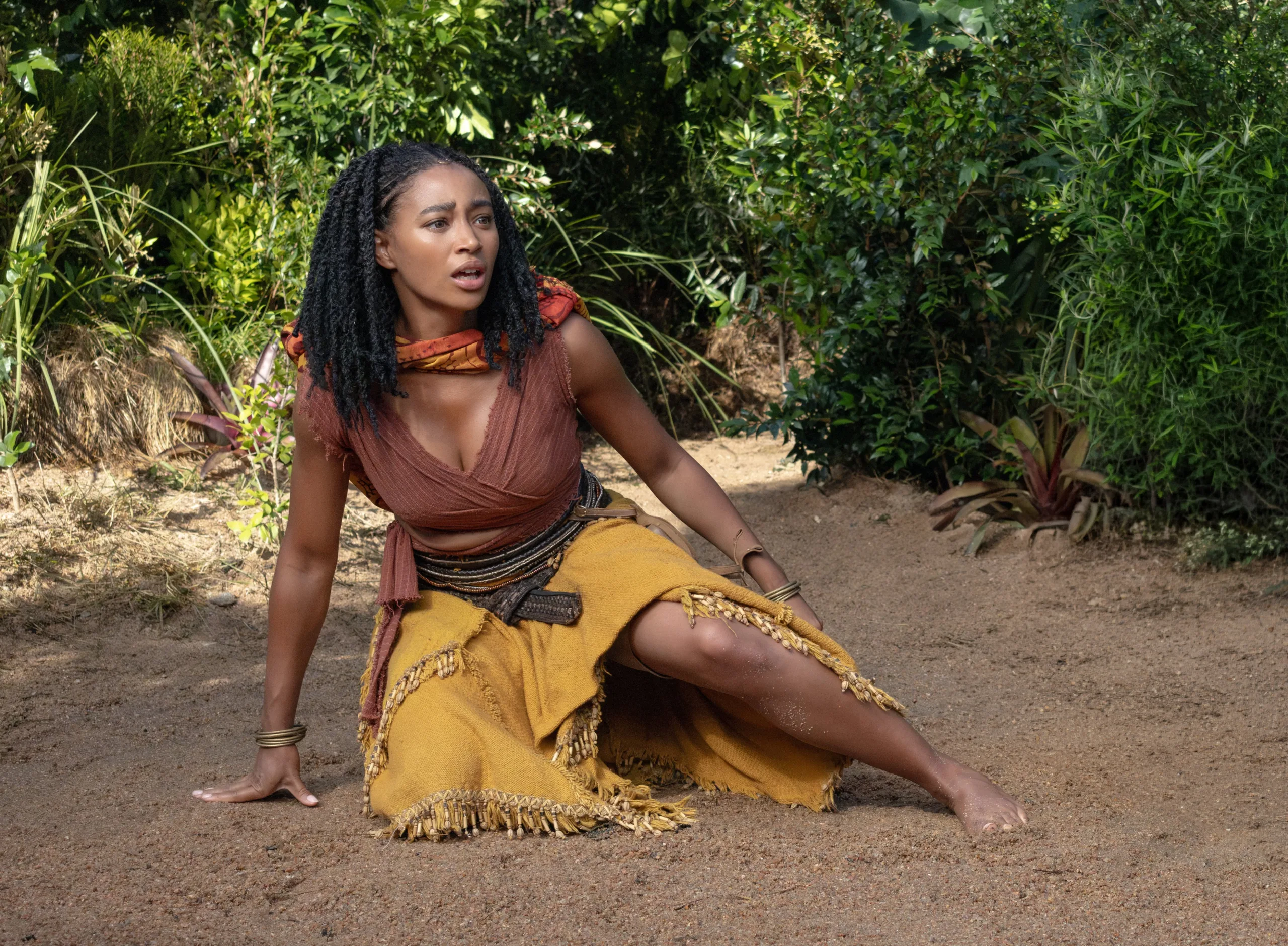
We got our first look at the characters in the screen adaptation of Tomi Adeyemi’s 2018 fantasy novel Children of Blood and Bone last Thursday, July 16, 2026. Since casting became public in January 2025, controversy has rarely been far from the project, set to hit theatres on January 15, 2027. The new images have only sharpened a question that’s been building for over a year: whether the drama surrounding this film could keep it from succeeding at all.
— Children of Blood and Bone (@ChildrenofBandB) July 16, 2026
— Children of Blood and Bone (@ChildrenofBandB) July 16, 2026
The casting was the first flashpoint. A book built on Yoruba mythology arrived with no explicit Yoruba representation among its leads, and the near-consensus among Africans, especially Yoruba people, was that the film would deliver another round of strange accents pretending to be Yoruba. Then came the louder controversy: Amandla Stenberg, a biracial actress, cast as Princess Amari, a character described in the novel as “copper complexion” and told at one point that she’s “far too dark.” Colourism is one of the book’s central themes, which made the casting hard to square; something Stenberg herself once seemed to understand, having stepped back from playing Shuri in Black Panther in 2018 because “there are spaces that I should not take up.” Viola Davis was also cast as Mama Agba, an elderly woman many fans can expect to sound nothing like anyone from a Yoruba town.
Then, more recently, came the second blow. In shock social media posts on Saturday, July 4, Adeyemi announced she was no longer involved in the film’s decision-making, despite Paramount confirming in 2023 that she’d co-write the screenplay with director Gina Prince-Bythewood. In now-deleted messages, she appeared to tell Stenberg never to contact her or use her name again. The messages from February 2025, a month after the film’s cast became public, surfaced weeks after Stenberg claimed in a TikTok that Adeyemi had been supportive of her casting, crediting the racist backlash Stenberg faced for playing Rue in The Hunger Games (2012) as partial inspiration for her Legacy of Orisha trilogy. Adeyemi has never confirmed or denied that account, but the message suggests she may see their purported conversation differently.
not after defending the casting choice is she saying she will not watch the children of blood and bone movie or support it! pic.twitter.com/tY39u8ul97
— • (@chaoticblkgirl) July 4, 2026
There are really two questions buried in all of this: will the casting controversy keep audiences away, and could the conflict behind the scenes have made the film worse to begin with? They get treated as one big cloud of “drama,” but they’re not the same problem, and they have different implications for the upcoming fantasy film.
Probably not in the way the loudest critics fear, but it will likely shape how the film is watched, not whether it’s watched. Most of this backlash has played out in a fairly contained space: Book Twitter, Nigerian social media, the corner of the internet that’s tracked every casting update since January 2025. The average moviegoer walking past a poster in January won’t know about the deleted DMs or the colourism debate. They’ll see Viola Davis, Idris Elba, Damson Idris, Regina King and Cynthia Erivo in an epic Black fantasy film, and for a lot of people, that’s enough to buy a ticket.
But for the audience the book was actually written for — Black women, Yoruba readers, anyone who saw themselves in a story explicitly about the danger of being told you’re “too dark” — the casting is not internet noise. It is one of the story’s core conflicts, showing up in who gets to play it. That audience won’t necessarily boycott, but they’ll watch with their arms crossed, ready to clock every moment the film either earns its themes or contradicts them. Controversy like this rarely kills a box office opening. It does, however, raise the bar for how forgiving the reception will be once people are actually in their seats.
This is the harder question, and the track record isn’t encouraging. Adeyemi and Paramount are far from the first author-studio pair to fall out, and when it happens, it’s often a warning sign about what’s already on the screen. Netflix’s fantasy drama The Witcher is the clearest parallel: author Andrzej Sapkowski spent years at odds with Netflix over the show’s direction, telling Vienna Comic-Con in 2023 that he’d offered ideas but “they never listened to me.” The show’s drift from his books eventually cost it lead actor Henry Cavill and a chunk of its audience, and Season 4 landed to some of its worst reviews yet last October. The action spy film Stormbreaker (2026) tells a similar story: author Anthony Horowitz, who like Adeyemi wrote the screenplay himself, suggested that the film was not a box office success partly because movie executives had watered the story’s grit down into something safer and more family-friendly.
I’m just excited to see a Yoruba-inspired fantasy given this level of scale, budget and attention 🥹😭
And I hope the drama around this doesn’t ruin the potential this has to really kick off so much more! What are your thoughts on #childrenofbloodandbone so far? pic.twitter.com/2FZQB9Oj42
— sofi 😊 (@the_odditty) July 16, 2026
What both cases share with Adeyemi’s situation is a writer being sidelined from a story that was originally theirs to shape. The Nigerian-American author was announced as co-screenwriter, credited as executive producer, and is now saying she wasn’t part of “final decisions.” Although Adeyemi did not mention why she stepped aside from the action fantasy film, not being involved in the final decisions is a structural sign that whatever ends up on screen may not fully reflect the vision that made over three million people buy her books in the first place.
If Sapkowski and Horowitz are any indication, that kind of rift tends to show up in the finished film, whether or not audiences ever hear the backstory.
Not exactly. But “not doomed” and “living up to its potential” are different outcomes, and right now the film has given itself less room to fail than it started with.
Ultimately, whether the Children of Blood and Bone film adaptation succeeds will depend on something far simpler than deleted posts or casting discourse: whether it captures the emotional truth that made millions fall in love with Adeyemi’s world in the first place. Audiences have forgiven controversial productions before, just as they have abandoned faithful adaptations that lacked heart. But every off-screen controversy raises the standard the film must now meet. In January, it won’t just be judged as a fantasy blockbuster; it will be judged as proof that one of Africa’s biggest literary success stories was worth bringing to the screen.