


Tune in to listen
Bounce FM

The biggest winner from Sunday’s events is not the Nigerian voter. It is Bola Tinubu.
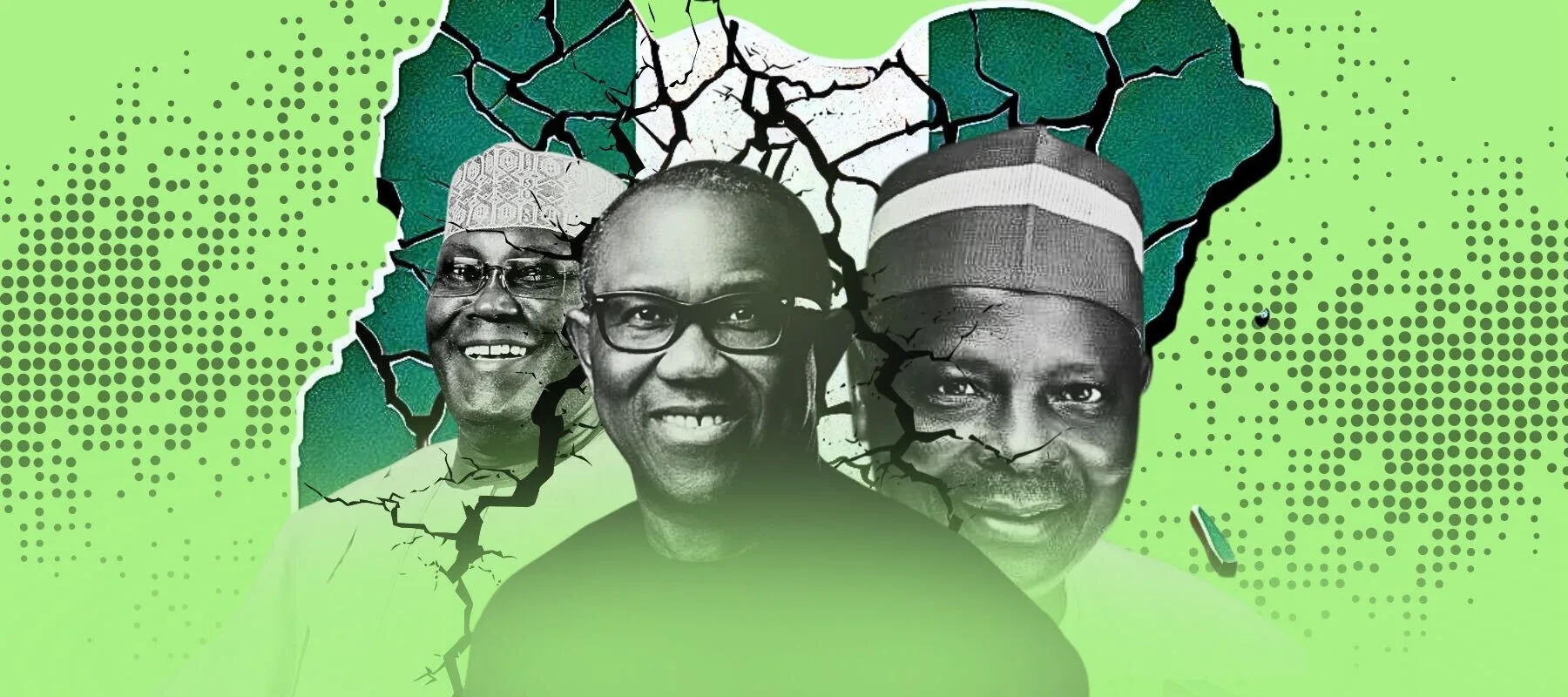
“This will just take us back to what happened in 2023 when we had divided votes by the opposition.”
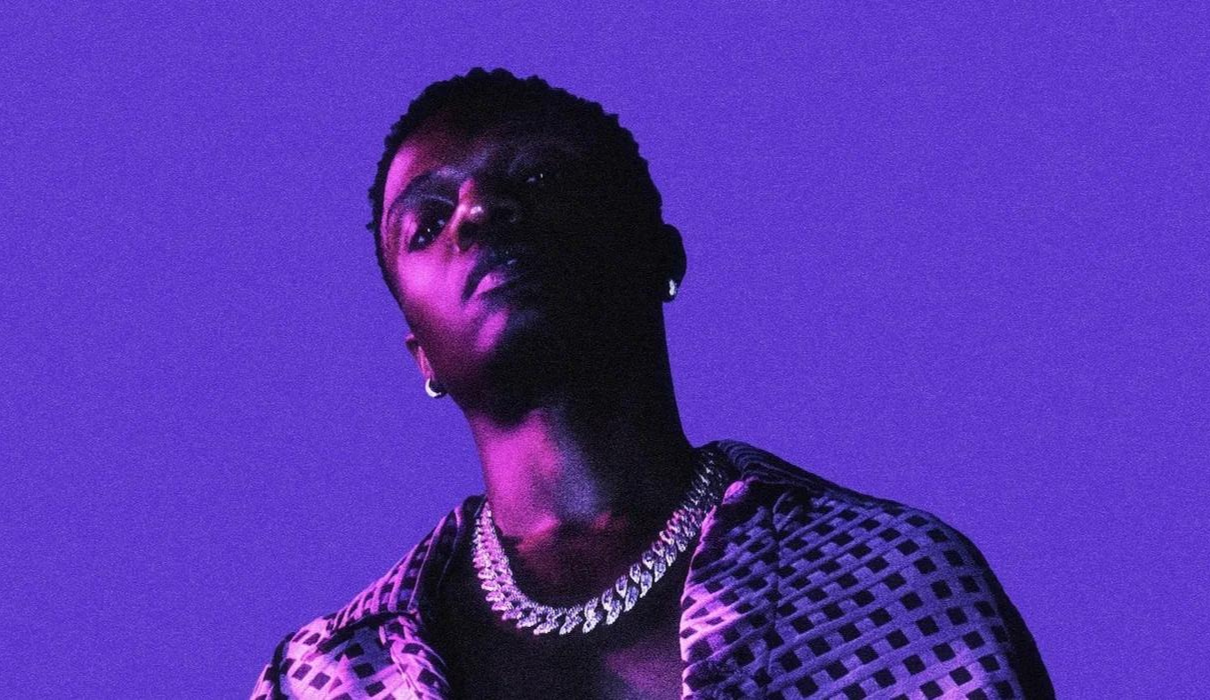
That was how Arise News’ political editor and veteran journalist, Sumner Sambo, reacted to the unravelling of Nigeria’s opposition coalition over the weekend. On Sunday, May 3, 2026, Peter Obi and Rabiu Musa Kwankwaso, the 2023 presidential candidates of the Labour Party (LP) and New Nigeria People’s Party (NNPP), announced that they were leaving the African Democratic Congress (ADC), which had been billed to be the mega party to take on the ruling All Progressives Congress (APC) in the 2027 general election.
Fellow Nigerians, good morning.
I woke up this morning after my church service with a deeply reflective heart, and despite every constraint, I felt compelled to share these thoughts with you.
Many people do not truly understand the silent pains some of us carry daily—the…
— Peter Obi (@PeterObi) May 3, 2026
The ADC platform launched in July 2025 to high hopes, dreaming of the feat the APC managed in 2015 when it became the first party to unseat an incumbent president in Nigeria’s history. As the APC did between 2013 and 2015, ADC had recruited opposition bigwigs, including serial presidential contender Atiku Abubakar, Obi, and Kwankwaso, to face President Bola Tinubu together. On paper, it was the dream team. Atiku (29.1%), Obi (25.4%), and Kwankwaso’s (6.4%) share of the 2023 votes was around 60.9% vs Tinubu’s 36.6%. So, it made sense for them to come together to defeat their common enemy — or so they thought.
While the then newly formed APC stuck together for more than two years to secure a historic victory, today, the ADC is unravelling before even taking off. It kept Obi for only four months and Kwankwaso for barely a month. The opposition is heading for the rocks again in 2027 because they lack the discipline to play nicely together.
The contrast with 2013 is stark.
When the Action Congress of Nigeria (ACN), Congress for Progressive Change (CPC), All Nigeria Peoples Party (ANPP), and a faction of the All Progressives Grand Alliance (APGA) came together to form the APC, they did not sign a coalition agreement with escape clauses; they dissolved their parties entirely. There was no going back. The men who built those parties surrendered their individual political identities for a single, legally registered entity because they understood a brutal truth: they had been losing to the PDP for years and would keep losing unless they stopped fighting each other.
And when they got to the negotiating table, real sacrifices were made. The most striking example involves the man now sitting in Aso Rock. Tinubu, the mastermind of the merger, initially wanted to be Muhammadu Buhari’s running mate. A Muslim-Muslim ticket was considered but the political risks were too high for a country as religiously charged as Nigeria. So Tinubu stepped back, conceded the slot to his ally Yemi Osinbajo, swallowed his ambition, and waited. Even at the 2014 APC primary, Kwankwaso and Atiku came second and third respectively to Buhari. They lost. They stayed. They campaigned for the man who beat them.
That was pragmatism at its finest. The current opposition doesn’t seem to know what that word means.
Kwankwaso, the same man who accepted defeat in 2014 and worked for Buhari’s victory, has now bolted with Obi to the Nigeria Democratic Congress (NDC), leaving Atiku behind in the ADC. No hard conversations about who brings what votes to the table. Just exit.
"The condition of our nation and the urgent need to rescue Nigeria, informed my decision to leave ADC for NDC."
Yesterday, I formally joined the Nigerian Democratic Congress (NDC), alongside my dear brother, Engr. Dr Rabiu Musa Kwankwaso, with one clear purpose: to continue the… pic.twitter.com/0wlsQs1xGU
— Peter Obi (@PeterObi) May 4, 2026
What the current opposition doesn’t seem to understand is the lesson Tinubu spent years learning before he ever ran for president. Coalition-building is not a press statement. It is not a summit in Ibadan with a declaration that no one holds themselves to. It is unglamorous, grinding, negotiating power-sharing, deciding who stands down, managing egos, and then actually following through when it hurts. It requires people to want the coalition more than they want the ticket.
Tinubu wanted the ticket. But he wanted power more. So he built the machine first, secured the machine’s loyalty, and collected his reward eight years later. The current opposition leaders want the ticket now, the machine later and that is why there is no machine.
The biggest winner from Sunday’s events is not the Nigerian voter. It is Bola Tinubu. A divided opposition is not a problem for his re-election campaign, it is the dream. Every defection, every dramatic exit press conference is another reason his team can point to and say: these people can’t run a party, how will they run a country?
If Obi, Kwankwaso, and Atiku cannot sit in the same room long enough to hold a primary, they will spend the next six months explaining their party choices while Tinubu runs the country and consolidates his incumbency advantage. Their dream of unseating the president will remain exactly that: a dream. And like 2023, they will be left wondering how they lost to the same man again, with more votes between them than he ever had.