



Tune in to listen
Bounce FM

June 12 marked 27 years of uninterrupted democracy, yet we are forced to remember the songs that captured where we were and where we are now.
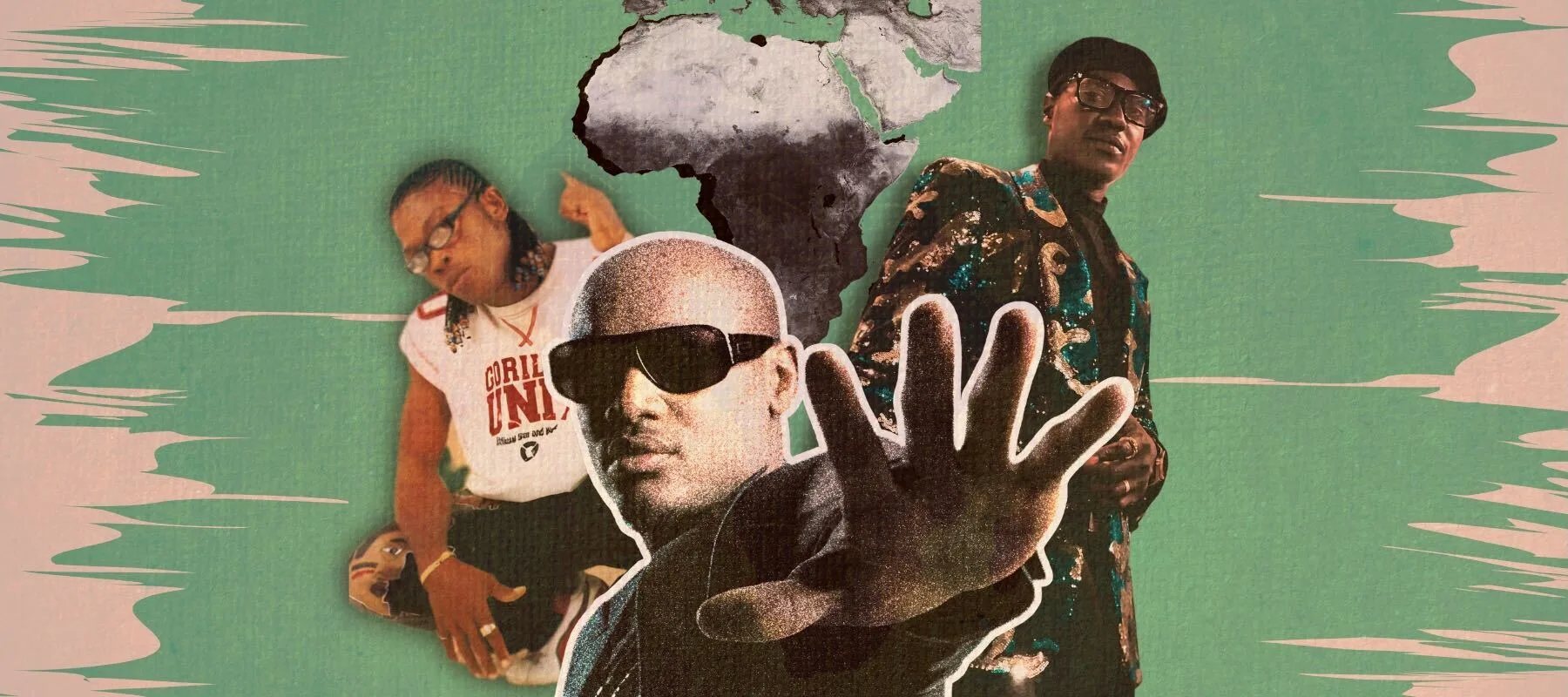
Before the seismic shift of Afrobeats’ commercialisation, Nigerian music was a mouthpiece for socio-political charge. Despite the hedonism reflected in the indigenous and contemporary music at the time, artists made music that spoke to the realities of people and contested the state of the nation in their era. While older-generation musicians like Fela Kuti and Majek Fashek were notably revered for their heavy criticism and outcry, contemporary artistes like Eedris Abdulkareem and African China championed socially conscious music as part of their artistry.
Beneath the country’s journey into independence and democracy, Nigerians have grappled with more socio-economic and political problems than they have enjoyed the dividends. But what better way to document the country’s frustrations and unresolved realities than through the music that has also echoed aspirations and triumphs?
June 12 marked 27 years of uninterrupted democracy, yet we are forced to remember the songs that captured where we were and where we are now. Here are 10 socio-political songs that still explain Nigeria today.
Although Fela Kuti built a legacy mostly by calling out the military government, “Shuffering and Shmiling” was a jab at the people with religious psychosis. The track invoked Marx’s view of religion as an opiate, showing how organised religion anaesthetised hardship, enriched its leaders and paralysed the poor masses into mindless submission.
For a country largely driven by multi-religion and multi-ethnicity, its biggest threat is the very cause that powers its movement to date. And Fela didn’t mince words when throwing jabs in the track.
Lagbaja’s prominence in the late early 2000s didn’t deter him from speaking on the situation of the country at the time. This classic song captures the several challenges Nigerians have endured despite the clamour for a democratic government. Hence the title “Suuru Lere”, which translates to patience or endurance in this context.
The song is a reminder that, to this day, the same challenges of corruption, electoral malpractice, bad governance, tribalism, and poverty still linger 63 years after independence.
Perhaps no song has more succinctly and explicitly captured the realities of Nigeria since her independence than the classic rap song “Jaga Jaga” by Hip-hop legend Eedris Abdulkareem. The song was a raw narrative of what the common man faces in Nigeria, including armed robbery, bribery, and corruption.
The 2004 track resonated with many Nigerians and rose to prominence, prompting backlash from President Obasanjo at the time and a ban on the radio. Over two decades later, the song’s prominence transcended its era, and its lyrics remain relevant to the plight of the country.
Ajegunle music legend African China built a legacy through his sociopolitical songs that resonated with the hearts of many Nigerians. His blend of reggaeton and dancehall sounds served as a tool for socially conscious music.
In 2006, he released the hit track “Mr President,” a reminder to political leaders to govern rightly and ensure there’s justice, fairness, and equity in the land irrespective of status, religion, or tribe. Two decades later, Nigerians are still making the same plea that African China once did.
With 2baba’s prominence in Afrobeats hit records in the early 2000s, one would think the country was devoid of socioeconomic and political dilemmas. Yet, 2baba’s 2006 release, “4 Instance,” was an outcry against the high level of corruption and bad governance in Nigeria.
And to this day, this single proves that history continues to repeat itself, as corruption and bad leadership remain features of the mandate politicians promised.
It has been nearly two decades since Asa’s “Fire on the Mountain” dropped, yet the references made in the track feel like reading a recurring news headline. The track remains a hauntingly precise mirror of Nigeria’s contemporary socio-political landscape.
In the song, Aṣa sings of a literal fire raging on the mountain, while citizens choose to ignore it. This perfectly mirrors today’s reality, in which institutional collapse, inflation, and insecurity have become so normalised that survival is treated as a passive, everyday routine. It’s 2026, yet the fire Aṣa warned about in 2007 is no longer in the distance — it is at the doorstep.
In 2007, Igbo rapper 2shotz and Yoruba singer 9ice joined forces to be advocates for the people with the classic “Make Dem Talk.” In this song, the duo sing and question the cost of living, the state of the economy, and police brutality. In 9ice’s chorus, he ends with a question about why staple food, garri, seems to be inflated — a problem many Nigerians would still deal with almost two decades later.
2Shotz’ two verses delve into his Lagos experiences, his constant battle with louts, and the police harassment. 9ice’s last verse is a call to action to the citizens to be proactive in the face of lingering problems. A message that has proven to be timeless.
Sound Sultan’s “Ole (Bushmeat),” featuring 2Baba, originally released in 2008, is a powerful political satire that addresses corruption and bad governance in Nigeria. Sound Sultan, who was always an advocate for socially conscious music, used sharp, witty storytelling to highlight the absurdity of massive societal inequality, where public funds vanish while everyday citizens struggle to survive.
The song centres around the popular Yoruba proverb, “One day, the bushmeat will hunt the hunter.” It implies that the exploited masses will eventually reclaim their power from the corrupt politicians. While the day is yet to come, the song serves as a conscious reminder of where we are now and a future for citizens when they rise for change.
Perhaps the most critically acclaimed socio-political song from the modern hip-hop and Afrobeats era, “This is Nigeria” by Falz, details the problems of Nigeria with specific references to political moments, insecurity and social injustice.
The Childish Gambino’s “This is America” cover came with a controversial video doing more justice to the message despite the heavy backlash. Between audio cuts from his father, Femi Falana, and other references, Falz penned his name into the history books with this song. One that isn’t lost to time but continues to echo.
In his breakout year, Wande Coal took listeners through a retrospective study with “Se Na Like This.” The song briefed Nigeria’s beautiful past, including moments like when one got a job immediately after graduation, when Nigerians flew to London without visas, and when one Naira was equivalent to one Dollar.
Despite regular play at parties, the track succinctly captured the daily economic hardship Nigerians face, with a clamour for Nigerians to demand change. The Afrobeats legend hasn’t released similar music ever since, yet the message of the song still reverberates.