



Tune in to listen
Bounce FM

What these ads understood, and many today don’t, is that memorability comes before conversion.
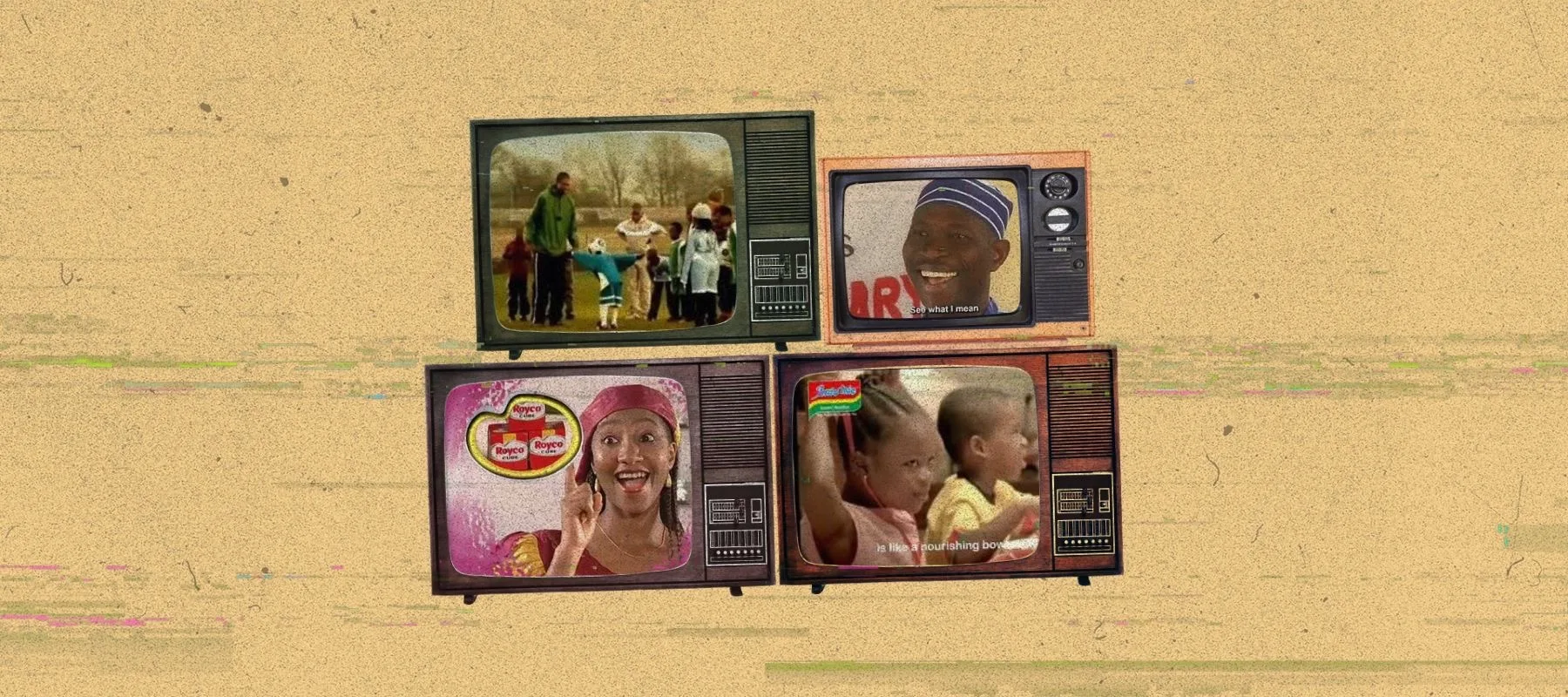
When was the last time a Nigerian TV ad made you stop everything and watch? Not scroll. Not mute. Watch. Because there was a time when ad breaks were part of our favourite TV shows.
Today? We skip, mute, and scroll without guilt. To be fair, there have been a few standouts in the last decade — Airtel’s “444” had real jingle energy and GTBank’s “737” ad was enjoyable — but they’re the exception.
Something has changed. So let’s go back to the ads that did more than sell. The ones that became part of who we are. Here are 10 classic Nigerian TV ads that were pure cinema:
Perhaps the most culturally impactful Nigerian TV ad ever made. The setup was simple: neighbourhood kids gather daily at a woman’s home because of how generously she cooks Indomie noodles. They erupt into a jingle that took over every street in Nigeria when she brings out their favourite meal: “Mama, do good o! She cook us Indomie, Indomie sweet well well!” If you were a child in 2010, that song lived rent-free in your head. And if you’re honest, it made you beg your mum for Indomie noodles immediately.
The ad worked because it captured something real: the communal warmth of Nigerian childhood, the culture of neighbours feeding neighbours’ children, food as love. Indomie became a symbol of care, not just a meal. In 2024, the brand revived it with a time-skip concept showing the same kids grown up. The internet went wild. That’s how you know something became culture.
Baba Blue was another iconic TV ad that’s stuck in the memory. A lawyer is trying to defend his client in court, but his catarrh has completely destroyed his voice. He’s stammering, embarrassing himself, losing the case. Then Baba Blue steps in, as he always did, and hands over a Vicks Blue menthol sweet. Voice restored. Argument delivered. Case won. Client free.
The twist? As the client gushes with gratitude to Baba Blue, he accidentally blurts out, “I swear, I no go do am again!”, confessing to the very crime he was just acquitted for. It was genuinely funny and memorable.
Every Nigerian child of a certain age watched this ad and immediately decided they were going to be a footballer. The story follows a young Nwankwo Kanu growing up, showing ridiculous skill even as a boy on the streets. A market woman watches him save a tin of Peak Milk from falling with a nimble foot move, and tells him in that unmistakable grandmother voice: “Papilo, I know say one day, you go make us proud.” And he did. Atlanta ’96, the Olympics gold, Arsenal, all of it.
Peak Milk made you believe the milk had something to do with Kanu’s greatness. It tied nutrition to national pride in a way no textbook could. Papilo wasn’t just a footballer. He was every Nigerian child’s proof that dreams were possible.
It’s election season in Nigeria, but it is a good bet to wager that the 2027 campaign will not give us a political ad as memorable as “Hope 93”. It used music, street language, and images of ordinary Nigerians to make a presidential candidate feel like the messiah who was going to bring the long-sought magic wand to solve all of Nigeria’s problems.
The ad helped Abiola win an election that crossed ethnic, regional, and religious lines in a way Nigeria had never seen. More than three decades later, the ad still impresses.
Meet Oga Solo: workshop owner, hustler, hard worker, and a man with a banging headache that could stop a train. The ad follows him through his workday, showing how the pain is killing his productivity, then the near-miraculous relief that one Panadol Extra tablet brings. The jingle delivered everything in pidgin with a catchy, danceable rhythm: “Panadol Extra, Oga for strong strong headache!”
The impact? In Nigeria today, millions of people call every painkiller “Panadol.” That is the rarest form of advertising success, when your brand name becomes the word for the entire category.
What these ads understood, and many today don’t, is that memorability comes before conversion. If people don’t feel it, they won’t remember it. And if they don’t remember it, they won’t buy it.
Yes, Indomie appears twice. They earned it. What’s remarkable is that while “Mama Do Good” was the most popular, “To Me, To You” is unarguably the more beautiful, more emotional one. Kids waiting for Indomie at a birthday party wander into the street, start singing with a street musician, and soon the whole neighbourhood has joined an impromptu concert. When Mama eventually brings the food out, there’s already a whole party happening.
But the song. Soft, gentle, full of quiet joy, asking us all to make our world a better place. It barely felt like an advert. It still brings something warm to the chest when it plays. That’s not advertising. That’s art.
This ad of Skye Bank (now Polaris Bank) followed people at different life stages — young, middle-aged, older — each carrying a quiet wish. The jingle gave voice to all of them: “I wish I had a friend helping me grow in every way / Saying yes to my needs / I wish that I knew what it feels like to be free / Oh, to smile every day of my life / Skye Bank, always there, saying yes to your needs.”
It was wistful and emotional in a way banking ads had no business being. Rather than talking about interest rates or account types, Skye Bank sold hope to their audience, promising to meet their needs. Simple and effective. That melody still does something to you when it plays.
Nigeria’s greatest advertising heist. Hafiz Oyetoro, popularly known as Saka, had been the recognisable face of Etisalat (now 9mobile) for years. Then the Nigerian Communication Commission (NCC) launched the Mobile Number Portability that allowed you to switch to a different network and still keep your old number. MTN’s advertising agency hatched a plan: get Saka himself — the literal face of the competition — to announce he had switched to MTN.
The ad opens with Saka in a yellow striped outfit, backed by a live band, singing his heart out: “I don port ooo / I don port go MTN!” Everyone, including Etisalat, was shocked. The phrase became everyday slang overnight. The ad won Best Telecom Advert at the 2013 Nigerian Telecom Awards and hit 100,000 YouTube views in its first week. It remains the gold standard for competitive advertising in Nigeria.
A husband walks in from work carrying some invisible grievance, ignores his wife, refuses her juice, and heads for the door in full dramatic mode. His wife quietly goes to the kitchen and starts cooking with Royco seasoning. The aroma travels. His feet stop. His face softens. He turns around, sits down at the table, and smiles shamelessly at the plate in front of him.
It wasn’t progressive, but it was precise, economical, and deeply funny in that specific Nigerian domestic way. The ad made Royco the default seasoning cube for many Nigerian kitchens. And it remains culturally relevant today through social media memes.
An old man’s warm, unhurried voice narrates the life of his friend: My friend Udeme is a great man. Udeme wanted to fly planes. He became a pilot. He traversed Africa. At the end of his day, friendly lights guide him home to share cold Guinness with his people. The closing line embedded itself permanently into Nigerian speech: “There is a drop of greatness in every man.”
Guinness Stout started being ordered simply as “Udeme.” The phrase “let the beer see the sky” — meaning open the bottle — became something people genuinely said. The campaign drove an 15% increase in Nigerian Guinness sales in its first year, and Nigeria overtook Ireland in Guinness sales for the first time. An ad did that.
What connects all ten? They are unforgettable. They sold their products, yes, but they also shaped how we spoke, what we quoted at the bar, what we sang on the street. They gave us slangs, gave us feelings we didn’t expect to have about noodles, painkillers, and beer. That’s not just advertising. That’s culture. And until brands start building for memory again, not just metrics, we’ll keep skipping.