



Tune in to listen
Bounce FM

If an industry repeatedly presents men as the default poster face of Nigerian pop music, doesn’t the audience eventually internalise men as the default artists to listen to?
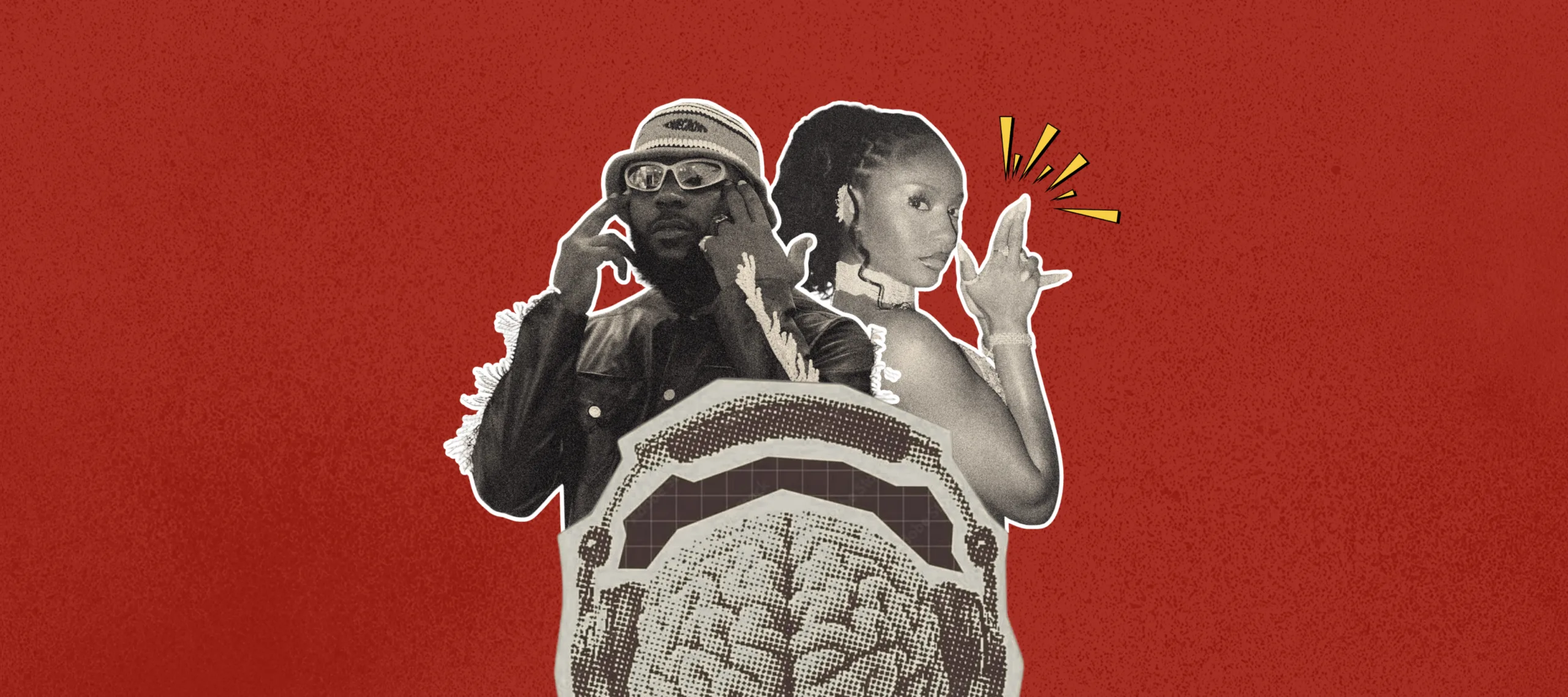
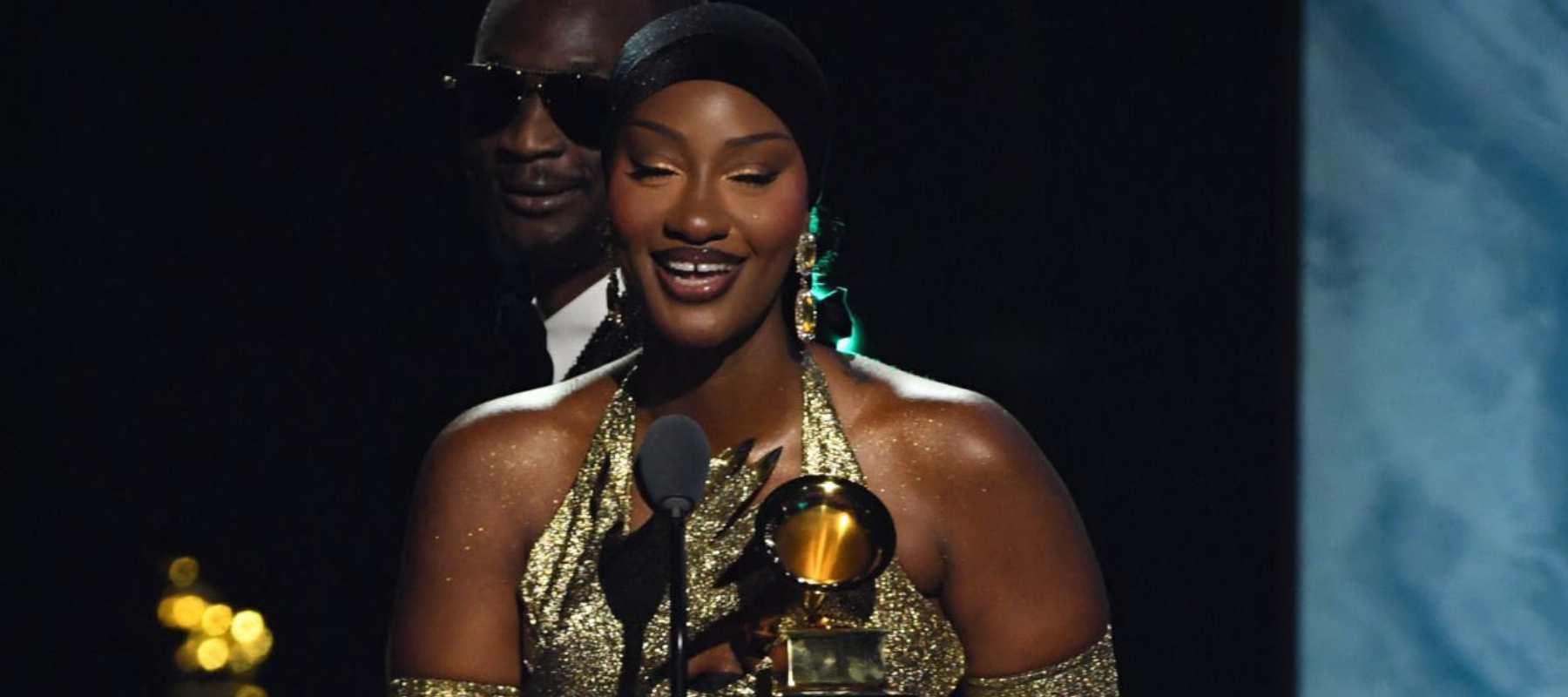
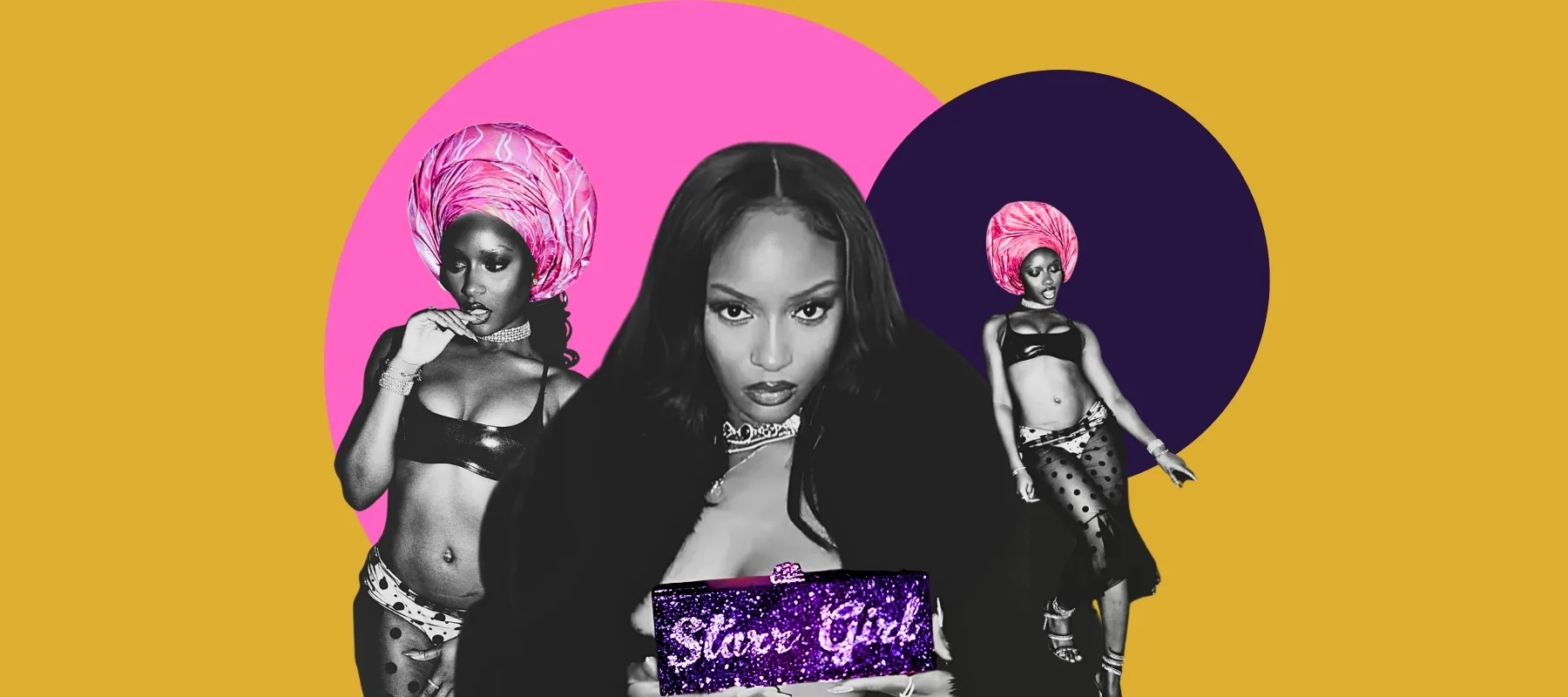
When the list of the biggest opening-day streams of all time for Nigerian albums on Spotify NG recently made rounds on X (formerly Twitter), one detail quickly became difficult to ignore: 2x Grammy-nominated artist Ayra Starr was the only female artist appearing on the list. For an industry that has produced some of Africa’s biggest stars, her position raised a triggering take among some netizens: Nigerian listeners are misogynistic.
The conversation became even more contentious when Starrgirl, Ayra Starr’s latest album, entered the discussion, as it barely garnered 2 million streams to rank her 24th on the list. This caused an uproar and a jarring divide between two oppositions.
Notice how the only female on the list is number 24/25?
Yes, that's how much Nigerians look down on female artists even when they are the ones making better music. https://t.co/VKBKm1s1EW— Jadesola💜 🌟 🐆 (@Jadesolaxunruly) August 16, 2026
I really hate that I’m doing this right now because I love Ayra Starr like màd. None of you I’m about to talk about talk about her music or give her her flowers like I do.
What tf do you mean that the reason her album didn’t get the numbers you expected is because men refused to…
— HONITEL👑 (@HonitelHQ) August 17, 2026
Some listeners argued that Nigerians are simply less willing to give female artists the same attention they readily and wholeheartedly give men. One user (@Ja22ys_song) expressed their disappointment in Nigerians, citing how they rallied in support for hip-hop rapper ODUMODUBLVCK with 4.32 million streams.
I'm actually disappointed in Nigerians ngl
Y'all gave Odumodublvck 4.32M
But couldn't even give Ayra starr 2M ??
This being the highest debut for a female artist is even more disappointing 💔 https://t.co/acK5ROrjlv— 🇳🇬 Henchy the 2nd 🌪️🌪️ (@Ja22ys_song) August 15, 2026
Then came the counterargument. Why does everything have to be misogyny? They insisted that reducing streaming behaviour to misogyny was unfair and a flawed perspective. Their argument was straightforward: people listen to music they enjoy. If a song resonates with them, the artist’s gender does not matter.
But in a country like Nigeria, both arguments can exist at the same time. And that is what makes this conversation worth having.
There is no denial that Ayra Starr is capable of commanding a significant audience. Her catalogue has accumulated substantial global streaming numbers, with The Year I Turned 21 alone sitting above 1.4 billion Spotify streams. Her recent album is proof that Nigerian listeners are not categorically resistant to female artists. On Nigeria’s Spotify daily chart, “Heaven Baby,” her collaboration with ZAYN, climbed as high as No. 2.
Yet Ayra Starr’s position in the streaming conversation is striking, but it isn’t proof of misogyny. The numbers don’t tell the whole story. If a listener doesn’t see themselves in Ayra Starr’s music, why should they be expected to stream it simply because she is a woman? It’s a fair question.
People really need to understand the reason most men don’t listen to female artistes is simply they can’t relate to their music. Most female artistes sing for women, how to look good, be confident in their body, female aesthetics and masculine men can’t relate to any of these.…
— BASITO (@itzbasito) August 16, 2026
Male artists dominate mainstream Nigerian music, so a male listener would naturally have more male voices whose music reflects his experiences, language, worldview, relationships, hustle culture, ambition, and whatnot. The average listener hears Seyi Vibez or T.I Blaze, and is instantly stirred in his soul to double the grind while hoping for better days. Another might hear Rema and connect with the fantasy of youth, money and desire. Someone else hears Burna Boy or Asake and finds an articulation of ambition that feels familiar.
So when the average male listener says: “I listen to whoever makes music I connect with.” That is objectively a valid stance. The consumption of arts, especially music (as its expression and creation), is personal, so people would naturally listen to music they like, or connect with an artist that conveys their experiences and current realities.
Beyond this, there’s also the question of availability and exposure. If the biggest songs, collaborations, concerts, playlists and cultural moments are disproportionately driven by men, both male and female listeners will naturally develop stronger attachments to male artists. And Nigerian women listen to male artists too a lot.
We also cannot deny that the music industry is driven by well-oiled financial and marketing machines, so when an artist like ODUMODUBLVCK garners massive streams, the credit shouldn’t just be his gender. More than the catalysts, it is also lazy to tie his achievements to his masculinity, given his noteworthy strategy in promoting the critically acclaimed Industry Machine album with the prequel, The Machine is Coming.
So maybe the argument is simply that the music that the average listener likes happens to come predominantly from men.
no amount of pr or peer pressure fit make me hear ayra starr
— • (@gnf_ogo) August 15, 2026
But would the same listener give a female artist the same chance in the first place if all things being equal?
“It’s about relatability” sounds objective until we begin asking what makes something relatable. What we consider relatable is influenced by our gender, environment, experiences, expectations and cultural conditioning.
A man can sing about ambition, heartbreak, money, loneliness, sex, insecurity, family, friendship or failure, and nobody necessarily considers those experiences exclusively male. But when a woman sings about those same things, there tends to be a shift, even when she is vocally better and versatile than most male acts.
"I don't listen to female artists like that, except the ones that behave like Men"
Here's proof. https://t.co/IkSPiLbCPo pic.twitter.com/ASoXUO4ku8
— SAGE! (@SAGE_600) August 16, 2026
Burna Boy’s “Last Last” is widely acclaimed as one of Afrobeats’ best heartbreak songs. Yet if a female counterpart releases such, would it be given similar attention, or would it be immediately tagged feminine and creatively lazy?
Why does a man’s experience so easily become our experience, while a woman’s experience can remain her experience?
None of this still proves that the Nigerian listener is definitely misogynistic. But taken together, it does establish something important: The music does not exist outside the culture that produces it. And that culture is not gender-neutral
The music industry, especially in Nigeria, is historically patriarchal in nature and structure. So the audience doesn’t exist independently of this ecosystem. If an industry repeatedly presents men as the default poster face of Nigerian pop music, doesn’t the audience eventually internalise men as the default artists to listen to?
To pretend misogyny doesn’t exist in the listening behaviour of Nigerian listeners would be disingenuous. Some listeners already have internalised ideas about what men and women are supposed to sound like.
“I don’t listen to Ayra Starr songs…” ❌
🗣️First-Listen Reactions to #StarrGirl — https://t.co/xFOL73RDAj pic.twitter.com/iqx2eQgMTZ
— Street Buzz🚦 (@StreetBuzzNG) August 20, 2026
But the Ayra Starr conversation does not prove that Nigerians hate female artists. Her own streaming history alone makes that impossible to argue convincingly. Yet the nuance of relatability doesn’t close the conversation.
There are listeners who genuinely don’t care or aren’t conscious about the gender of an artist and are simply responding to sound. Some genuinely prefer male artists because they relate more closely to them. And perhaps all of these things are true simultaneously.
But what many fail to understand is that personal taste or relatability itself is shaped by culture. The things we find relatable aren’t just shaped by what we have experienced but by what we see, what we hear, taught to value and whose stories we repeatedly encounter.
But if we have to keep asking why women are expected to prove their universality while men are simply assumed to possess it, then perhaps there is something about the way we listen that is worth examining.