


Tune in to listen
Bounce FM

But the scoreline and temporary bragging rights are just a fraction of what the long-awaited derby clash leaves in its wake
The last time a top-flight football derby between two Lagos-based teams happened in the Nigeria Premier Football League (NPFL) was 10 years ago, when goals from Sikiru Olatunbosun, Stephen Odey, and Ifeanyi Ifeanyi gave MFM’s Olukoya Boys a 3-1 win over Ikorodu United in the NPFL16 Matchday 25 at the Agege Stadium.
That feels like a different era because, in many ways, it was. Aside from the fact that it’s been a decade and two months, the league was also famously sponsored by Globacom then. So much has happened without much changing since then, but more relevant to the point is the recent Lagos derby between two of the city’s newer clubs, Sporting Lagos and Inter Lagos, at the Mobolaji Johnson Arena in Onikan on NPFL26 Matchday 3 on Sunday, September 13.
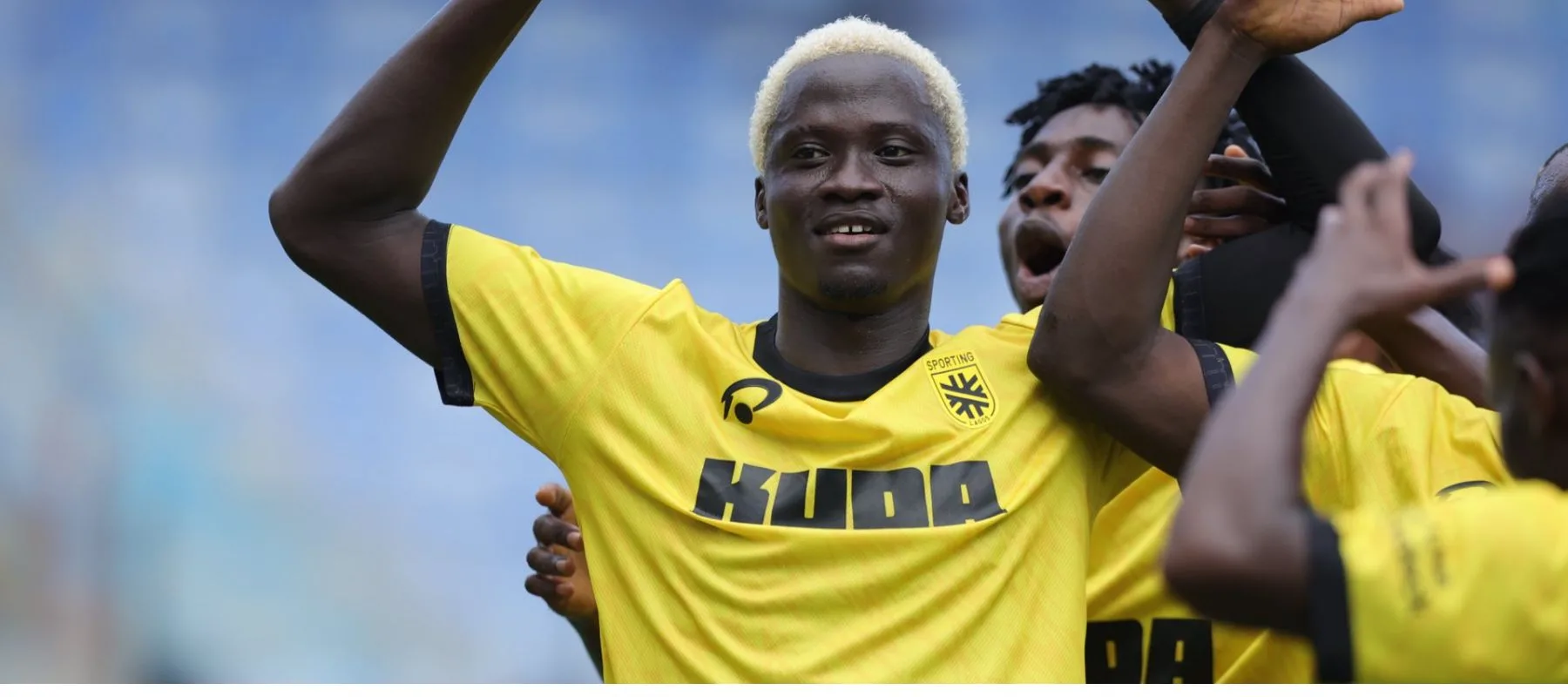
So, when striker Sodiq Ayoade rose highest to head Sporting Lagos in front of Inter just inside the seventh minute, it mattered a great deal for various reasons. It was the first NPFL Lagos derby goal in 10 years, Sporting Lagos’ first goal of the 2026/27 NPFL season, and the defender’s first competitive goal for the Tech Boys.
Baba Aliyu’s 60th-minute strike and Valentine Ugwu’s impressive solo effort at death restored Lagos’ bragging rights to the Coach Jeff Buter side, if only for a while. But the scoreline and temporary bragging rights are just a fraction of what the long-awaited derby clash leaves in its wake.
Before their first-ever NPFL meeting on Sunday, Sporting and Inter Lagos, both established in 2022 and 2023 respectively, had met four times, two of which were competitive encounters in the NNL and Lagos FA Cup. The Pride of Lagos, as Inter are fondly called, won both matches, only to fall short in their first encounter in the top flight.
The record speaks
4 games. 3 wins and 1 drawLagos Derby this weekend
Don’t miss it! pic.twitter.com/T32FSaB4oz— Inter Lagos (@InterLagosFC) September 9, 2026
Both teams had lost their opening matches of the season, which made the derby all the more important on Sunday. About 15 minutes after going behind early, Inter had the opportunity to bring themselves level from the spot after teenage goalkeeper Ebenezer Harcout fouled Kewe Iyede. However, they squandered the chance and were left to rue it, as Sporting only extended their advantage in the second half, even though the Tech Boys were also far from prolific in front of goal.
The banter that built around the game and lingered after it, the quality of the contest and the fanfare around it offered a glimpse of what Lagos has been missing. But in such an expected turn, it was not the biggest talking point of the encounter, for many relevant reasons.
There’s no such thing as a seamless sporting event anywhere, not to talk of the NPFL. For the Lagos Derby on Sunday, much had been reignited about the seemingly disinterest of the country’s football-loving populace, evidenced by what was a lukewarm crowd at the 10,000-capacity Onikan Stadium.
This is true for everyone to see, as we’ve seen even with matches involving the Super Eagles and Super Falcons in the country. The debate about Nigerians’ true interest in their football is a matter for another day, if it’s even a tenable one when all the relevant factors are considered.
It is cliché to weep over the state of Nigerian football; as we already know, every league campaign, international window and tournament brings fresh reminders of how much the game has lost with each passing year, yet somehow, we continue to find ourselves having the same conversations.
Perhaps it’s not too far-fetched to expect a better turnout for such a fixture, especially given the drought. But it’s the same reality that makes for a defence of the low turnout.
For context, MFM FC and Ikorodu United (not to be mistaken for the newly formed – longest-standing Lagos side in the NPFL currently, Ikorodu City) which contested the last Lagos derby before now, are now defunct. The structures, community and following they built alongside them have all but vanished or diminished to the barest, at least.
It’s not always realistic to expect a following from a demographic that you haven’t fed, and this is one you just recently showed that their time, investment and attention aren’t important by postponing the much-anticipated Lagos derby between Sporting Lagos and Ikorodu City from September 6 due to a political rally, of all reasons.
To boot, Inter and Sporting Lagos barely have seven years of collective existence between them, and just one season in the top flight. Surely, expecting them to fill stadiums that are rarely filled for sporting reasons anywhere in the country is a misplaced demand.
If, by progressive strain, these clubs can steadily develop over a 38-match football season, and, getting to the end of it in decent shape, which sadly is not a given, there is reason to believe that Sunday’s derby could be the beginning of something more.
Inter, in its first NPFL season, and Sporting Lagos, still only in their second, have much more to do before this can become the kind of rivalry that carries its own weight. Sunday’s derby was significant because it finally happened. It was a reminder of what football in the country’s most commercial and buzzing city can look like when two relevant clubs meet with something at stake, and of the appetite that can be created around it. When this can be sustained over time, then we can start talking about the numbers.