


Tune in to listen
Bounce FM

There is no evidence that tens of millions of Nigerians are currently poor or going to bed hungry because celebrities are not giving out enough of their own money.
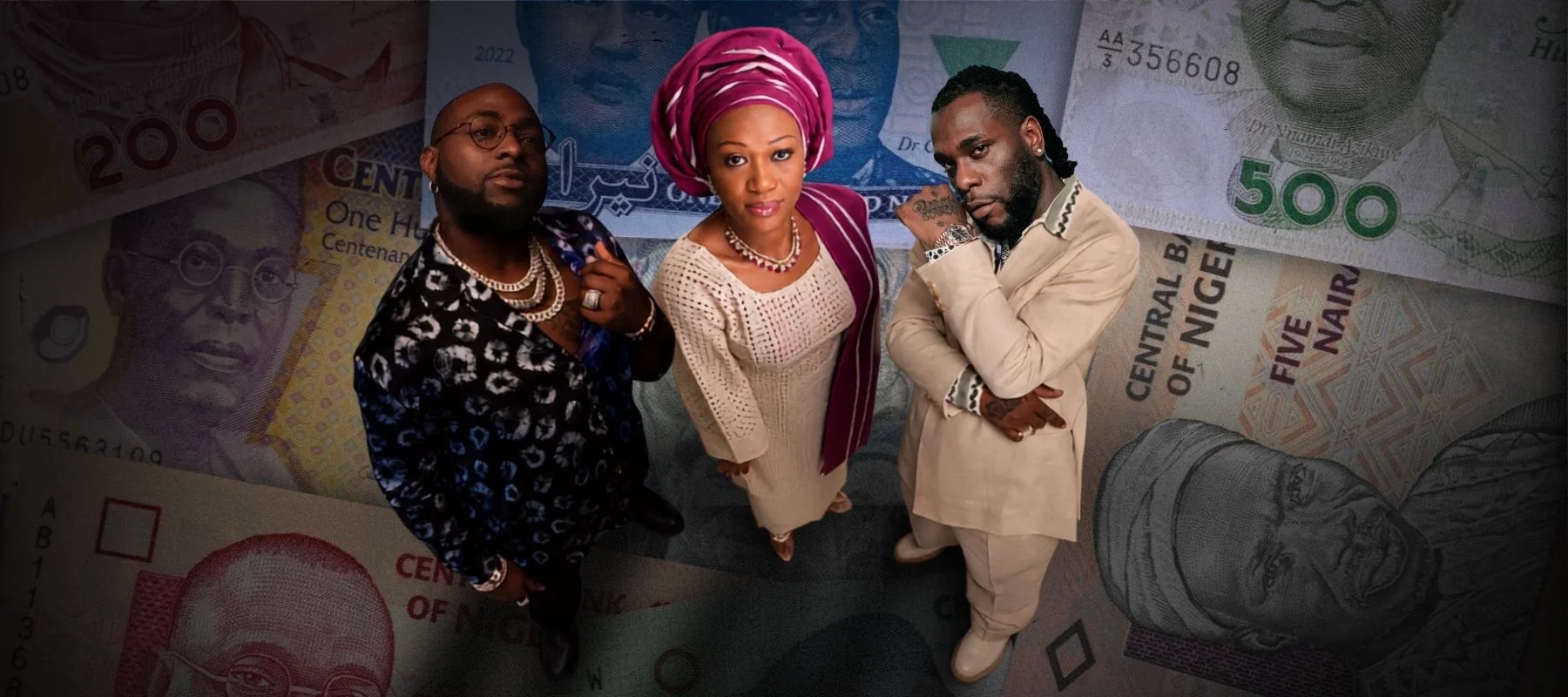
At a recent event launching the National Community Food Bank in Lokoja, Kogi State, First Lady Remi Tinubu made a moral appeal to Nigerian celebrities: your exotic cars are cool, but it is time to set up charity foundations and help the poor. “The burden on the government is huge, you can still help [relieve that],” she said, while name-checking Afrobeats superstars Burna Boy, Davido, and Asake.
First Lady Remi Tinubu sends a message to Burna Boy, Asake, Davido and the rest.
“Start Foundations to Help Pepper, Vegetable, Okra, Melon & Akara Sellers: "The Burna Boys of this world, the Asakes, all of them, Davido we want to see you with one foundation or the other,… pic.twitter.com/qmEQfTAcIN
— Oyindamola🙄 (@dammiedammie35) July 11, 2026
Truly, the burden on the government is huge: over 70% of Nigerians remain poor under the watch of the first lady’s husband, according to the World Bank, and food inflation remains on the rise, per the latest figures from the National Bureau of Statistics (NBS), worsening the cost-of-living crisis. But the lingering question for many is: are celebrity foundations potent solutions to the country’s myriad of economic problems?
Rapper Falz, who recently dropped a new EP, Break Time, that draws attention to Nigeria’s economic and security challenges, says no. “Is the solution to our problem more foundations? Oh my God. It’s absurd,” Falz said in response to Mrs Tinubu’s charge, while appearing on Arise News’ Arise 360 last Tuesday, July 14, 2026.
The rapper also noted the irony in the first lady’s call: “If you look at what has been spent [by government officials] on acquiring new vehicles, jets, all these things… what are your priorities? And you’re out here talking to individuals. This is actually your job to do!”
Less than two months before Mrs Tinubu asked celebrities to prioritise charity over buying Maybachs and Rolls Royces, she had sparked backlash online after donating personal vehicles to party women leaders in five states. But leaving the disconnect aside, there is no evidence that tens of millions of Nigerians are currently poor or going to bed hungry because celebrities are not giving out enough of their own money. In fact, there is documented evidence that several celebrities already do what the first lady was asking.
Incidentally, two of the three people she name-checked in her speech have charity foundations. Davido founded the David Adeleke Foundation (DAF), a non-profit organisation, in 2022 to uplift vulnerable communities across Nigeria. Burna Boy set up The REACH Nigeria Foundation, a non-profit focused on providing food relief and strategic support to the vulnerable and underserved. Besides Davido and Burna Boy, several other celebrities, from Tiwa Savage to Adekunle Gold and DJ Cuppy, to mention a few, use their resources to cater to the underprivileged.
I and my foundation pledge the sum of 300 million Naira to orphanages around Nigeria … as my yearly contribution to the Nation ❤️ .. details of disbursement tomorrow 🇳🇬
— Davido (@davido) February 20, 2024
Our goal is to reach 500 families in the next 30 days.
₦18,000 provides a survival food pack that feeds a family of 5 for 2 weeks.
You may not be able to help everyone but you can help one family today. pic.twitter.com/bCcmr09DJJ— The REACH Nigeria Foundation (@TheREACHNG) April 10, 2026
So, maybe the problem is not that celebrities and other wealthy Nigerians are not giving enough to the poor. Nigeria has continued to struggle economically despite widespread philanthropy, suggesting that, while private donations may help relieve the pain of a few, they are not the answer for all; the government is.
There’s an even more fundamental point the first lady’s appeal glosses over: private money is private money. No Nigerian celebrity is under any obligation, moral or legal, to hand over their earnings for communal upkeep. That’s what tax is for, and the tax net barely stretches over Nigeria’s informal economy, let alone its music stars. Framing philanthropy as a duty rather than a choice shifts responsibility away from the people actually empowered to redesign the tax and welfare architecture, and Nigeria has an entire government, elected and paid, to do exactly that.
But even setting the entitlement question aside, there’s a deeper fallacy baked into Mrs Tinubu’s appeal: the idea that celebrities, if only they gave more, could meaningfully move the needle on Nigeria’s economic condition. They can’t, not because they lack generosity, but because the tools available to them – scholarships, food banks, one-off cash grants – were never built for the scale of the problem. No amount of school fees paid or bags of rice distributed fixes a naira that keeps losing value, inflation that keeps eating into wages faster than they can rise, or a middle class that keeps shrinking into poverty Mrs Tinubu says she wants to end. Those are outcomes of monetary policy, fiscal choices, and structural reform, the very terrain government occupies and philanthropy cannot touch.
It is important to make that distinction because it’s easy to mistake visibility for impact. A Davido donation trends for a week; a well-designed subsidy or tax reform changes lives quietly, structurally, for years. Nigeria doesn’t need its celebrities to become development agencies. It needs policies with a human face, sound enough to hold, humane enough to matter, and a government willing to own that job instead of outsourcing its guilt to the country’s biggest stars.