


Tune in to listen
Bounce FM

While the big boys compare battle passes, the average young Nigerian is standing outside the game lobby with their face pressed against the glass.
Imagine you want to play a video game. Not just any game, but the biggest, most consequential game in Nigeria. The one that decides who controls your light, your roads, your fuel price, your future. You load it up, excited. Then the screen freezes and a prompt appears:
“To continue, purchase the Battle Pass. ₦100,000,000.”
You close the app. You cannot afford the Battle Pass. Nobody you know can afford the Battle Pass. In fact, at Nigeria’s new minimum wage of ₦70,000 a month, even if you hustle your way to ₦100,000 monthly and save every single kobo, it would take you over 83 years to afford that figure. You will be dead before you can even register interest.
Welcome to Nigerian democracy in 2026 as we head towards the 2027 elections.
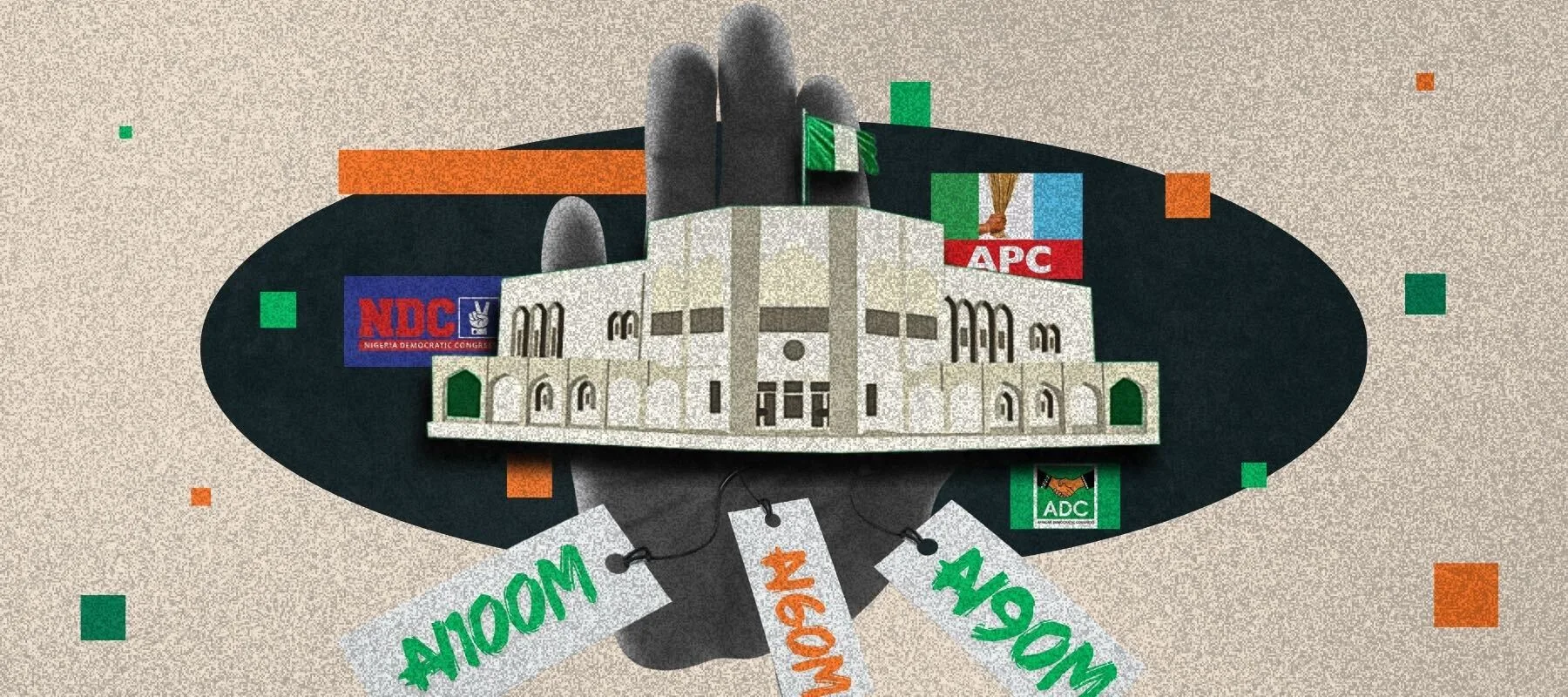
This is not a metaphor. It is literal. The All Progressives Congress (APC), Nigeria’s ruling party, set the cost of its 2027 presidential nomination form at ₦100 million. One hundred million naira. To even express interest — before the actual nomination form — costs ₦30 million on its own. The African Democratic Congress (ADC), the so-called opposition coalition housing serial presidential contender Atiku Abubakar and former Rivers State Governor, Rotimi Amaechi, charged ₦90 million for its presidential form. Labour Party’s own? ₦50 million. Even the “cheapest” presidential ticket — LP’s — cost more than most Nigerians will earn in several lifetimes.
And it doesn’t get better as you scroll down the menu. Want to run for a seat in your state House of Assembly, literally the lowest level of the game? The APC charges ₦6 million. The cheapest available is ADC’s ₦2 million. For someone earning ₦100,000 a month, that is still 20 months of salary. Untouched. Not a naira spent.
These are not political parties. These are subscription services with perhaps the most brutal paywalls in Africa.
So who are those spending real money on these in-game purchases?
Tinubu, the president and APC’s returning player, had mysterious “support groups” collectively footing his ₦100 million forms.
On the opposition server, Atiku doled out ₦90 million for the ADC presidential forms. The former vice-president has been running for president since 1993. So, he is no stranger to paying to play. And as history shows, he is always happy to pay.
A New Chapter in Nigeria’s Democratic Journey 🇳🇬
H.E. Atiku Abubakar, GCON, has officially received his payment receipt to contest under the platform of the African Democratic Congress (ADC) ahead of the 2027 Presidential Election.
This development marks another significant… pic.twitter.com/Tt1Hb9PEzc
— African Democratic Congress (@ADCNig) May 9, 2026
Amaechi, a former minister, also secured his ADC nomination form; collected on his behalf by former APC national chairman John Oyegun, because even picking up your ₦90 million form is something you delegate.
His Excellency Chibuike Rotimi Amaechi picked the Presidential Nomination Form of the African Democratic Congress at the party’s national secretariat in Abuja.
The form was picked by his excellency chief John Oyegun in the company of former Minister of Environment Mohammed… pic.twitter.com/yC6aFPUKCV
— African Democratic Congress (@ADCNig) May 9, 2026
Peter Obi, who recently quit the ADC and ran off to the Nigeria Democratic Congress (NDC) dropped ₦60 million on the NDC presidential form. Obi built much of his political momentum on youth-driven reform politics. Yet even his path to 2027 still requires navigating the same expensive political structures.
And remember, these are not ordinary players. These are political veterans with decades of access, networks, and financial backing.
While the big boys compare battle passes, the average young Nigerian is standing outside the game lobby with their face pressed against the glass.
A 25-year-old graduate with ambition, ideas, and genuine hunger to fix their community cannot run for their state’s House of Assembly seat on any major party platform without first producing millions of naira in form fees and that is before a single campaign poster is printed, before a single rally is held, before a single vote is cast.
This is the real cheat code of Nigerian politics: price out the competition before the game even begins.
In 2023, Atiku, Obi, and former Kano State Governor, Rabiu Musa Kwankwaso, collectively received 60.9% of the presidential vote against Tinubu’s 36.6%. The majority of Nigerians voted against the current direction. And yet, 2027 is shaping up to be a rematch between the same set of wealthy veterans: same faces, different jerseys.
Because the game was designed that way.
Until the cost of participation drops, Nigerian elections will continue to recycle the same political class, not necessarily because they are the best candidates, but because they are the only ones who can afford to enter the room.