



Tune in to listen
Bounce FM

Two decades after PayPal exited Nigeria, the American-based multinational fintech has returned through a partnership with Nigerian giant Paga.
When PayPal shut Nigerians out of its services some two decades ago, it cited high levels of fraudulent activity across Nigeria and parts of West and Central Africa as justification. What was initially communicated as a temporary measure while its systems were upgraded to detect criminal activity effectively became a long-term restriction. Individuals and businesses were unable to send or receive cross-border payments, locking Nigeria out of what was one of the world’s most dominant digital payment platforms.
Years later, partial openings ensued. In 2014, a partnership with First Bank enabled outbound payments. In 2021, a collaboration with Flutterwave eased PayPal access for businesses, while individuals remained unable to receive inbound payments. Then came January 2026, when Paga, a Nigerian fintech, announced its partnership with PayPal, a move that finally allowed Nigerians to receive international payments and gain full access to its global payments network after nearly two decades of limited service.
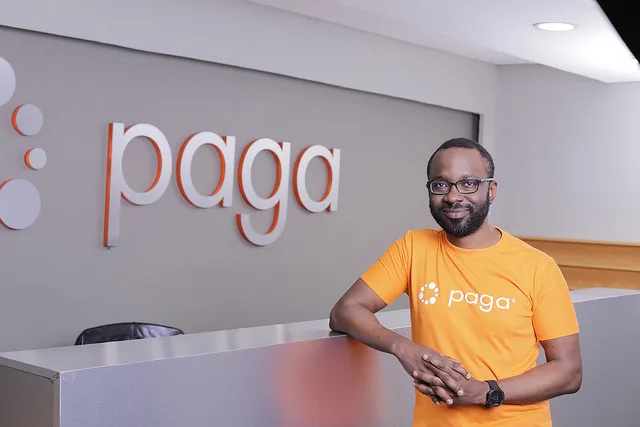
“We have been intentional about partnering with local innovators like Paga to develop solutions that help Nigerians earn, spend, and grow,” said Otto Williams, Senior Vice President, Regional Head, and General Manager of PayPal Middle East and Africa. “I was born and raised in Nigeria, so I have seen the potential firsthand. We are here to listen, learn, and support Nigeria’s digital economy.”
That stated commitment to Nigeria’s digital economy has particularly been the core of the public unease surrounding PayPal’s re-entry. Why now when the country’s digital economy has braved the storm and is well into its maturity stage? According to a report by research firm Tech Hive, the country’s digital economy is projected to generate $18.3 billion by 2026, nearly double the $9.97 billion recorded in 2021, as artificial intelligence, cloud services, fintech, and nationwide connectivity mature in tandem.
This growth has been driven by builders and users alike — freelancers, online merchants, creators, and others in the gig economy collectively form the backbone of any digital economy. These are the same individuals PayPal excluded for nearly two decades. The criticism is barely about the American-based firm’s justifiable exit on the grounds of fraud risk in the early 2000s. Social media, particularly X, is replete with accounts of indiscriminate account freezes, inaccessible funds, poor customer support, and other negative experiences from Nigerian PayPal users.
One anonymous user who spoke to The Grid about their experience using PayPal between 2021 and 2023 described a frustrating ordeal.
“I created my first PayPal account after getting a user testing job that surprisingly accepted Nigerians, but PayPal was the only payment option,” the user said. “I opened an account without any warning about restrictions. After my first payment came in, my account was locked for ‘suspicious activity.’ Customer support was unhelpful. They told me to forget the money because my account was banned.
The user added that they later attempted to access PayPal using a VPN and tried bypassing the impediments by opening multiple accounts. “I had to open multiple accounts, and each time the issue persisted,’’ they shared. “Eventually, I left. It was not worth the stress.”
For many users like this, PayPal’s return inspires little enthusiasm. In its partial absence and amid allegations of heavy-handed enforcement, local fintech companies such as Paystack, Flutterwave, and Paga built robust local and cross-border payment infrastructure that kept Nigeria plugged into the global digital economy when PayPal left.
PayPal is not the first foreign fintech to experience an uneven relationship with the Nigerian market. Wise (formerly TransferWise) has had multiple start-and-stop attempts dating back to February 2015. According to Condia, Wise’s interruptions were largely due to regulatory changes and payout provider reliability issues. Its re-entry in 2024, however, was not met with widespread scepticism or criticism like PalPay’s.
On its face, PayPal’s partnership with Paga is a positive development as it expands payment options and integrates Nigeria more fully into global commerce. But goodwill is not automatic. Beyond the infrastructure it promises, PayPal must confront the trust deficit it created if it truly considers Nigerian users as a significant component of its global network.