



Tune in to listen
Bounce FM

The genocide, now in its second year, has triggered the world’s largest displacement crisis and plunged Sudan into one of the most severe humanitarian emergencies of the 21st century.
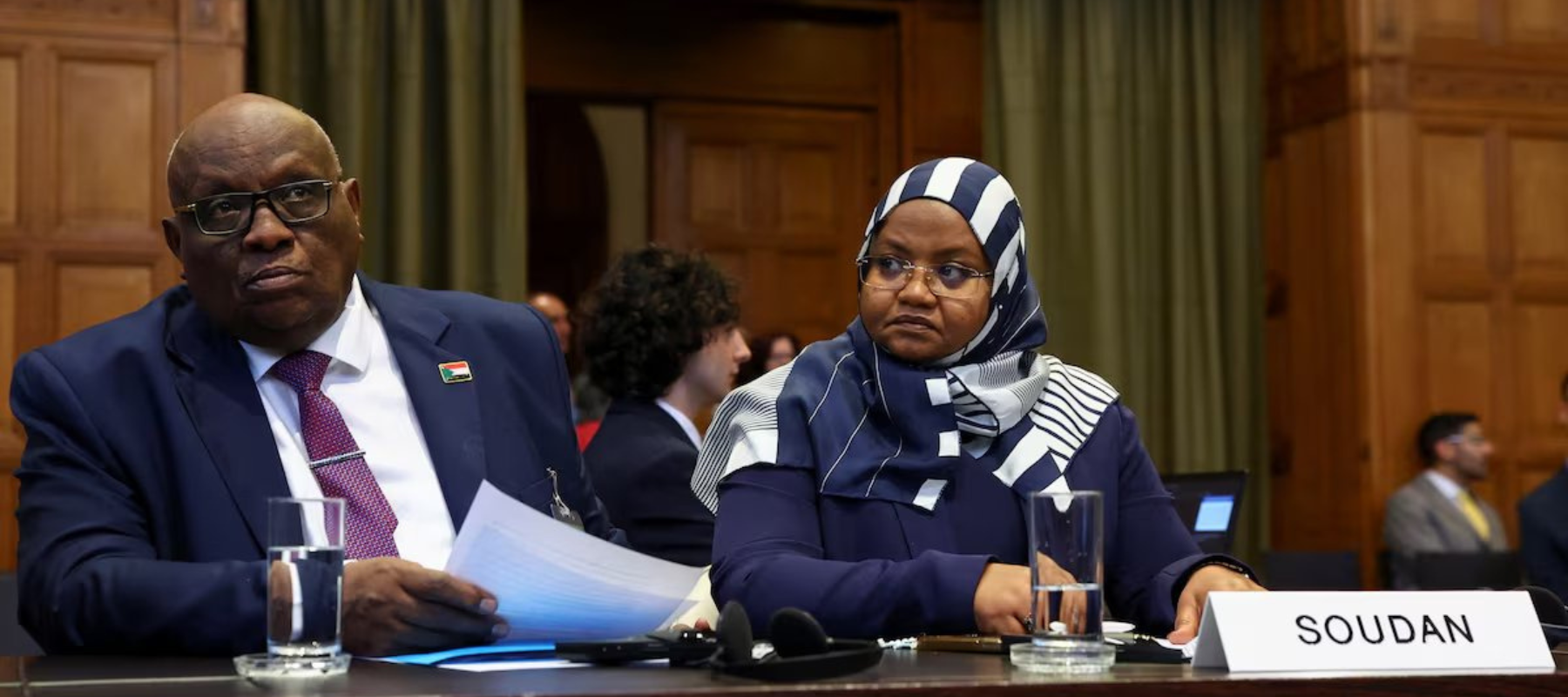
The International Court of Justice (ICJ) dismissed Sudan’s case against the United Arab Emirates, ruling that the court lacked jurisdiction to hear Khartoum’s accusations that Abu Dhabi violated international law by supporting the Rapid Support Forces (RSF), a paramilitary group engaged in a civil war in Sudan. In its ruling, the court stated that Sudan had failed to demonstrate the existence of a legal dispute with the UAE regarding the interpretation or application of the Genocide Convention prior to filing the case, a necessary precondition under Article IX of the treaty. Additionally, the ICJ noted that the UAE had entered a reservation to Article IX when it ratified the convention, meaning it does not accept the court’s jurisdiction over genocide-related disputes unless it has given explicit consent. Without a valid legal basis or evidence of a formal dispute, the court concluded that it “manifestly lacks jurisdiction” to proceed with Sudan’s application.
Sudan filed the case in December 2024, accusing the UAE of breaching the United Nations Genocide Convention and international humanitarian law by allegedly providing arms and other support to the RSF. The RSF has been fighting the Sudanese Armed Forces (SAF) since conflict erupted in April 2023, displacing over eight million people and creating one of the world’s worst humanitarian crises.
The court’s 15-judge panel voted unanimously to throw out the case, citing a lack of legal grounds for Sudan’s claims under the Genocide Convention.
WATCH LIVE: The #ICJ delivers its Order on the request for the indication of provisional measures submitted by Sudan in the case #Sudan v. #UnitedArabEmirates.https://t.co/AxtMfwcIEB
— CIJ_ICJ (@CIJ_ICJ) May 5, 2025
Sudan’s application had claimed the UAE’s alleged airlifts of military supplies to RSF-controlled areas in Darfur and Khartoum “contributed to genocidal acts” against ethnic African communities, particularly the Masalit people in West Darfur. It requested the ICJ to impose emergency measures, including a halt to any UAE assistance to the RSF and an investigation into arms transfers.
In its defence, the UAE denied all allegations and challenged the admissibility of the case. It argued that Sudan had failed to properly notify the UAE of any dispute before approaching the ICJ, a procedural requirement under Article IX of the Genocide Convention. The ICJ agreed with the UAE’s position.
The United Nations Panel of Experts on Sudan had previously reported in January that multiple countries, including the UAE, may have breached the UN arms embargo on Darfur by supporting armed groups. However, the panel did not specifically accuse the UAE of aiding genocide or acting with genocidal intent.
Sudan’s transitional government has been attempting to regain international support and legitimacy since being sidelined by the RSF in large parts of the country. The SAF-led government has accused the RSF of war crimes and ethnic cleansing in Darfur, allegations which the RSF denies.
The UAE’s Ministry of Foreign Affairs welcomed the ICJ’s decision, stating that it reaffirmed Abu Dhabi’s “respect for international law and its firm rejection of baseless accusations”. The ministry also said the UAE would continue to support humanitarian efforts in Sudan and called for a peaceful resolution to the conflict.
The ICJ’s ruling does not prevent Sudan from pursuing other legal avenues or filing a revised case under different international treaties. However, it is a setback to Khartoum’s attempts to internationalise its case against the RSF and its alleged backers.
Fighting in Sudan continues with no signs of resolution, and aid agencies warn that the humanitarian situation is deteriorating. According to the UN Office for the Coordination of Humanitarian Affairs, more than 25 million people, over half the population, are in need of humanitarian assistance.
The conflict in Sudan stems from a power struggle between the Sudanese Armed Forces (SAF), led by General Abdel Fattah al-Burhan, and the Rapid Support Forces (RSF), a powerful paramilitary group commanded by Mohamed Hamdan Dagalo, known as Hemedti. Tensions between the two factions escalated after the collapse of a planned transition to civilian rule, with both sides vying for control of the country’s political and military institutions. Sudan has accused the United Arab Emirates of fuelling the RSF’s campaign by allegedly supplying arms and logistical support via airlifts to RSF-held areas. While the UAE denies the allegations, Sudan contends that the scale and coordination of the RSF’s operations would be impossible without external backing.
The genocide, now in its second year, has triggered the world’s largest displacement crisis and plunged Sudan into one of the most severe humanitarian emergencies of the 21st century. The conflict, which erupted on April 15, 2023, has displaced 8.7 million people and left 18 million facing acute food insecurity, according to figures released by the United Nations.
Fighting has devastated Khartoum, where entire neighbourhoods have been reduced to rubble amid shelling, airstrikes and ground combat. Many civilians have been cut off from essential services for over a year, with electricity, healthcare and clean water unavailable in large parts of the capital.
In Darfur, the RSF and allied militias have launched repeated attacks on non-Arab communities, including the Masalit, leading to mass killings, sexual violence and forced displacement. In West Darfur’s El Geneina, thousands have been killed and entire districts razed, according to investigations by Amnesty International and Human Rights Watch.
The violence has also caused economic paralysis. The Sudanese pound has collapsed, inflation has soared, and the banking system remains largely inoperative. Many workers have gone unpaid for months, and markets have either shut down or are operating under militia control. According to the World Food Programme, at least five million people are on the brink of famine, particularly in Khartoum, Darfur and Kordofan.
Despite mediation efforts by the African Union, IGAD, and back-channel talks led by the US and Saudi Arabia, a durable ceasefire remains elusive. Both the SAF and RSF have rejected international proposals that would lead to power-sharing or disarmament.
The war has also spilled into neighbouring countries. More than 1.8 million Sudanese refugees have fled to South Sudan, Chad, Ethiopia and Egypt, placing additional pressure on already fragile states. Many are living in overcrowded camps without proper shelter, clean water or food.
The United Nations has appealed for $2.7 billion in humanitarian aid for Sudan in 2024, but less than 10% of that amount has been received. Aid convoys have been repeatedly looted, and bureaucratic restrictions by warring parties have blocked access to affected areas.