



Tune in to listen
Bounce FM

The Dangote Refinery is going public. For young Nigerians, the question is simple: are you paying attention?
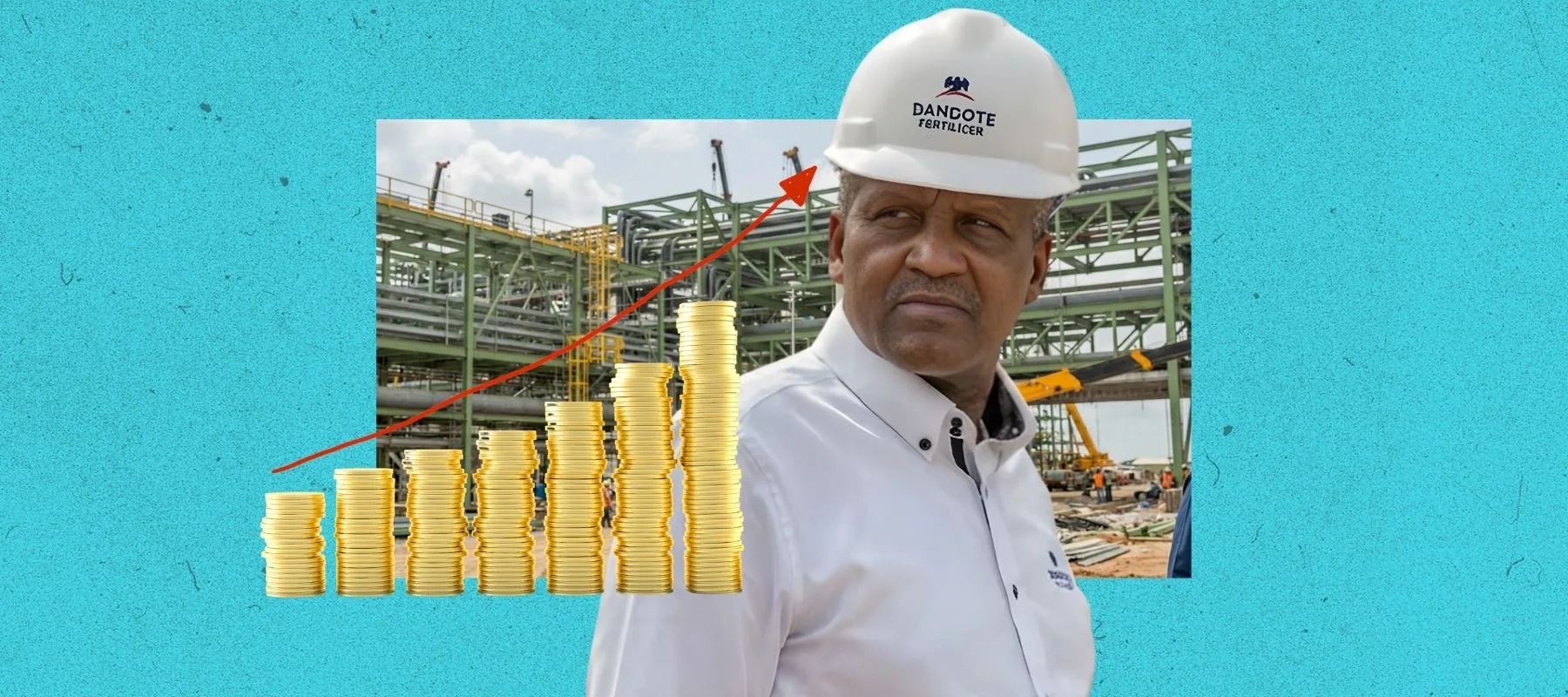
On February 21, 2026, the Chairman of the Dangote Group, Aliko Dangote, announced that ordinary Nigerians will be able to purchase shares in the Dangote Petroleum Refinery & Petrochemicals FZE within the next four to five months as the company prepares to list. He also confirmed that Nigerian shareholders will have the option of receiving dividends in either naira or United States (US) dollars.
Three investment banks — Stanbic IBTC Capital, Vetiva Capital Management, and FirstCap — have since been appointed to manage what could become the largest equity offering in African capital market history.
That’s the news. Here’s what it actually means for you.
Between 5% and 10% of a $20 billion company is about to be available to regular people. Not pension fund managers. Not foreign portfolio investors. You. The NYSC corps member. The skit maker. The remote worker.
The last five years tell a specific story about how young Nigerians have tried to build wealth. When traditional savings accounts offered returns that couldn’t keep up with inflation, a generation turned to crypto. When crypto stopped paying as it used to, some turned to sports betting. The logic was the same both times: take a swing, move fast, hope the volatility works in your favour.
Sometimes it did. More often it didn’t.
The Dangote Refinery listing is the opposite play entirely. Slow. Industrial. Unsexy. A company that produces something the country physically cannot do without. For a generation raised on crypto volatility and betting slips, this is a different kind of bet: one that doesn’t ask you to time the market or predict a coin’s next move. It asks you to own a piece of infrastructure that will still be running in forty years.
That’s not a less exciting proposition. That’s a more serious one.
There is a brutal irony that young Nigerians have lived with for years: we consume fuel, we pay for fuel, we queue for fuel but we’ve never owned any part of the chain that produces it. The wealth generated by Nigeria’s oil sector has historically flowed to a small network of operators, government entities, and foreign capital. The average Nigerian is downstream of all of it. Literally.
This is a rare crack in that wall. In a country where inherited real estate and family business connections have long been the primary wealth transfer mechanisms, a public listing changes the rules. You don’t need to know anyone. You don’t need to have been born into the right family. You need a phone, a BVN, and the decision to act.
Here is the part that should make your ears perk up: investors can choose to receive dividends in US dollars.
Think about what that means for a generation that has watched the naira slide from ₦197 to the dollar in 2015 to up to around ₦1,400 in recent weeks. Every time the exchange rate moves, savings shrink, not because you did anything wrong, but because of forces entirely outside your control. A dollar-denominated dividend flips that equation. You buy in with naira, but your returns are shielded from devaluation.
It’s essentially a domiciliary account, but in equity form.
And unlike a fixed deposit gathering dust, this is ownership. You are not lending money to a bank. You own a piece of the infrastructure that refines Nigeria’s crude oil and exports petrochemicals that earn hard currency. When the refinery makes money, you make money. In dollars.
The numbers behind this are real: the refinery supplied 62% of Nigeria’s petrol in January 2026 alone, overtaking imports for the first time. It is also saving the country $10 billion annually in foreign exchange, making it an attractive investment.
The most common reason young Nigerians sit out major investment opportunities isn’t lack of interest, it’s the assumption that real investing requires real money. The Dangote listing will challenge that.
Fintech apps such as Trove, Bamboo, and Cowrywise have helped drive a surge in retail trading among young Nigerians by making the entry point as low as ₦5,000. These same platforms are expected to facilitate access to the Dangote shares when the window opens, making participation easier than many assume.
Of course, this remains a stock market investment. Oil price fluctuations, regulatory changes, and currency shifts are real risks. No one should invest funds they cannot afford to leave untouched for a period of time. But for a generation repeatedly told that wealth compounds gradually, this is precisely the kind of opportunity that rewards patience.
Nigeria’s old money was built on access to land, to contracts, to information the rest of us didn’t have. This listing is accessible to anyone paying attention.