



Tune in to listen
Bounce FM

The videos document what a society looks like when enough people, in a public space, in broad daylight, have correctly calculated that nobody will stop them.
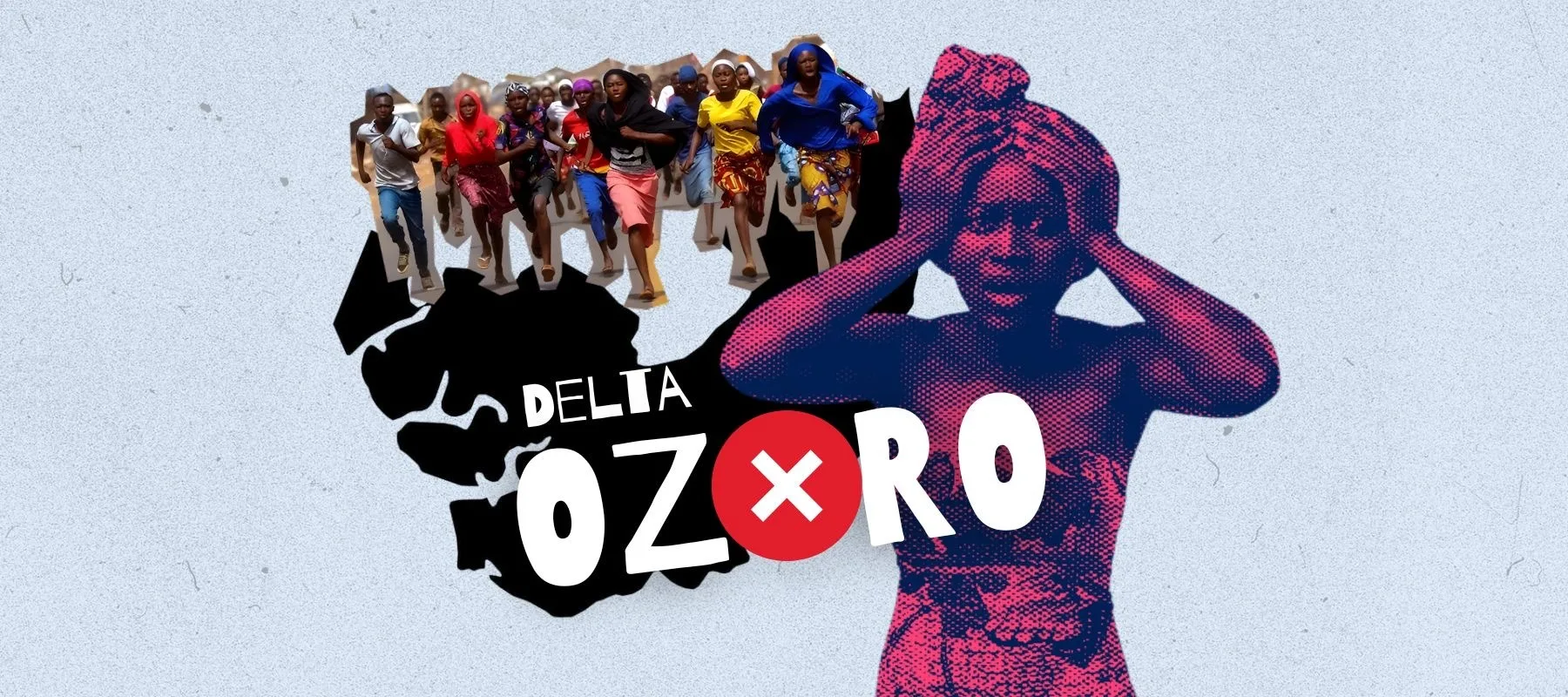
On the afternoon of Thursday, March 19, 2026, in Ozoro, Isoko North Local Government Area (LGA) of Delta State, a cultural festival became the scene of multiple sexual assaults. Videos circulated on social media showing young women being chased, grabbed, and groped by groups of men. Their clothes were torn. Some were visibly crying. The incidents happened outside, in daylight, with other people present.
Many girls have reportedly been r@p£d and m0l£sted by men in Ozoro during what is being described as a “r@p!ng festival” in the area.
According to multiple reports and videos circulating online, today is said to be the day of this festival in the Ozoro community, and girls are… pic.twitter.com/h1CjvFQg74
— TENIOLA (@Teeniiola) March 20, 2026
Sixteen people have since been arrested. The First Lady Remi Tinubu, local government and state officials, several human rights groups, and other concerned individuals have condemned it. The official story is simple: miscreants hijacked a tradition, and the right people have been arrested. Case closed.
But before we get to the consequences, there is a prior question that the official response has not answered: why did nobody stop it while it was happening?
Community elders insist the Alue-Do festival involves couples seeking fertility blessings, and that what happened was a distortion. That is worth taking seriously. The contested question is not what the festival is supposed to be. It is what environment allowed it to become what those videos show.
The assaults did not happen in a dark alley or behind closed doors. They happened in a communal space, in the middle of the day, with enough participants that multiple videos were captured from multiple angles. That scale implies something beyond individual criminal impulse. It implies that the people involved did not expect to be stopped. Not by bystanders, not by community elders, not by the police, and not by anyone whose opinion they valued. That is not a blanket statement about the whole Ozoro community. It is a statement about what was visible in those videos: a crowd, a moment, and no clear intervention.
What produces that kind of confidence? Not culture alone. Cultural framing may be used to create a sense of permission, but it is the absence of deterrence that removes the last constraint.
Deterrence operates on two levels. The legal level (fear of arrest, prosecution, and conviction) and the social level (fear of being identified, ostracised, and losing standing in one’s community). In Nigeria, both have been weakening for a long time. The Violence Against Persons Prohibition Act has been law since 2015. Delta State has domesticated it. But domestication and enforcement are different things. Conviction rates for sexual violence in Nigeria remain extremely low. Survivors routinely avoid reporting because the process is more punishing than protective. A man who has watched this pattern across his lifetime has learned something: the law exists, but it does not tend to reach him.
And it is not just ordinary men watching. When activist Rinu Oduala criticised the Delta Police spokesman SP Bright Edafe’s handling of the Ozoro incident on X, his response was a sexually suggestive remark directed at her personally.
It’s not the first time PRO Bright the dull is harassing me btw. Four years ago, he did this.
Today, it’s sexual harassment. Tomorrow, it may be a bullet. Save Rinu from police harassment. pic.twitter.com/aXsDVckoKr
— Rinu Oduala 🔥🔫 (@SavvyRinu) March 20, 2026
He later deleted it. The police hierarchy, as far as the public knows, said nothing. No reprimand. Just silence, and then business as usual. This is the same institution that arrested sixteen people in Ozoro and is expected to deliver accountability. When the people charged with enforcing consequences can sidestep them casually, it risks signalling that in this country, accountability is optional.
Which brings us back to the arrests. Sixteen of them, made because videos went viral. They feel significant. But arrests made in response to national outrage are not the same as a deterrence system. Some may view them as a response to optics. The real question is not whether these specific sixteen men — and other offenders still at large — face consequences. It is whether the next group of men in a town without phone cameras will have any reason to believe they will be stopped.
Nigeria has a pattern of performing accountability without building it. Condemnations are issued. Arrests are made. Then the noise fades, the cases stall quietly or even deliberately frustrated in some cases, and the architecture that made the incident possible remains exactly where it was.
The Ozoro videos are disturbing. But what they document is not only what a group of men did on one Thursday afternoon. They document what a society looks like when enough people, in a public space, in broad daylight, have correctly calculated that nobody will stop them.
That calculation did not begin on March 19. It has been building for several years. And until it is consistently proven wrong, it will be made again.