


Tune in to listen
Bounce FM

Any serious push for actor royalties in the streaming era would require a wholesale renegotiation of how Nollywood content is financed, contracted, and distributed, from the ground up.
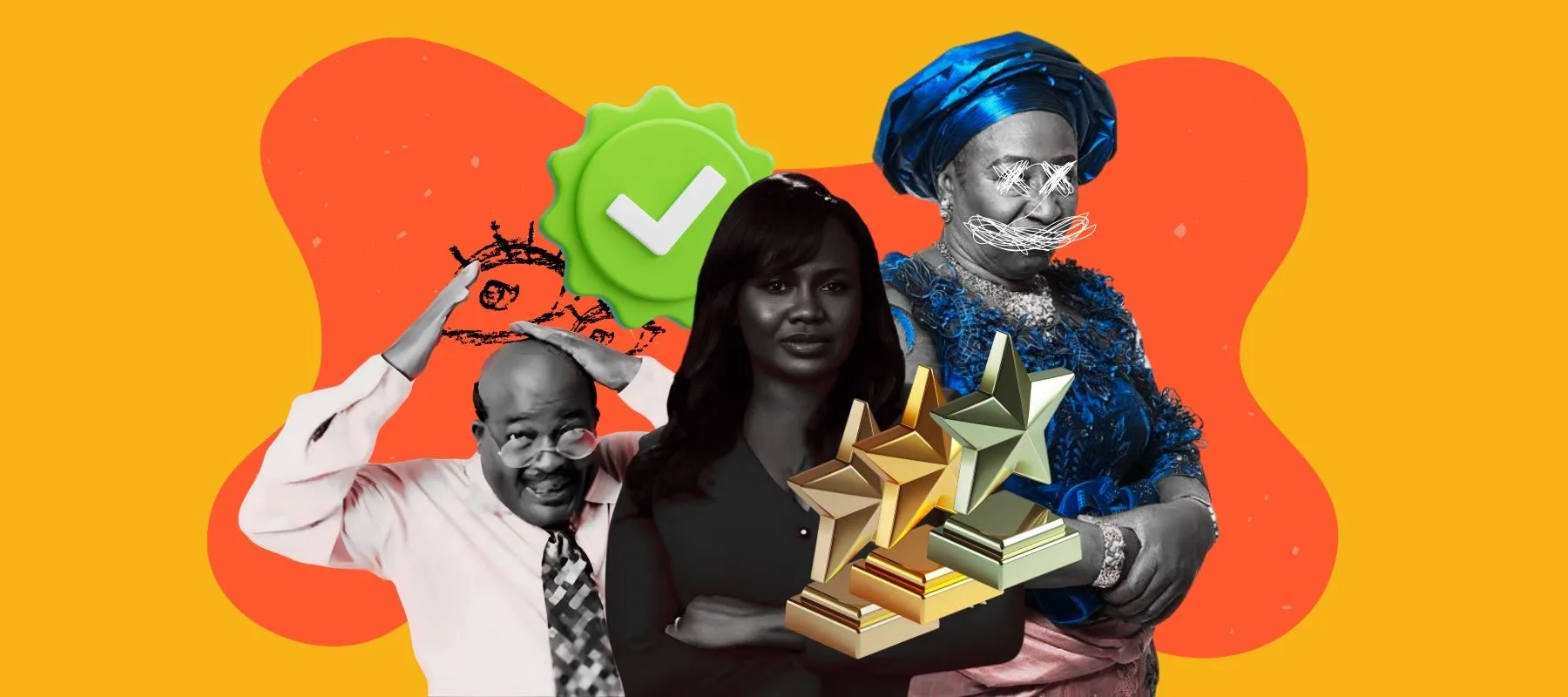
In a recent episode of content creator Isbae U’s YouTube show, Curiosity Made Me Ask, released on Friday, April 4, 2026, veteran Nollywood actress Patience Ozokwor sparked a conversation the industry has long avoided. “Why you see us [some Nollywood actors] beg is because they [filmmakers] don’t pay us royalties,” she said in a now-viral clip.
“The reason why Nollywood actors and actresses are poor is because we don’t get Royalties for what we do, we only get paid for our appearance at the shoot. That’s why everyone is running to Youtube”
— Patience Ozokwo says 🤦🏾♂️ pic.twitter.com/YC9t4wYMCe
— SKB (@seyikanbai) April 4, 2026
She was not the only actor to have made that assertion in recent weeks; she was just the latest. Less than a month earlier, comic actor Abiodun Richard Ayoyinka, widely known for his role as Papa Ajasco in the classic show of the same name, had many talking about the fate of popular actors who often have no financial security to match their fame. In an emotional interview with media personality Lucky Udu, Ayoyinka lamented that he owns neither a car nor a house, a consequence of the modest, one-off fees he received and his inability to commercially exploit the trademarked character he helped make iconic.
"That particular character (Papa Ajasco) has been registered by Wale Adenuga… Things have never been okay for years back now – no car of my own, no house of my own…"
– Abiodun Ayoyinka pic.twitter.com/il2RrSOQOq
— @𝗼𝗻𝗲𝗷𝗼𝗯𝗹𝗲𝘀𝘀𝗯𝗼𝘆 (@OneJoblessBoy) March 14, 2026
Both experiences converge at the same point: actors do not receive sustained compensation for their work. On the surface, this feels like a straightforward injustice. In more structured film industries such as Hollywood, actors earn royalties or residuals — payments triggered when a project is reused, licensed, or broadcast after its initial release. For principal performers, those residuals can accumulate into long-term payoffs that dwarf the original salary. It is perfectly reasonable, then, for Nigerian actors to want the same. But Nollywood is not Hollywood, and as the industry stands today, it lacks the foundational infrastructure to make long-term actor payments a practical reality.
Nollywood filmmakers have had to articulate all of this in response to a wave of social media sympathy that, however emotionally valid, has largely skipped the structural analysis. Writer-director Jade Osiberu sarcastically responded to Kanayo O. Kanayo’s seeming proposal that the Actors Guild of Nigeria (AGN) mandate lifetime royalty payments for actors on streaming platforms. If such a rule existed, she argued, producers should equally be entitled to call on casts and crew to cover losses when a film fails.
I agree jare.
I think the association should also implement a law that when a producer makes loses on a project, all the actors and crew come together to contribute to cover the losses incurred. May be for actors, you can contribute by how many scenes you featured in so the… https://t.co/3saxRy9Fda— Jade Osiberu (@jadeosiberu) April 6, 2026
But even if you accept that argument — that producers and actors start sharing the losses and gains — another question emerges: where would the money come from? As screenwriter Jola Ayeye put it, terrestrial television barely broadcasts reruns of classic shows. Many adults today grew up watching SuperStory, This Life, and Fuji House of Commotion, and others, but how many of those shows generate revenue today? Without advertising income attached to reruns, the financial mechanism for residual payments simply does not exist.
My dear, we lie to ourselves A LOT in the Nigerian film industry. Let's start by asking where royalties come from and what setup in Nigeria/Nollywood enables them? We barely have terrestrial television, and streaming is a one-off payment. Where will these royalties come from? https://t.co/jsOhkSXdwc
— Jola (@Jollz) April 6, 2026
In normal countries he would be getting monthly residual cheques for his role as Papa Ajasco. But how many reruns of Papa Ajasco & Company are there on air? How much is the show even making per season? In Nigeria, TV is all about selling airtime. https://t.co/LCrESFdTF4
— Ayomide Tayo (@AOT2) March 17, 2026
And if the money is not coming from television, perhaps it comes from streaming, which is where the conversation usually lands next. But that route has its wall too. Piracy has already hollowed out much of the potential revenue base. Nigeria’s creative economy bleeds income daily to Telegram channels, Moviebox, and other illegal streaming platforms. As Actress and producer Bolaji Ogunmola noted, you cannot demand lifetime royalties while the audience consumes content without paying for it.
You can’t want lifetime royalties for actors and still be watching their film on pirated platforms now!!!! Ejoor now!!!! Please….. help us . Moviebox / telegram is not the place to watch Nigerian content. Help us
— Bolajiogunmolatv (@OgunmolaBolaji) April 7, 2026
Then there is the deeper structural problem that the streaming argument exposes, and it is the most important one in this debate. When Netflix, for example, acquires a Nollywood title, it pays the producer a fixed, one-time licensing fee for exclusive rights. That deal is struck entirely at the producer level. There is no clause obligating Netflix to pass any portion of that fee to the cast. The money stops at the producer. The system ends there. The actors who gave the film its commercial appeal — whose faces sold it to a global platform — have no legal claim to what that sale was worth. Any serious push for actor royalties in the streaming era would therefore require not just goodwill but a wholesale renegotiation of how Nollywood content is financed, contracted, and distributed, from the ground up.
Which is exactly the point. Friends aired its last episode in 2004, yet its cast continues to earn from it more than twenty years later, through syndication, streaming licensing, and international broadcast rights. That did not happen by goodwill. It happened because the Screen Actors Guild, now SAG-AFTRA, spent decades negotiating the contractual infrastructure that makes residuals enforceable: standard agreements, collective bargaining, and legal mechanisms with real teeth.
The AGN has a long road to travel before Nollywood reaches anything close to that. But the destination is clear. The work of getting there — standard contracts, producer-actor co-investment models, a welfare fund for veterans, broadcasters licensing and airing more classic Nollywood content, and a serious assault on piracy — is what the industry needs to talk about. Sympathy for struggling actors is not enough. Structure is.