



Tune in to listen
Bounce FM

The social and economic realities of Nigerian fathers require them to take their health very seriously.
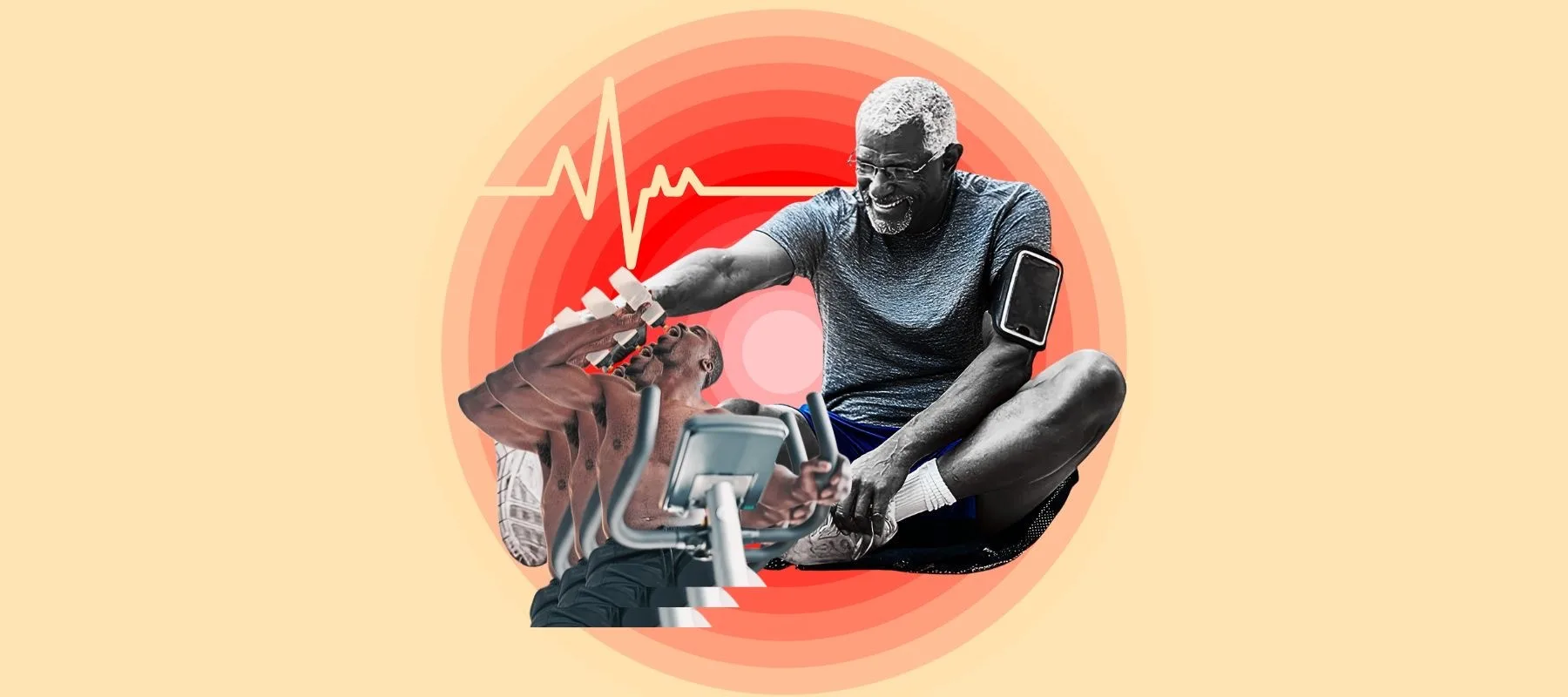
Every year, Men’s Health Week concludes on Father’s Day and this year is no different. The 2026 Men’s Health Week began on Monday, June 15, and concludes today, June 21, which is also Father’s Day. The timing of Men’s Health Week and Father’s Day is not a coincidence. It is a reminder for fathers who prioritise family over their wellbeing to take a step back and start to take their health more seriously. And nowhere in the world does the message resonate more than in Nigeria.
Nigerian men live an average of 54.3 years, the lowest male life expectancy on earth, far below the global benchmark of 73.7 years. The reasons are not mysterious. Men are dying from highly manageable conditions simply because they do not seek help in time. A middle-aged man walks into an emergency ward — or is carried in by worried family members — presenting with advanced organ failure, severe cardiovascular complications, or late-stage disease. When asked how long the symptoms have been occurring, the answer is often “months” or even “years.”
None of this is surprising. To admit to feeling unwell, let alone to book a doctor’s appointment, feels like a direct compromise of masculine authority. Add to that the economic reality: a father stretched across multiple jobs, eating whatever is available, with no gym, no time, and no health insurance, tends to place his own body last on the list.
But the body keeps receipts. So, BSide spoke with Ayokunle Badmus, a UK-based Nigerian musculoskeletal physiotherapist, about what Nigerian fathers can realistically do, within real constraints, to stay alive for the people who love them.
Dehydration does quiet, cumulative damage to kidney function, circulation, energy levels, and cognitive sharpness. In Nigeria’s heat, the standard adult recommendation of 1.5 to 2 litres a day is a floor, not a ceiling. “You can’t go wrong, you can never go wrong with water,” Badmus says. For men doing physical labour or working long hours, the deficit builds faster than they realise.
Hard labour is not exercise. A man who works on his feet all day has not moved his body well, he has stressed it. Badmus draws the line clearly: “There’s a difference between stress and exercise,” he says. A short leisure walk after work does something labour cannot: it lowers cortisol, improves cardiovascular function, and resets the nervous system. It costs nothing.
No gym required. Squats, spot jogging, skipping ropes, and makeshift weights all count. “You can do a squat in the home. You can use makeshift weights,” Badmus says. Muscle strength and joint integrity decline without consistent use and the decline is the kind you only notice when it becomes a problem.
The diet doesn’t have to be perfect to be improved. “If one can take oranges with whatever one takes, or carrots, that would be great,” Badmus says. Affordable fruits like these provide micronutrients that support immune function, cell repair, and metabolic health, things the body draws on silently, every day.
Sleep is not laziness. It is biological maintenance. “It’s the way your body tries to recover — you shut down and restart it, and you feel refreshed again,” Badmus says. Adults need six to eight hours daily, at minimum. Men who consistently sleep less accumulate a debt the body eventually collects, in the form of chronic fatigue, hormonal disruption, and weakened immunity.
Hypertension has no obvious symptoms until it becomes a crisis: a stroke, a heart attack, organ failure. Badmus recommends monthly BP checks at minimum, using the affordable electronic monitors that are widely available. “The moment you clock 40, try and make it a habit. If you are beyond 50, don’t joke with it,” he says.
The mind and body are not separate systems. “If your mental health is not great, the body just feels tired the moment the mind is tired,” Badmus says. Socialising — at church, a mosque, with neighbours or friends — is a free and clinically meaningful intervention. Laughter and connection lower stress hormones and improve cardiovascular outcomes. This is not soft advice.
Both are more destructive than most men treat them. Smoking damages the lungs, the heart, and the vascular system progressively and irreversibly. “Smoking is entirely terrible for your physical health,” Badmus says. Alcohol compounds stress on the liver and disrupts sleep quality even when it appears to aid it. Reducing either, or stopping entirely, is one of the highest-return health decisions a man can make.
Nigerian men are conditioned to absorb discomfort as proof of strength. Badmus flags the warning signs that must not be ignored: persistent headaches that don’t respond to medication; sustained elevated blood pressure; body pain that won’t ease with rest; numbness or tingling in the limbs; changes in bowel or bladder function; recurring fever; unexplained weight loss. “Please be sensitive as men,” he says. “Be sensitive to your own body.”
Everything on this list points here. Many men view a hospital visit as a last resort, choosing instead to “ride out” the pain, ignoring early warning signs like persistent headaches, chest discomfort, or unusual fatigue. Badmus’s advice: “Please see a doctor when you notice a change in your body.” Not when it becomes unbearable.