


Tune in to listen
Bounce FM

These are some of the biggest storylines we feel have defined the season so far, and could yet have a say in how it unfolds.
This international break, which began on Monday, September 21, and will run until October 6, 2026, will be the longest one yet. After a round of UEFA Champions League matches, some four, five and seven league matches across Europe’s top leagues, and a couple of cup games in between, the 2026/27 football season has entered its usual September international break, but this one will span three weeks.
The usual gloom that comes with the international break has settled over fans once again, although there should be some respite in knowing the reason FIFA decided to merge the usual October window into a single 16-day break. The move was made over concerns for players’ welfare following the expanded 2026 World Cup, which took six weeks to contest through the summer, and means this new September-October schedule is set to remain in place until at least 2030.
Already, this fledgling football season has given us plenty to talk about, and these are particularly worth revisiting as the international break takes precedence, especially since these are bound to influence the remainder of the season one way or the other. These, then, are some of the biggest storylines we feel have defined the season so far, and could yet have a say in how it unfolds.
🌕🌍 Mbappé says he wants to dedicate the Ballon d’Or to Africa: “I have never lost the connection with my roots and my origins. Every time I go to Africa, I feel the love from the people.”
“I’ve always felt very loved on the African continent. I hope I can leave with the Ballon… pic.twitter.com/6Ndsbc66vQ
— Fabrizio Romano (@FabrizioRomano) September 22, 2026
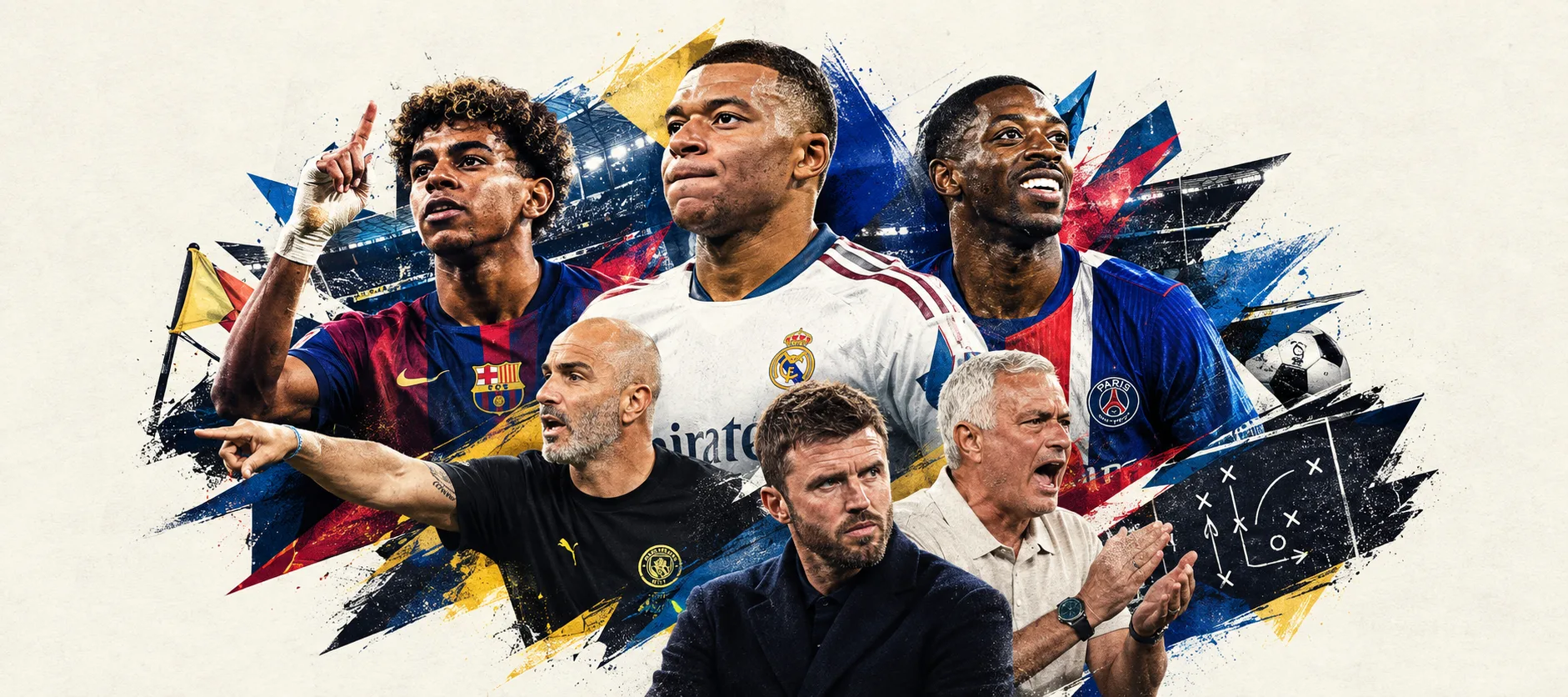
The 2026 Ballon d’Or ceremony will take centre stage at the London Palladium Theatre in England on October 26, a few weeks after the first international window of the season packs up. Unlike what we have seen in recent times, the campaign for who’s the most deserving of football’s most coveted individual award has developed into quite the contest, with players and coaches themselves leading the campaign in not-so-subtle fashion.
Real Madrid forward Kylian Mbappé and Barcelona youngster Lamine Yamal have been among the most vocal of the bunch, while Paris Saint-Germain’s Fabián Ruiz and Ousmane Dembélé, the current holder of the award, have also touted their own claims in no small way. Real Madrid’s manager, José Mourinho, also implicitly threw his weight behind Mbappé.
“You cannot give the Ballon d’Or to a player simply because he won the Champions League or the World Cup… The best player in the world is something else, and he is neither at PSG nor in the Spain team,” Mourinho said.
Mbappé? Despite a stellar individual run this summer, France finished shy of the podium at the Mundial, and Madrid weren’t exactly spectacular either. Yamal? The 18-year-old can boast of a league title and a World Cup, but falls short in goal contributions, which have almost become a requirement for the forwards who have won the award in recent years.
PSG’s Dembélé and Fabián had a stellar club season with the French giants, defending the Champions League title and their domestic dominance, though Fabián also has a World Cup trophy to his name.
Just maybe, the Ballon d’Or “is going to stay in the hands of a PSG player,” as Dembélé asserted. But wherever it eventually turns, likely among the aforementioned names, it could be one of the most divisive editions in recent times.
🚨 Michael Carrick: “I totally understand the feelings of the supporters. We have to accept it. I totally accept it”.
“It’s on me ultimately: as a team what we look like, how we play and what results you get. I take that”. pic.twitter.com/OI7AGVbf4k
— Fabrizio Romano (@FabrizioRomano) September 17, 2026
The opening months of the season, particularly in the Premier League, are always a period of intrigue for many reasons, including how quickly the pressure begins to build on managers.
This season is no different. The early conversation has already centred on Tottenham Hotspur’s manager, Roberto De Zerbi, who, despite the club spending over £300 million in the summer window, had not won any of his opening five league games. Spurs headed into the break bottom of the league, level on two points with 19th-placed Fulham, a direct indictment of new gaffer Álvaro Arbeloa, whose last commitment was in the dugout at the Santiago Bernabéu.
Another major point of attention is Michael Carrick’s Manchester United, who have also endured a difficult start. 12th on the log after just one win in five matches, and already eliminated from the Carabao Cup after losing to a much-rotated Brighton side from two goals up, is far from a decent start for a Manchester United manager, and does raise the question of how long the young manager can survive after the international break.
Manchester City under Enzo Maresca this season:
▪️7 games
▪️7 wins
▪️20 goals scored— ESPN UK (@ESPNUK) September 20, 2026
One of the more interesting early-season storylines has come from Manchester, where Manchester City have begun life without Pep Guardiola with few, if any, hitches. Five wins from as many games, including the infamous derby victory at Old Trafford, mean City stand as the only unbeaten side heading into the break, all under the stewardship of Enzo Maresca.
The Italian was, of course, significantly backed in the summer, but considering the possible challenge of replacing a gaffer like Pep, alongside the exodus of first-team players the Mancunian side also lost, Maresca’s task was always going to be a huge one. The former Chelsea boss, however, seems to be doing well.
A perfect start to the season isn’t as much of an indicator as a losing start to it, but if anything at all, these opening weeks have offered encouraging signs for Maresca and the Project at City.
But the real test remains after the break. Whether City can maintain this level across the league, Champions League and domestic competitions will ultimately tell us much more than these opening weeks can.
If there is one thing the opening weeks of the season have reminded us of, it is that football’s officiating conversation is nowhere close to disappearing.
From controversial VAR decisions to the interpretation of handballs, penalties and red-card offences, refereeing has once again occupied almost as much conversation as the football itself. A Squawka review of VAR errors in the Premier League has already highlighted a number of contentious decisions from the opening weeks.
The Manchester derby, for instance, brought its own share of refereeing discussion, while the Madrid derby also became a talking point beyond the result itself, particularly following José Mourinho’s criticism of Álvaro Arbeloa’s response.
These incidents may appear isolated, but they form part of a wider question that football has continued to wrestle with: where does the line sit between human error, technological intervention and institutional consistency?
With so much of the season still to play, the officiating conversation is unlikely to disappear. If anything, the stakes will only get higher as the title race, European places and relegation battles begin to take shape.