



Tune in to listen
Bounce FM

At the recently concluded 83rd Venice International Film Festival, the film won two awards that affirmed its creative depth and masterful production.
For years, Nollywood has had a favourite address: Lekki.
Lekkification of Nollywood. We had so many movies showing “rural” life. New Nollywood now wants to start and end the movie in one Lekki shortlet 😭 https://t.co/cbhpB4SM1h
— P0liticalbaby 🇵🇸🇨🇩 (@P0liticalbaby) October 11, 2025
The penthouses are expensive, the weddings are bigger, the cars are shinier, and everyone somehow seems to have a driver. But as “Lekkification” becomes a growing critique of modern Nollywood, Dear Ajayi arrives with a very different proposition: what if a Nigerian film simply trusted ordinary family life to be interesting enough?
Directed, written, and produced by Damilola Orimogunje, Dear Ajayi is a period drama developed over nearly a decade, with development starting around 2017. It recently made history at the 83rd Venice International Film Festival as the first Nigerian film selected for the Competition section of Giornate degli Autori (Venice Days). At the festival, which ran from September 2 to 12, 2026, Dear Ajayi went on to win two awards that affirmed its creative depth and masterful production: the XXXVIII CICT-UNESCO Enrico Fulchignoni Medaglia Fellini 2026 and the Bisato d’Oro for Best Cast and Performances.
The former award is given to a film that best embodies cinema’s humanist purpose; an appreciation of Dear Ajayi’s human-centered storytelling and emotional weight. The latter rewards the ensemble of Bimbo Akintola, Tosin Adeyemi, Lanre Hassan, William Benson, Antar Laniyan, and the wider cast for bringing the story to life.
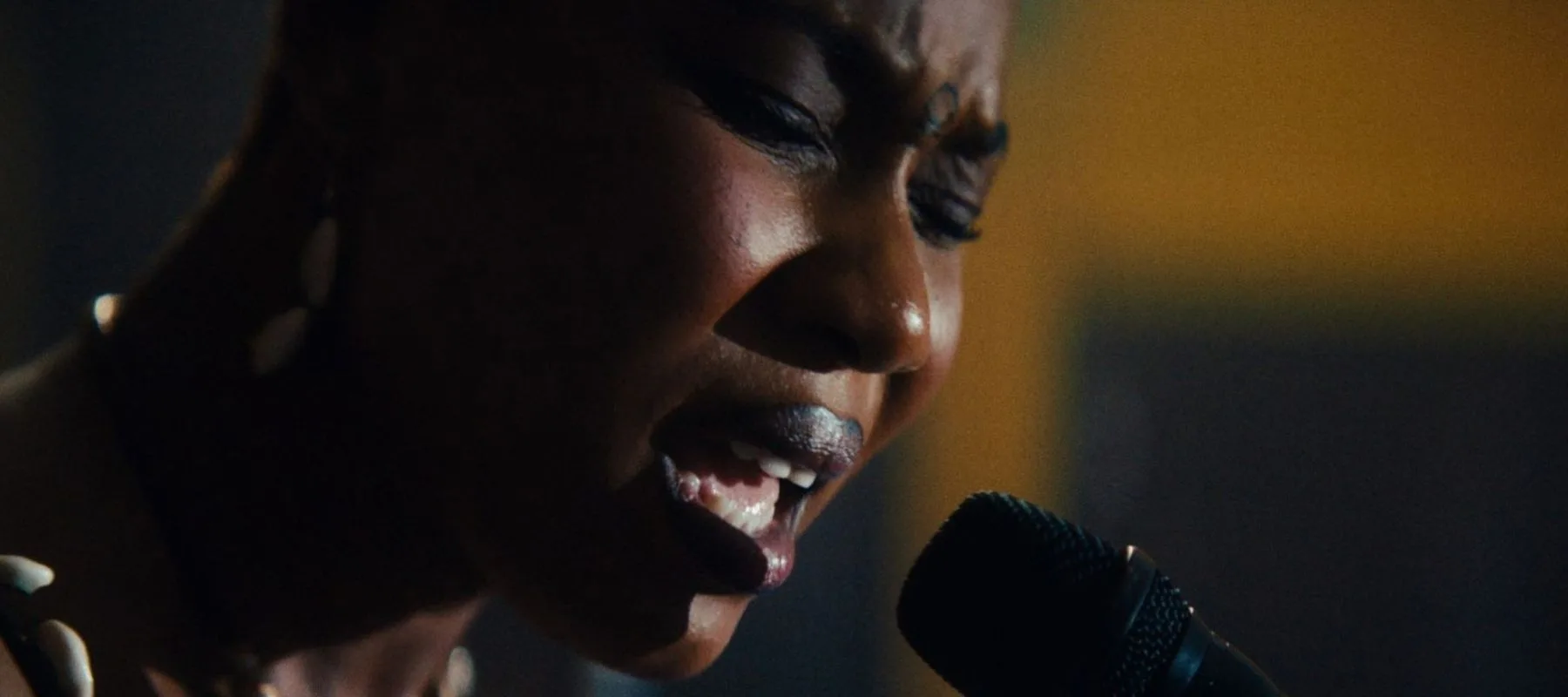
The production had international backing — it’s a co-production involving Nigeria’s 2o9ine Films, Depth and Optics Productions, and Zynox Productions alongside Germany’s Mayana Films — but the story, shot in Ibadan, is entirely Nigerian, with dialogue that moves between Yoruba, English, and Igbo. Set in southwestern Nigeria in the 1990s, it follows two estranged sisters, Ade (played by Bimbo Akintola) and Titi Ajayi (played by Tosin Adeyemi), forced back under one roof after their father’s death and their mother’s (Lanre Hassan) paralysis. Ade is a devoted Christian and breadwinner, while Titi is an upcoming singer who feels judged for her more secular lifestyle, creating a real and familiar tension in their household.
In an ultra-religious but officially secular country, these are tensions that families navigate daily — conservative and nonconformist family members living together under the same roof — making Dear Ajayi a relatable story for millions of Nigerians.
That relatability is the product of a creative philosophy. Orimogunje has spoken about being drawn less to dramatic turning points than to the quieter, unresolved parts of family life: words left unsaid, sacrifices nobody acknowledges, dreams quietly set aside, and the way families keep loving one another despite the weight they place on each other. He has also said that the ordinary deserves the same cinematic attention usually reserved for the extraordinary and Dear Ajayi grew directly out of that instinct.
It shows in how he handles the sisters themselves. Ade and Titi are not written as hero and villain, saint and sinner. Orimogunje has described his approach as observation rather than judgment. “I try to approach every character with empathy, allowing contradictions to exist without seeking easy answers,” the filmmaker tells Giornate degli Autori. That restraint carries through to the filmmaking itself: shot entirely with a single lens, to preserve one unbroken emotional perspective, with music and stillness left to carry what dialogue could not. As he has put it, cinema is at its most powerful when it trusts audiences to find meaning in “gesture, silence and everyday life” rather than explanation.
That’s a formula, not just a mood: quiet observation, restraint, and a camera that trusts silence over spectacle. Nollywood doesn’t have to abandon glamour; big, aspirational stories will always have an audience. But Dear Ajayi proves Nigerian audiences can still be moved by stories that look and feel like their own lives. That’s what turned a near-decade-long passion project into a Venice prizewinner, and what makes it resonate with anyone who’s seen their own unfinished conversations and unspoken sacrifices reflected on screen.
Dear Ajayi arrives in theatres on November 13, 2026.