



Tune in to listen
Bounce FM

This One Is Personal is a mature, affecting record, one that both demands and rewards patient listening.
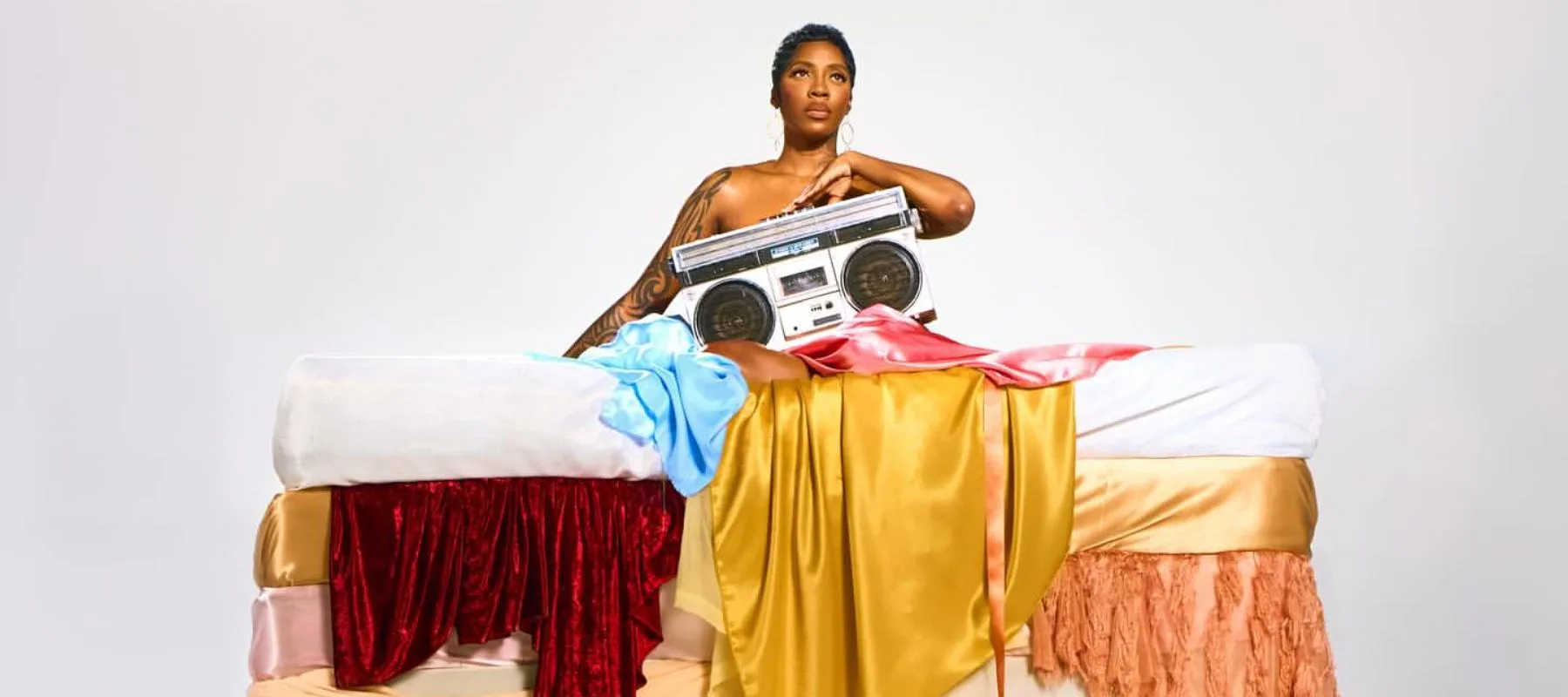
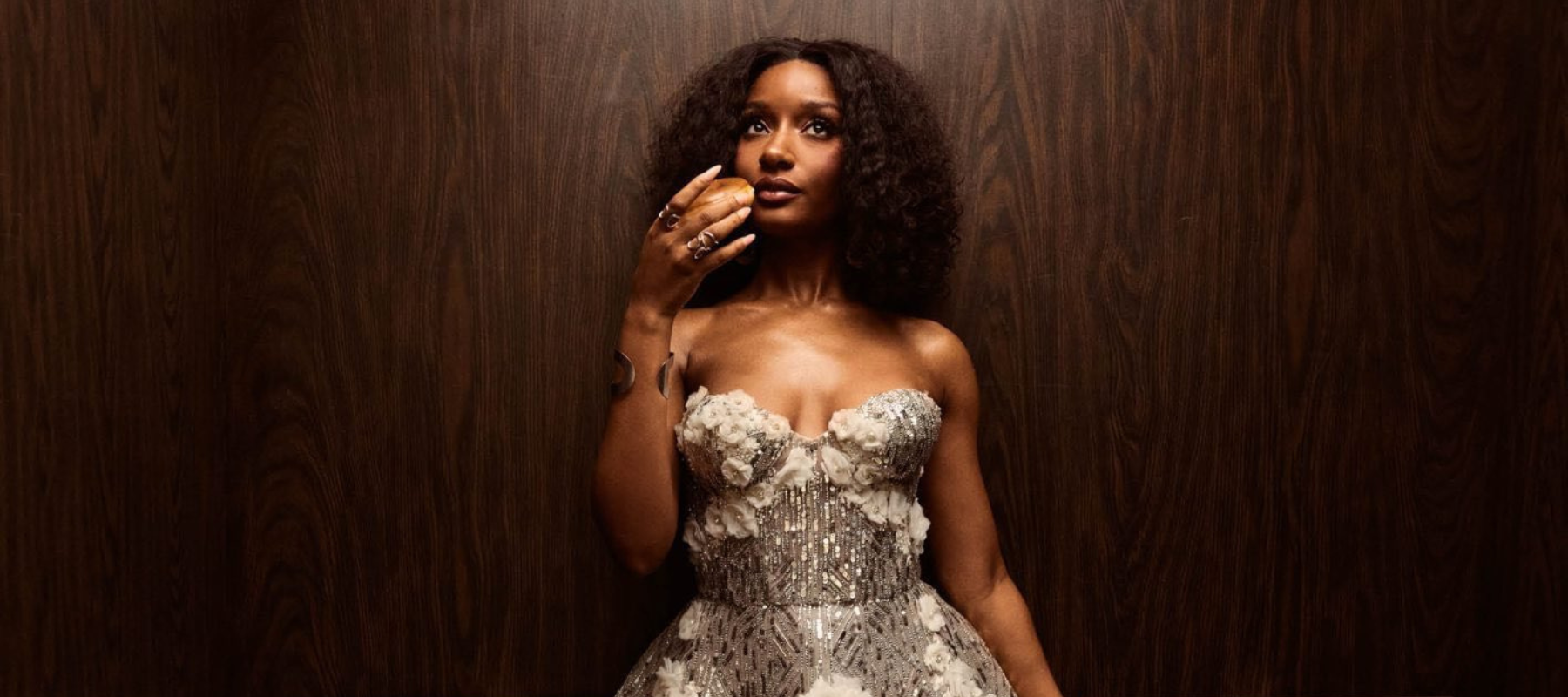
The “personal” album is a curious and durable pop institution. It functions as an apparent tearing-down of celebrity artifice that simultaneously builds a new, more “authentic” persona. It’s a transaction in which the artist offers up what feels like genuine vulnerability, and the audience, in turn, offers a more intimate form of attention. What, then, is more personal for an artist than to grant you full access to the messy, complicated, and often contradictory interior of their heart? This One Is Personal, Tiwa Savage’s new 15-track R&B and soul album, positions itself as precisely that. It is a record that finds the Queen of Afrobeats and one of the defining voices of contemporary African music as an everywoman singing her ass off.
For those who have followed Tiwa’s trajectory — from her training at Berklee College of Music to her work as a backing vocalist for Beyoncé, Whitney Houston, Mary J. Blige, George Michael, and so on, and later her emergence as a pop star in her own right — one thing has always been clear: R&B is her native idiom. Her coronation as the Queen of Afrobeats meant submitting, at times, to the genre’s vigorous demands. But she never abandoned her artistic marrow. It tracks, then, that she would wholly utilize this foundational identity as the vehicle for what is meant to be her most personal work to date.
The album opens with a simple “I’m Done.” Over a sparse piano line, Savage’s voice is close-miked and unadorned, tracing the immediate aftermath of a shattered relationship. “I don’t wanna love again, I’m finished / Oh, I’m done,” she sings, her delivery imbued with a weary fortitude. It’s a powerful opening statement, establishing the album’s emotional terrain as a place of painful, necessary reconstruction. This resolve, however, proves to be fragile. The record’s thesis does not ply a linear path. An interlude midway through the album finds her in a far more broken state, the strength of the opening track having dissolved into a pool of doubt. From this contemplative starting point, the album explores the various chambers of a heart in flux.
“Angel dust” is a midtempo warning shot, a slinky track where a confident Savage lays down the terms of engagement for a new lover. The production here is slightly fuller, but the focus remains on her thrilling presentation. She then dips into a well of clear influences, demonstrating her deep knowledge of the genre she’s fully inhabiting. “You4Me” is a delicious sample of Tamia’s “So Into You.” On “Holding it Down,” the production is a very nostalgic nod to classic ‘90s R&B, and Savage responds with a fluid flow that proves she’s as much a student of rhythm as she is of melody. The subtle, cool-toned jazz inflections of “10%” further showcase a musician operating at the peak of her interpretive powers.
Throughout This One Is Personal, the central protagonist is Savage’s voice itself. It almost feels absurd to imagine anyone doubting her vocal power with the copious evidence already on record — the Brandy-assisted “Somebody’s Son,” “Get It Now,” Get Low,” “Hold Me Down,” and many more, but if those doubts ever existed, Tiwa Savage kills them stone dead. This project demonstrates her voice as a remarkably supple and textured instrument, capable of expressing a vast emotional spectrum.
On the heart-on-sleeve balladry of “Scared of Love” and “Pray No More,” it is fragile, trembling on the edge of breaking. On “Will I Run Again,” a clear album highlight, it soars with a lament for her own open-heartedness, a curse she seems unable to shake. “Sometimes I’m foolish / Truly, sometimes I’m good / But I need to be selfish,” she soliloquises. But on “You’re Not the First (You’re Just the Worst),” she goes full gladiator. Here, Savage exposes the full might of her vocals, her voice soaring through a series of breathtakingly complex runs. It’s a show-stopping performance that feels entirely earned, a moment of cathartic release that is as technically impressive as it is emotionally raw.
Not every cut lands as cleanly. “Addicted,” with Nigerian alt-R&B artist Taves, folds in his synthpop tendencies, and while the chemistry is there, the track feels a little detached. However, the true lacerating glory of this record lies in its refusal to offer a simple story. Savage gives voice to the warring factions that occupy a single, wounded heart. “For One Night” articulates the yearning of wanting a fleeting physical connection to blossom into something more, a feeling of vulnerability cloaked in the supposed nonchalance of a hookup.
“I’m done,” she sings at the beginning. By the end, we are not so sure she is. After all the pain, the self-reflection, and the moments of reclaimed strength, the album closes with “Change” — a duet with James Fauntleroy — on a note of utter surrender. “Just tell me what to change into / ‘Cause I wanna be the one in love with you,” she pleads, offering to contort herself into whatever shape her lover desires. It is a beautiful and somewhat tragic conclusion. It’s not a definitive happily-ever-after but in any case, happily-ever-afters do not exist.
Where the album presents a more iffy case is in its lyrical content. To be clear, Tiwa Savage can write. She’s known how to make words do more than they should. Across her catalogue, she has rendered lines that stick, because they’re witty, sharp, lived-in, and resonant. On This One Is Personal, that gift feels underused. For all the technical sophistication of Savage’s vocal performance, the words themselves often traffic in an almost startling simplicity. This is not, in itself, a weakness; such plain-spoken declarations can feel disarming, especially when carried by the strength of her voice. But it also means that the towering weight of her vocals sometimes outpaces the depth of the lyric, the grandeur of the performance falling onto words too thin to hold it. There’s a sense that she’s adhering to a perceived R&B script, but her natural poetic instincts don’t fully translate.
This One Is Personal is a good album about love; it might have been a great one had it ventured further into the fuller contours of the “personal.” Love has always been Savage’s dominant subject, and she treats it here with conviction, but the focus rarely strays beyond heartbreak, yearning, and desire. The title sets an expectation of intimacy that the material does not fully deliver. To call an album personal suggests an opening into the textures of her individuality. Instead, the album deflects towards circling the same emotional ground she has tilled for years. The absence is not of confession for confession’s sake, but of the kind of specificity that could have turned a strong album about love into a more expansive portrait of Tiwa Savage herself.
None of this takes much away from the fact that This One Is Personal is a mature, affecting record, one that both demands and rewards patient listening. It’s as much about Tiwa the grown woman as it is about Tiwa the unflinching one, the artist who has lived through a complicated public life yet never seemed afraid to say what she wanted or to live as she pleased. She is the kind of woman who can do whatever she likes, and what she likes is to simply be herself.