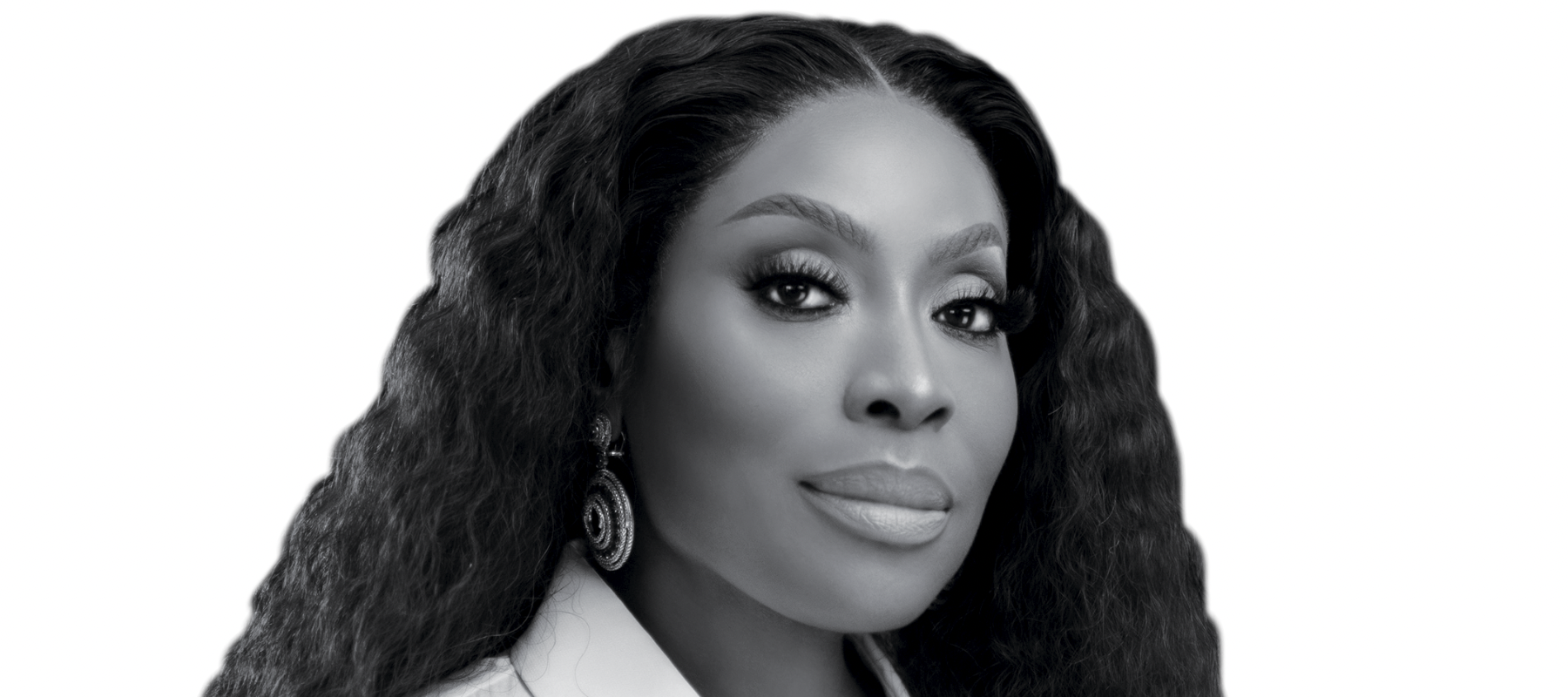



Tune in to listen
Bounce FM

In this conversation with BSide, Nissi Ogulu shares the drive behind her layered career and how each endeavor contributes to her broader mission for Africa’s growth and innovation.
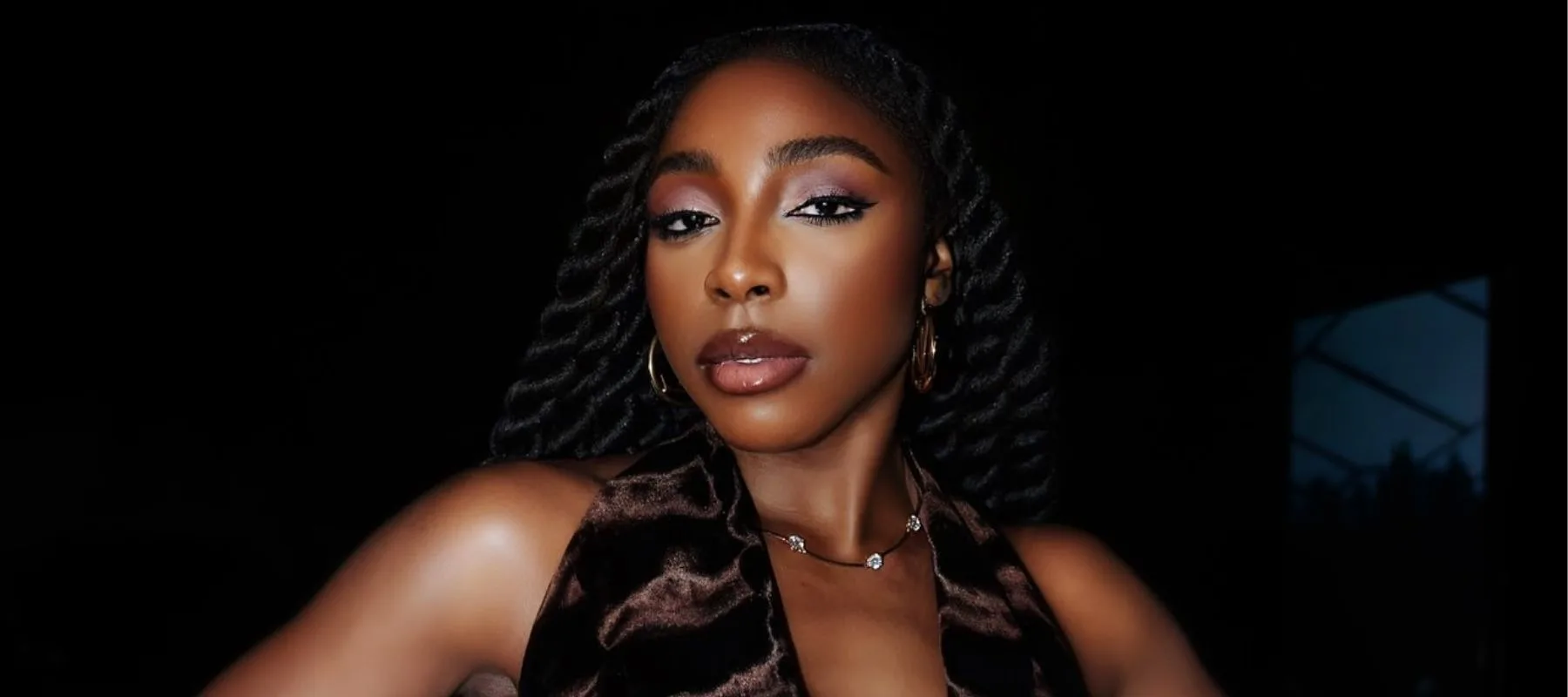
Nissi Ogulu has a clear vision and pursues her goals with as much intent and resolve as one can muster. With regards to her multidisciplinary layers, only a few, if any, Nigerians are leaving distinct marks in the worlds of music, animation, and technological innovation the way she is. Far from operating on the margins of these distinctive fields, Nissi’s foray into each is built on natural inclinations, ones that her structured upbringing helped her tap into early and sustained over time. All she pursues now has been incubating for decades, the sum of which makes the inexorable components of who she is today.
Nissi took to music as a child, influenced by her surroundings, especially her mother, Bose Ogulu, the renowned talent manager behind her superstar son Burna Boy and Nissi herself. Currently signed to Spaceship Records, her discography includes the critically acclaimed 2020 debut EP Ignite and her sophomore project Unboxed, which was preceded by the lead single “Nobody” featuring YBNL poster boy Fireboy. She has also made her mark with performances at Afronation 2023 and her debut headline show at London Square in March 2024.
Her inventive disposition reflects her academic discipline in Mechanical Engineering, which she majored in at the University of Warwick in the United Kingdom. This path led her to Jaguar Land Rover, where she ran a full course from intern to project engineer and later lead project engineer, contributing significantly to the design and production of automobiles, including the Range Rover, over the five years she spent there Today, she is championing Africa’s early adoption of electric vehicles through Kemet Automotive, an African-centred EV production company she co-founded with Rui Mendes Da Silva, an entrepreneur with a vast experience in the electric mobility space.
Beyond that, Nissi is also the founder of Creele Animation Studios, a trans-media startup dedicated to telling African stories through 3D animation. Earlier in August, Creele Studios released the trailer for Sopo, its sophomore project inspired in part by Fela Anikulapo Kuti’s memoir, Dis Fela Sef! The Legend(s) Untold.
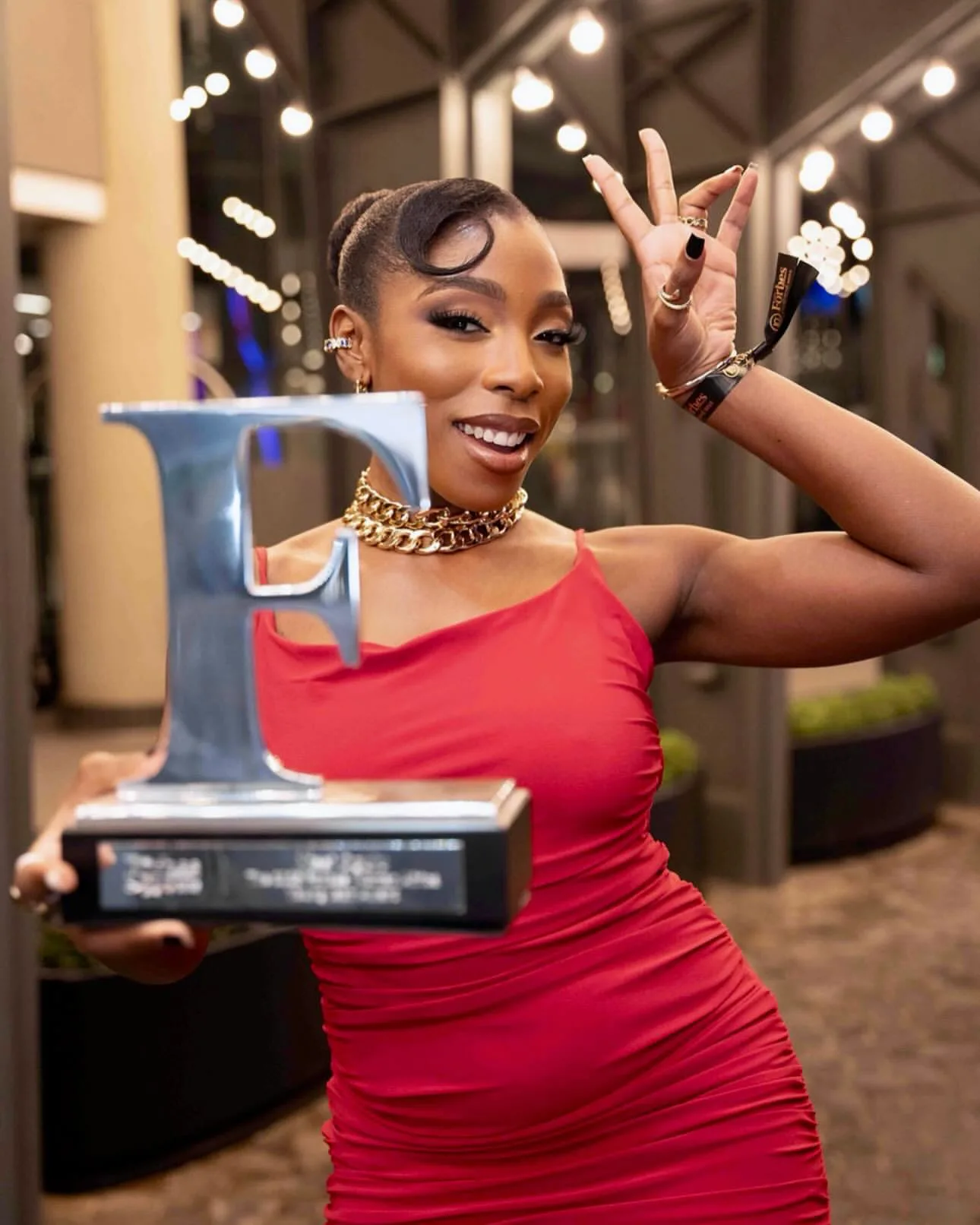
These undertakings, along with her expression through visual art, feed into Nissi’s broader vision of making meaningful contributions to the world around her. “I want to use everything that I have for something that goes way beyond me, to impact as many lives in the world as possible,” the 2025 Forbes Youth Icon told BSide. That is why she sings, why she creates art, why she tells impactful African stories, and why she is advancing solutions for the continent’s mobility needs.
In this conversation with BSide, Nissi Ogulu shares the drive behind her layered career and how each endeavor contributes to her broader mission for Africa’s growth and innovation.
This interview has been edited for brevity and clarity.
Across your multiple pursuits, what excites you the most or currently holds more of your attention, and why?
I can’t really single one out because they are all components of who I am, so they excite me equally. Although depending on what’s happening at a given time, one may demand more of my focus than the others, but that doesn’t make it any more important in the bigger picture. It often comes down to the day of the week and what’s on my schedule. If I’m releasing a project for Creele Studios, for instance, I’m excited about that work. If I’m recording a new single, I’m thrilled to be in the studio expressing myself through music. If I’m preparing for an exhibition, I’m in the art studio. Actually, many times, they overlap, and I’ll find myself working across all four in a single day. I just know how to morph myself into what each one requires at the snap of a finger. I guess if somebody were to ask me what my superpower is, I’d say it’s making everything work at once.
Are these different paths feeding into one bigger vision that you have, or are they passions you’re nurturing independently?
My bigger vision as a whole is to create a legacy that impacts people around the globe. Like I used to say, I want to use everything I have for something that goes far beyond me; something that touches people’s lives, as many as possible, and leaves a mark on the world. I’m a firm believer in leaving things better than I found them, and that’s what I want to do with everything I’ve been given. I feel as though I’ve chosen this duty, and the beautiful part is that it also feeds into my own experience of life, allowing me to express myself in ways that are fulfilling. It makes life full for as long as I’m here to live it.
You’ve recounted in past interviews how your family played a huge role in taking to music early on. How about the other career you’re charting? What were the origins?
I think I just had an innate talent for these things, and coincidentally, the way my upbringing was structured allowed me to tap into them early. My mom had a music school, and that’s where I discovered I could play the keyboard quite well for my age. I started around four or five, and by nine, I was singing, creating melodies on the keyboard that people seemed to enjoy.
With art, I loved cartoons. I remember drawing Spider-Man after watching a cartoon and realising that I enjoyed it and seemed to be good at it, so I kept at it. At the same time in school, I discovered I was more interested in science subjects because of how logical they are, so that became my thing. My curiosity about how things work, particularly cars, also shaped my background. I picked the car bits from my dad. He’s arguably the best driver I’ve ever seen, with almost a sixth sense for cars. As a daddy’s girl, I naturally picked that up from him, and unintentionally, he passed down his love of cars to me.
When the time came to choose what to study, I leaned toward aeronautics because of my love for gadgets and aeroplanes. But eventually, we settled on Mechanical Engineering because it was broad enough to cover all my interests and gave me the freedom to explore different paths without being boxed in.
What has been your biggest “I did it” moment so far operating across these fields?
That’s an interesting question. I’d say a monumental “I did it” moment is still brewing, but for now, I’d say my debut American headline show in New York on March 15 last year. The second is the creation of our first prototype car in 2022/23. A fully functional SUV built entirely from our own design and technology. It seemed impossible, but we basically created a car from nothing. We did it, and it was the clearest sign yet that we’re on the right track.
Speaking of prototypes, vehicle manufacturing isn’t a common venture in Africa, let alone electric vehicles. But your startup Kemet Automotive has set out to bridge the gap. What made the audacious leap into EVs so important for you?
When you have a vision, you owe it to yourself to give it everything you can. None of the things that I am doing today sprang on me in recent times; they’ve all been incubating for decades. And for me, the automotive space is especially personal. I grew up Pan-African, surrounded by stories of pride, resilience, and the responsibility to push our continent forward. My grandparents were part of African reforms, and from them I learned both the heights of excellence we once reached and the urgency of reclaiming that spirit. That sense of duty fuels me.
At the same time, I care deeply about change that creates real progress: sustainability, industrialisation, infrastructure, and projects that can strengthen our economy. With the world transitioning to clean energy, mobility feels like the logical front for Africa to step into and we cannot afford to miss this wave the way we missed the industrial revolution. Dependence on oil is no longer viable; costs are rising, scarcity is increasing, and it is not sustainable. We cannot continue to depend on the same finite resource that is not beneficial to sustainability at the end of the day.We’ve missed a lot before. So how do we catch onto a wave that can allow us to actually have a standing world? The Chinese have done exceedingly well, but they’re coming from a place where they were even in a worse condition than we were. So we have no excuse.
EVs give us a chance to innovate, create jobs, build industries, and solidify our place in the global market. Of course, it has been tough. You cannot approach this with naivety, the realities across Africa are complex, and even understanding how systems work in Nigeria alone can feel like a puzzle. But we have to find a way. Ultimately, Kemet Automotive is about using my expertise in mobility to position Africa at the forefront of sustainability while also improving employability, infrastructure, and industrial growth. I believe it’s an essential step — one that ensures we begin to play a bigger role in the game of the world at the moment.
That was insightful. And like you mentioned, operating in Nigeria is a different game entirely, as is the continent at large. Considering this reality, how has it been advancing the startup?
It’s been challenging, surprising, and humbling. I’m not going to mince my words.
Look at it this way: we’re building a product meant to improve people’s lives, but to make that happen you need the support of policymakers and regulators. In an ideal world, they should always advocate for what’s best for the people, but it doesn’t always work that way, and that’s where the biggest challenges lie.
At the same time, the good news is that this isn’t the standard across the continent. I’ve been pleasantly surprised by how progressive and forward-thinking many African countries are. They may not have the market size of Nigeria, for instance, but they often bring a level of professionalism, attention to detail, and willingness to execute that’s inspiring. So, in a way, you’re balancing two sides of a coin: progressive enablers on one side, and a massive consumer market like Nigeria on the other. The task is marrying those two realities while still pitching a product that is Pan-African in nature. Of course, politics can complicate that, everyone wants their own slice of the pie. But the truth is, we’re stronger if we stop competing with each other and focus on competing with the world.
The most humbling part, though, has been engaging directly with people and hearing their hopes and struggles during our market analysis. Many want products that look good, feel good, and genuinely improve their lives, but they’re stuck because opportunities and resources aren’t available to them. There are brilliant graduates with strong qualifications who can’t find decent jobs, or whose starting salaries are shockingly low.
So for us, knowing that what we’re building could create jobs and give people a chance to use their skills is something we don’t take for granted. On tough days the belief that our work can touch lives in a meaningful way fuels us.
Are you still on track to launch the first cars in 2027, like you’ve previously stated?
Yeah, 2027 is our tentative timeline for rolling out the first batch of cars. We hope we don’t come across major setbacks, but if they come, we’ll tackle them head-on.
As a creative, collaborations are essential. You’ve had quite a few, like your single “Nobody” with Fireboy and your art project with Slawn. What draws you to a potential collaborator?
Basically, anyone who’s a good person and talented. Damola [Fireboy DML] is a great guy and a good friend. Slawn, too, is smart and thoughtful in his approach to his craft. People like that are always a breath of fresh air, and with them, you can build genuine friendships and dynamics that allow freedom of expression and bring out the best in your art. Some others I’d mention are Teni and Olamide; their character shines through everything they do, and I love that. Generally, I’m a very open person when it comes to work. I can collaborate with anyone talented and fundamentally a good person.
Who are the people you’re looking to collaborate with across the board?
So many. As time passes, more incredible people emerge that I’d love to work with. There are so many, and the most exciting thing for me is that I’ve barely tapped into 20% of the collaborations I know are possible. In the American and African spaces, there are plenty I’d love to explore. My top-tier one, though, is Jay-Z. I’ve always been a huge fan. And at some point, my brother [Burna Boy] and I will collaborate. That’s inevitable, that’s my bestie.
View this post on Instagram
With Creele Studios, you’re operating in a distinct area of the entertainment industry. Why animation as a medium to tell these African stories?
Animation is a vital medium to connect with the younger generation. The goal is to portray the brilliance of African stories in a way that appeals universally, and I think it’s important we do this with animation. It’s a unique way to preserve our history, foster inclusion, and let people around the world see Africa differently if done right. More importantly, animation is a fantastic tool to tell stories without the limitations of reality. With it, you can visually express a feeling or motion you couldn’t otherwise conjure. From a business standpoint too, it’s a phenomenal way to feed back into tourism, entertainment, and even music. For kids especially, it’s a largely untapped market, and we’re glad to be leading the charge here.
You already have a lot on your plate, but are there spaces you haven’t ventured into yet that you’d like to explore?
Someone recently asked if I’d ever act, and honestly, I can’t say. Right now, I don’t have the bandwidth, but maybe I’ll dabble in it someday. I do love film, so maybe I’ll step from behind the lens to in front of it. We’ll see. It’s about the only thing I can think of right now, but maybe I’ll learn how to fly a plane one day.
What do you wish people paid more attention to or asked more about your work?
I wish people would look deeper. I wish they would do away with surface-level assumptions and actually see the person, the work, and define me based on that.