



Tune in to listen
Bounce FM

The ongoing violence in West Darfur has been described as the first genocide of the 21st century.
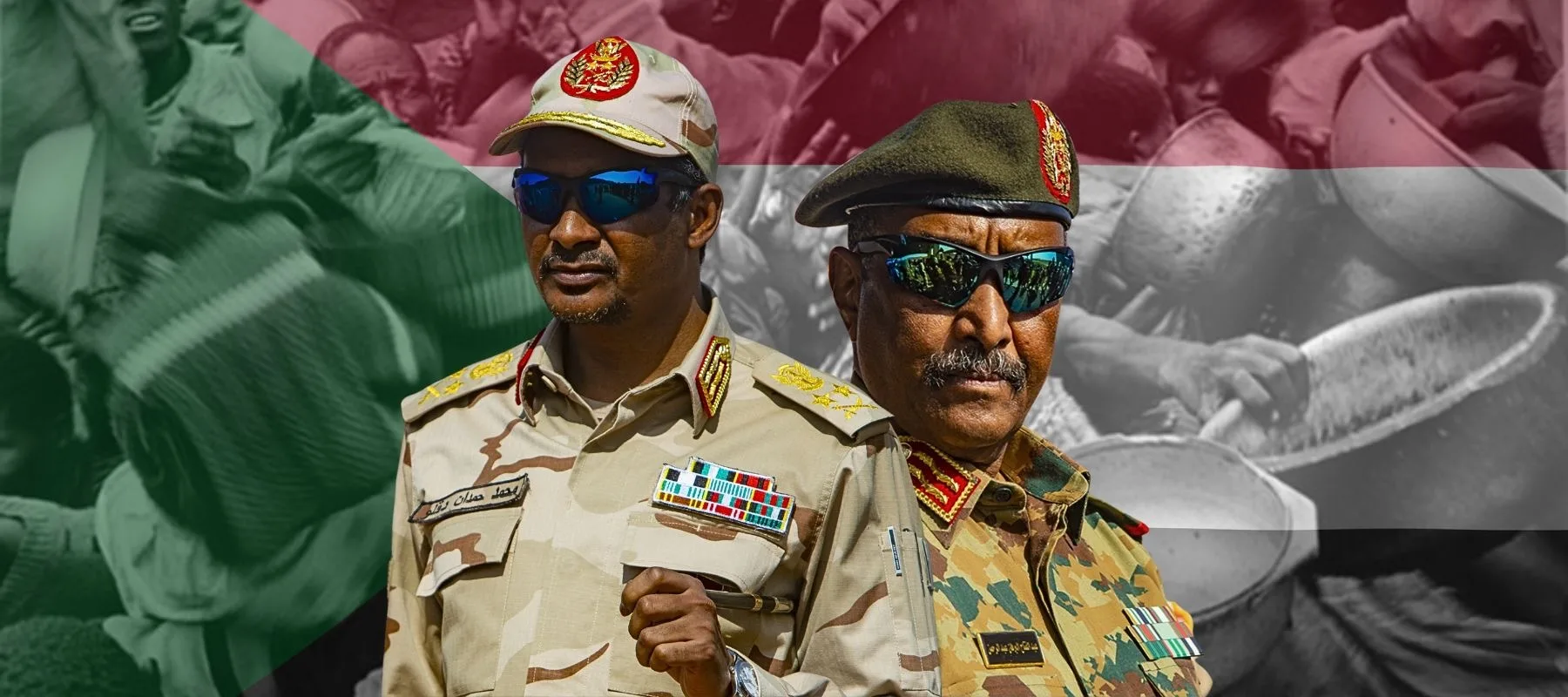
Sudan has been plunged into one of the world’s worst crises since April 15, 2023, when full-scale war broke out between the Sudanese Armed Forces (SAF) and the paramilitary Rapid Support Forces (RSF). What began as a power struggle between two generals has devastated the country, destroyed its capital, and triggered mass atrocities in Darfur that rights groups and survivors describe as genocide.
More than ten million people have been forced to flee their homes in just over a year. Around one million eight hundred thousand have crossed into Chad, South Sudan, Egypt, and other neighbouring states, creating the largest displacement crisis in the world today. Food supplies have collapsed, famine looms, and international investigations are underway into war crimes and crimes against humanity. To understand this conflict, it is necessary to look at Sudan’s political history, the rise of the RSF, the role of ethnicity and religion, and the catastrophic humanitarian fallout.
In 2003, rebel groups in Darfur accused the government of marginalising non-Arab communities. Then-President Omar al-Bashir responded by arming Arab militias called the Janjaweed. These militias carried out scorched-earth campaigns against groups such as the Masalit, Fur, and Zaghawa, burning villages, committing mass rape, and killing thousands. The International Criminal Court later indicted Bashir for genocide and crimes against humanity.
In 2013, Bashir transformed the Janjaweed into a formal paramilitary force—the Rapid Support Forces—under the command of Mohamed Hamdan Dagalo, widely known as Hemedti. The RSF grew powerful by controlling lucrative gold mines in Darfur and profiting from Sudan’s gold exports. Much of this gold moved through the United Arab Emirates, making the RSF financially independent from the state. Hemedti also sent troops to fight in Yemen on behalf of Gulf states, further expanding his reach.
After the 2019 uprising that toppled Bashir, the army under General Abdel Fattah al-Burhan and the RSF worked together to remove civilian leaders from power in an October 2021 coup. Tensions between them rose when plans were announced to merge the RSF into the regular army. Disagreements over command and timelines escalated until, on April 15, 2023, war began in Khartoum.
The conflict began with street battles in the capital. RSF fighters seized the presidential palace, the airport, and key bases, while the army bombarded them with airstrikes and artillery. Entire neighbourhoods became battle zones. Civilians were trapped for weeks without food, water, or power. Hospitals were destroyed or occupied by fighters. Families fled on foot or in overcrowded buses towards Port Sudan or Egypt.
But the most horrific violence has taken place in Darfur, especially in West Darfur’s capital, El Geneina. There, RSF fighters and allied Arab militias launched systematic attacks on the Masalit ethnic group. Men were shot in the streets, women and girls raped, and whole neighbourhoods burned. Community leaders were targeted for execution. Survivors fled across the border into Chad, joining camps now holding hundreds of thousands of Masalit refugees.
Local doctors estimate that at least ten thousand people were killed in West Darfur during the first months of the war. The United States government has declared that the RSF and its allies committed genocide against the Masalit. The United Nations has not yet issued a legal determination, but the International Criminal Court reopened its Darfur investigations in mid-2023, gathering evidence of ethnic cleansing, war crimes, and crimes against humanity.
Religion is not the central dividing line in this war as both sides and most Sudanese are Muslim. Instead, the violence reflects long-standing ethnic and regional tensions between Arab groups and non-Arab communities in Darfur. The RSF’s leadership and base are rooted in Arab tribes, while groups such as the Masalit have faced repeated persecution and displacement.
The humanitarian consequences are catastrophic. More than 12 million people have been displaced since April 2023, and 25 million now depend on humanitarian aid. Over three million children are acutely malnourished, and the United Nations warns that famine is imminent in Darfur, Khartoum, and Kordofan. The World Health Organization says only one in three hospitals in Sudan is still functioning. Measles, cholera, and polio are spreading due to the collapse of vaccination campaigns.
Humanitarian access remains restricted. Warehouses and convoys have been looted, aid workers attacked, and permission for cross-border operations delayed. Many areas are cut off entirely. Civilians in besieged neighbourhoods survive on leaves, foraged grains, or contaminated water. Aid agencies warn that more people could die from hunger and disease than from bullets.
Sudan’s economy is in freefall. The war has decimated the country’s infrastructure, destroyed businesses, and led to a near-total shutdown of banking and telecommunication services. The Sudanese pound has lost most of its value, banks have shut, and salaries go unpaid. Fuel and bread prices have soared. Farmers in Darfur and Kordofan missed planting seasons, while herders lost access to grazing routes. Gold remains one of Sudan’s only major exports, but its trade is dominated by networks linked to the RSF, deepening the conflict’s resource dimension. Widespread unemployment and the inability to access savings have left the population with no financial buffer, leaving them completely vulnerable to the ongoing crisis.
For those attempting to flee, the journey is fraught with peril. Civilians are subjected to arbitrary harassment and extortion at checkpoints controlled by both the SAF and the RSF. SAF soldiers often view anyone attempting to cross their lines with suspicion, sometimes accusing them of being RSF sympathizers, while the heavily-armed RSF militias operate with a brutal disregard for human life, killing and robbing civilians nonchalantly. The danger of encountering either side is so great that many people prefer to risk starvation and disease rather than attempt to cross.
This humanitarian crisis has disproportionately impacted women and children, who face heightened risks of violence, exploitation, and lack of essential services. The collapse of Sudan’s healthcare system has made reproductive care nearly impossible to access, putting countless new mothers at risk. Reports of gender-based violence, including sexual exploitation, abuse, and human trafficking, are alarmingly widespread, with survivors having little to no access to support. This vulnerability is particularly acute in Darfur, where ongoing ethnically-motivated violence have created an environment of extreme danger for women and children. Economic hardship has further exacerbated their plight, stripping women of their livelihoods and forcing them into desperate situations. The International Rescue Committee (IRC) has highlighted this crisis, noting that over 90% of the Sudanese refugees who have fled to Chad are women and children, many of whom arrive severely malnourished and in desperate need of medical care, including prenatal support and mental health services.
The conflict in Sudan has become a devastating proxy war fueled by external actors, primarily through the trade of Sudan’s most valuable resource: gold. The commander of the Rapid Support Forces (RSF), Mohamed Hamdan Dagalo, has leveraged his control over many of Sudan’s gold mines to secure significant financial and military backing, making him one of the most powerful men in the country. For years, the UAE has been a major destination for gold smuggled from Sudan. This illicit trade has provided Hemedti and the RSF with a continuous revenue stream, allowing them to purchase weapons, pay salaries, and fund their war effort. Numerous reports, including those from UN experts and independent analysts, have documented the flow of gold from RSF-controlled areas to the UAE in exchange for military hardware, including drones and armored vehicles. Despite denials from the UAE, evidence suggests this trade has been critical in sustaining the RSF’s military campaign.
In a move to hold the UAE accountable, the Sudanese government initiated legal proceedings against the country at the International Court of Justice (ICJ) in early 2025. Khartoum accused the UAE of complicity in the genocide in Darfur by providing extensive financial and military support to the RSF. However, in May 2025, the ICJ declined to hear the case, citing a reservation the UAE had made to the Genocide Convention. This reservation excludes the ICJ’s jurisdiction over disputes to which the UAE is a party, effectively shielding it from the lawsuit.
Beyond the UAE, other regional powers are also involved. Libya, specifically the forces of Field Marshal Khalifa Haftar in the east, has been a key transit point and supplier for the RSF. Reports indicate that Haftar’s forces have provided fuel, ammunition, and other supplies to the RSF through the porous border, helping to sustain the paramilitary group’s operations, particularly in the western Darfur region.
Mediation efforts have repeatedly failed. Talks hosted in Jeddah by the United States and Saudi Arabia broke down after both sides violated ceasefires. The African Union and IGAD have also attempted to mediate, but neither Burhan nor Hemedti have shown willingness to compromise. Meanwhile, the United Nations’ political mission in Sudan has been largely paralysed, with its staff relocated after attacks.
As of mid-2024, the SAF controls the east and north of the country, including Port Sudan, where the government now operates. The RSF holds much of Darfur, parts of Khartoum, and Kordofan. The front lines shift, but neither side has gained decisive advantage. Civilians continue to bear the brunt of shelling, airstrikes, massacres, and hunger.