


Tune in to listen
Bounce FM

As this year’s World Cup leaves with lingering feelings, memories and perhaps questions, Africa has left indelible marks in the global sports, and Burna Boy once again helps reinforce Afrobeats’…
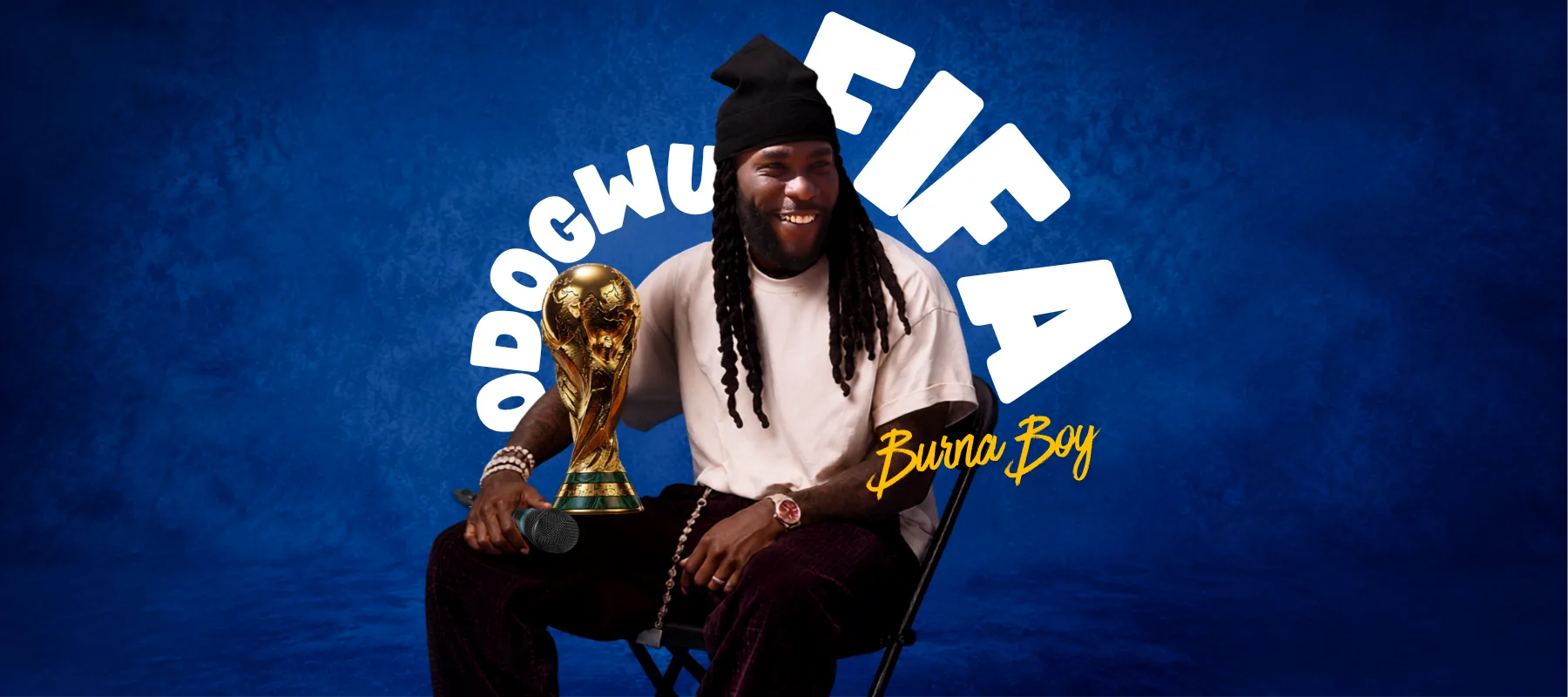
The 2026 FIFA World Cup came to an end in one of the most unforgettable moments in football history. Amid the celebration, blood, sweat, and tears was Africa permeating the hearts of viewers globally. And Nigerian superstar Burna Boy stood at the centre of this pivotal moment.
Decades back, whenever African artists appeared at global sporting events, they were either regarded as symbols of diversity or recognised among the spectators. Fast forward to recent times, they are increasingly becoming part of the architecture of these global moments. And the 2026 FIFA World Cup offered perhaps the clearest illustration yet with the appearance of Burna Boy, Rema, Ayra Starr, and Tyla on the tournament’s tracklist.
Burna Boy & Shakira PERFORM “DAI DAI” AT THE FIFA WORLD CUP FINAL HALFTIME SHOW! 🔥🏆 pic.twitter.com/mOXLYFOLsq
— BOUNCE (@bouncenetworks) July 19, 2026
While football produced its own defining narratives over the course of the tournament, music simultaneously wrote hers. Although these two elements have, from time immemorial, played together, the recognition hasn’t always been the same for African artists. Yet, at the centre of this year’s tournament was Burna Boy, whose presence stretched beyond a single performance into the very sound of the competition.
His voice on the tournament’s most defining records, “Dai Dai,” performance at the Opening Ceremony and inaugural FIFA World Cup Final Halftime Show helped set a monumental achievement for Africa beside the noteworthy performances from African football teams like Cape Verde and Egypt.
Burna Boy makes history as the only African artist to perform at both the FIFA World Cup Opening Ceremony and the Final Halftime Show. pic.twitter.com/r9N7rGqPEP
— BOUNCE (@bouncenetworks) July 19, 2026
The record, “Dai Dai,” a collaboration with Colombian icon Shakira, quickly proved its significance. Released as one of the tournament’s flagship songs, it debuted at No. 1 on the Billboard Global 200, becoming the first official FIFA World Cup song to achieve the feat. Opening with more than 41 million global streams in its first week, the record carried the momentum of the tournament long after the final whistle, recording another spike in streams as audiences revisited the competition’s biggest moments.
“Dai Dai” by Shakira & Burna Boy spends a 14th day at #1 on Global Spotify with a new peak in daily streams (4.921 million). pic.twitter.com/YIJjsrhTcL
— Pop Crave (@PopCrave) July 20, 2026
On paper, those are impressive numbers. But the track’s real achievement lies more than that. For years, Shakira has been inseparable from football’s biggest stage. “Waka Waka (This Time for Africa)” became synonymous with the 2010 World Cup, while “La La La (Brazil 2014)” reinforced her place within FIFA’s musical legacy.
Shakira and Burna Boy's "Dai Dai" rises 4-1 on this week's Latin Airplay chart.
It earns Shakira her milestone 25th No. 1 on the chart, extending her record for the most among women. It also earns Burna Boy his first No. 1 on the ranking.
— billboard charts (@billboardcharts) July 21, 2026
But Burna Boy’s inclusion on “Dai Dai” represented more than another international feature; it signalled another establishment of cultural influence where an Afrobeat act is helping define the soundtrack to one of the world’s largest cultural events.
Although this shift has been unfolding for some time, the Grammy winner has remained one of its most visible protagonists. His relationship with football predates this World Cup. In 2023, he became the first African artist to headline the UEFA Champions League Final Kick Off Show, placing Afrobeats before one of sport’s largest live audiences. Since then, his stadium tours across Europe and North America have further blurred the boundaries between African music and mainstream global entertainment.
His return to football’s biggest stage in 2026 continues a trajectory that has steadily redefined what an African artist can represent on the international stage.
Yet the African Giant’s World Cup moment also belongs to a much broader story. The globalisation of Afrobeats has never been the work of one artist. It has been built through a collective push that has seen Nigerian and African musicians occupy increasingly prominent positions across international music and sport.
Nigerian musicians have been well represented at some of the world's largest footballing events 💚🎵 pic.twitter.com/2uqcWpcvlV
— ESPN FC (@ESPNFC) October 31, 2023
In 2023, Rema performed at the Ballon d’Or Awards with his global hit “Calm Down,” while Davido helped usher Afrobeats into the Qatar 2022 World Cup with his voice on the official FIFA soundtrack, “Hayya Hayya,” alongside his performance at the Closing Ceremony. The singer also marked his second consecutive appearance with a headline performance at the FIFA World Cup 2026 Countdown Concert. Also, artists like Tems have expanded the continent’s influence at the first-ever FIFA Club World Cup Final Halftime Show, and at other sport tournaments like the 2023 NBA All-Star Halftime, and at the F1 75 Livery for Aston Martin.
Tems performing Higher for @AstonMartinF1’s Unveiling at #F175LIVE, O2 Arena 👑✨ pic.twitter.com/GsXJPuWZCP
— tems 𝖘z𝖓 (@temsszn) February 18, 2025
Football, perhaps more than any other sport, mirrors shifts in popular culture. As it becomes more global, so too does the music. And the increasing presence of African artists within FIFA’s music lineup is an acknowledgement of how contemporary popular music is being shaped.
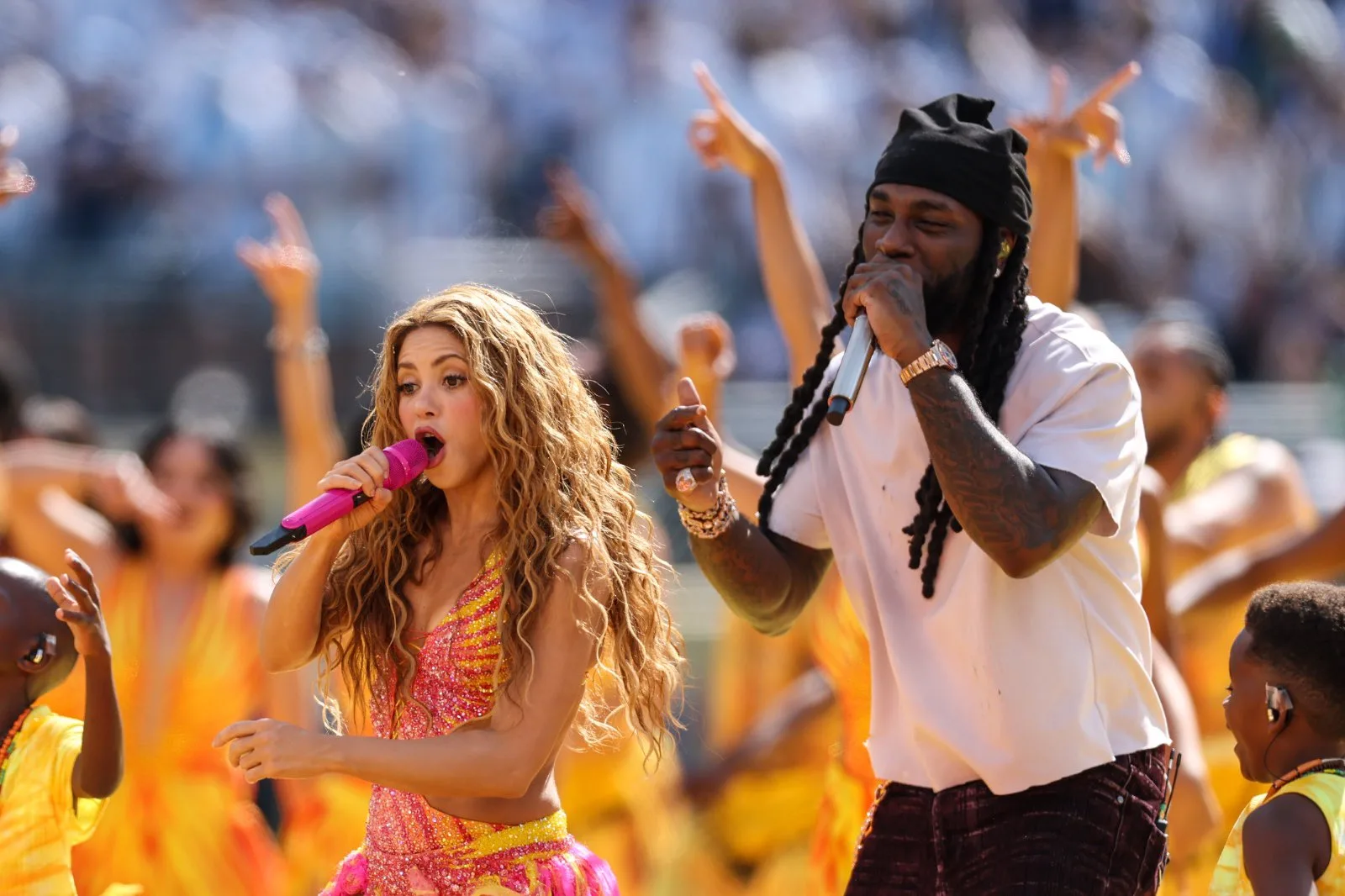
That’s why Burna Boy’s achievements at this World Cup matter beyond another history-making headline. The halftime performance, the success of “Dai Dai,” and the visibility of Afrobeats throughout the FIFA’s tracklist all point towards the reality that African music continues to remain a global export.
As this year’s World Cup leaves with lingering feelings, memories and perhaps questions, Africa has left indelible marks in the global sports, and Burna Boy once again helps reinforce Afrobeats’ place on football’s biggest stage.