




Tune in to listen
Bounce FM

How much of Remo Stars’ dismal performance against Mamelodi Sunday truly comes down to the NPFL’s deficiencies?
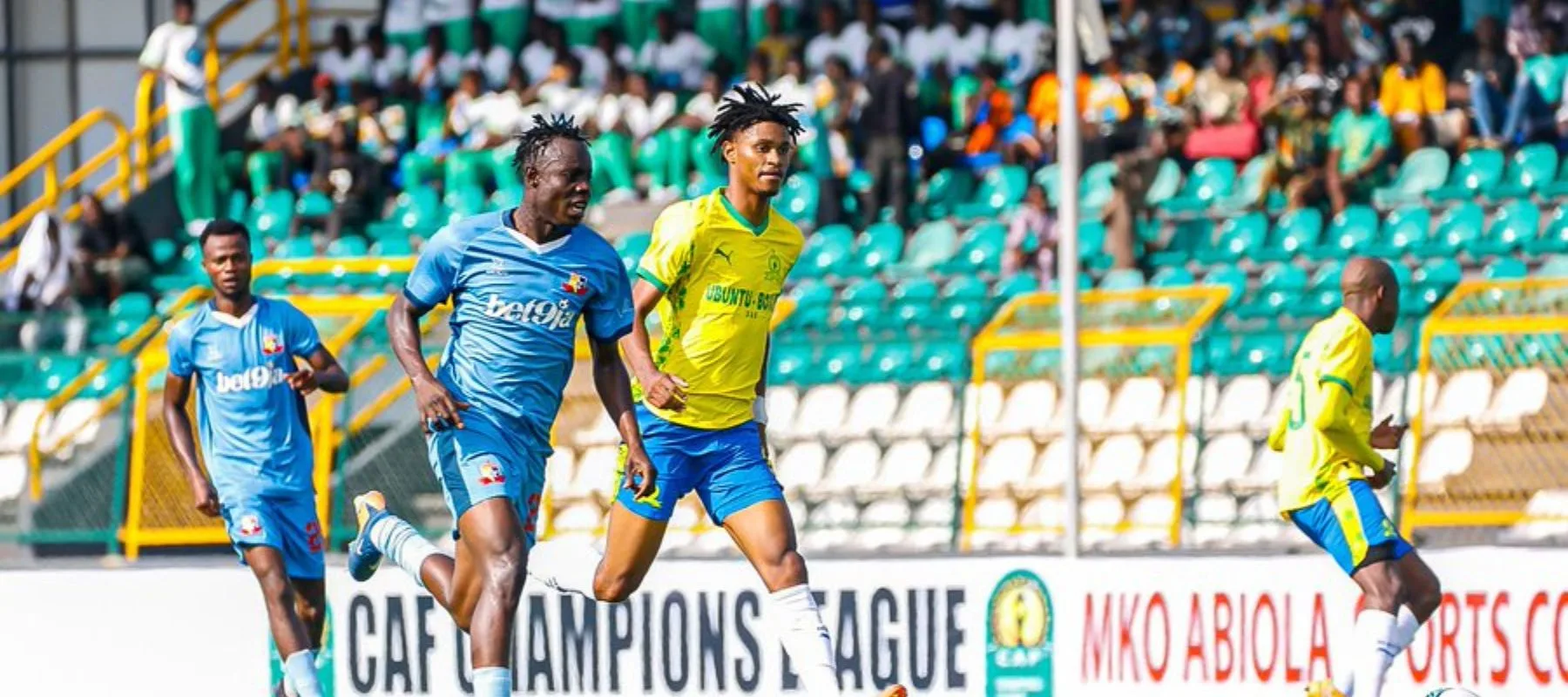
At the MKO Abiola Stadium in Abeokuta on Sunday, October 19, a devastating and unprecedented event occurred in Nigerian club football history. In their first-ever appearance in the second round of the CAF Champions League (CAFCL) preliminary stage, reigning Nigerian champions Remo Stars fell 5-1 to South Africa’s Mamelodi Sundowns, becoming the first Nigerian club to lose by five goals at home in any CAF competition.
Remo initially made history by advancing to the second round after a commanding 5–0 victory over Comoros’ US Zilimadjou in the first round. But standing between them and their dream of a maiden group-stage appearance was Mamelodi Sundowns, one of Africa’s most formidable sides. The two-legged tie was always going to be a steep challenge for the Sky Blue Stars, arguably the biggest test in their coming-of-age story. However, with the first leg scheduled at their adopted home ground in Abeokuta, there was faint hope that the Sky Blue Stars could secure a decent enough result before the trip to Pretoria for the return leg.
To the delight of the home crowd, they appeared set on course by starting brightly, pressing high and creating early chances in search of an opener. However, their early promise vanished in the 12th minute when Thapelo Maseko put Sundowns ahead. Another lapse saw the visitors double their lead before the break, and a visibly shaken Remo side failed to recover as the visitors added three more goals in the second half to complete the rout. Samson Olasupo’s 78th-minute goal was a mere consolation, barely masking the reality that the return leg in Pretoria is now little more than a formality.
Since Sunday night, Remo’s collapse has sparked widespread disappointment among Nigerian football fans. Many believe that the result reflects a glaring gulf in quality between Nigerian and South African football. Given the multi-sector rivalry between both nations, such conclusions are hardly surprising. They are even more tempting when viewed against the backdrop of recent meetings between the Super Eagles and Bafana Bafana in the 2026 World Cup qualifiers, which both ended in draws. South Africa eventually topped the group and secured automatic qualification, condemning Nigeria to an arduous playoff route. Interestingly, the Bafana Bafana squad is dominated by players from the South African Premiership, unlike Nigeria’s Europe-dependent team.
About four of those players, including captain Ronwen Williams, featured in the Sundowns lineup that demolished Remo in Abeokuta. Meanwhile, the hosts don’t have any Nigerian international in their ranks, not counting head coach Daniel Ogunmodede, who doubles as an assistant gaffer with the national team.
Adding weight to this argument are resurfaced comments from Kunle Soname, owner of Remo Stars and Portuguese side C.D. Feirense. In an earlier interview explaining why Nigerian clubs struggle in continental competitions, he pointed to the NPFL’s weak financial power, the huge disparities in player welfare, and the resulting challenge of retaining top talent. In Soname’s now-famous words, “There’s simply not enough money in Nigerian football. Last season when Remo Stars played AS FAR, our players were earning ₦500,000, ₦600,000, and a maximum of about ₦800,000. They were up against players earning $4,000 to $5,000 in their clubs. Seven out of ten times, we’d lose to a side like this because they have the better players. The best players in our league now, come next season, are no longer here. How do you compete against these guys?”
Soname’s points are certainly tenable, with Remo themselves serving as a case in point. With all of their unmatched administrative allure in the NPFL, the Sky Blue Stars have lost no fewer than three key starters to continental rivals this season. The resulting stagnation in the league’s growth continues to yield damaging results, evident in the Super Eagles B’s poor outing at CHAN 2024, and the league’s limited (quality) infusion into the national teams, more precarious in the youth setups that lack the European-based options available to the Super Eagles and Falcons.
But how much of Remo Stars’ dismal performance on Sunday truly comes down to the league’s deficiencies?
Beyond being the second best side at the MKO, Remo were far from convincing. Up against Sundowns — the undisputed South African team of the decade, with eight consecutive league titles, ranked second on the continent, and Africa’s standout performer at the 2025 FIFA Club World Cup — there was never a logical expectation for the Ogunmodede-led side to outclass such an opponent at any venue. That reality likely affected their mindset, consequently making them disorganised, particularly in defence, where they committed cheap errors that any well-drilled side would have punished.
They certainly could have done better, but in setting expectations for the Sky Blue Stars, one key point many overlook is the club’s fledging status: it is only their fifteenth year of existence. This season marks their third appearance in the CAFCL, following two previous campaigns that ended in first-round exits. Playing in the second round for the first time and losing to the 2016 champions and last season’s runners-up, in itself, hardly mirrors the doom many have painted it to be.
An important question this defence sidesteps is whether NPFL giants like Enyimba or Rangers International would have fared much better. In truth, they might have offered stronger resistance, but Mamelodi Sundowns would still likely prevail in almost any context, as they would against most top clubs across the continent. Would that then suggest that South African football is inherently superior to Senegalese or Moroccan football, depending on which country the opposing club represents?
Multiple truths can coexist here. It’s true that Nigerian football has regressed significantly across all levels. It’s also true that this decline affects every Nigerian contingent in international competitions. It’s equally undeniable that the structural rot must be addressed from its roots. But the defending NPFL champions’ loss is not, on its own, a definitive indicator of that decline.