



Tune in to listen
Bounce FM

Today, there’s a thriving community of virtual religious gatherings across Nigeria.
Before the grind of the dreaded Mondays that stir the country back to life, Nigeria used to slow down on Sunday mornings. Streets emptied as churches and mosques filled up for a few hours when the sounds of various religious proceedings overlapped in the same wave that also felt the density of clustered religious structures in major cities across the country. Sunday worship was — and still is — mostly non-negotiable in many of Nigeria’s religious families. It’s a weekly ritual that reinforces the sense of community and togetherness. But lately, something’s shifted. Not the devoutness; Nigerians and their religions are almost inseparable. Much of the devotion is still intact, but the experience has been altered by virtual worship since the 2020 boom.
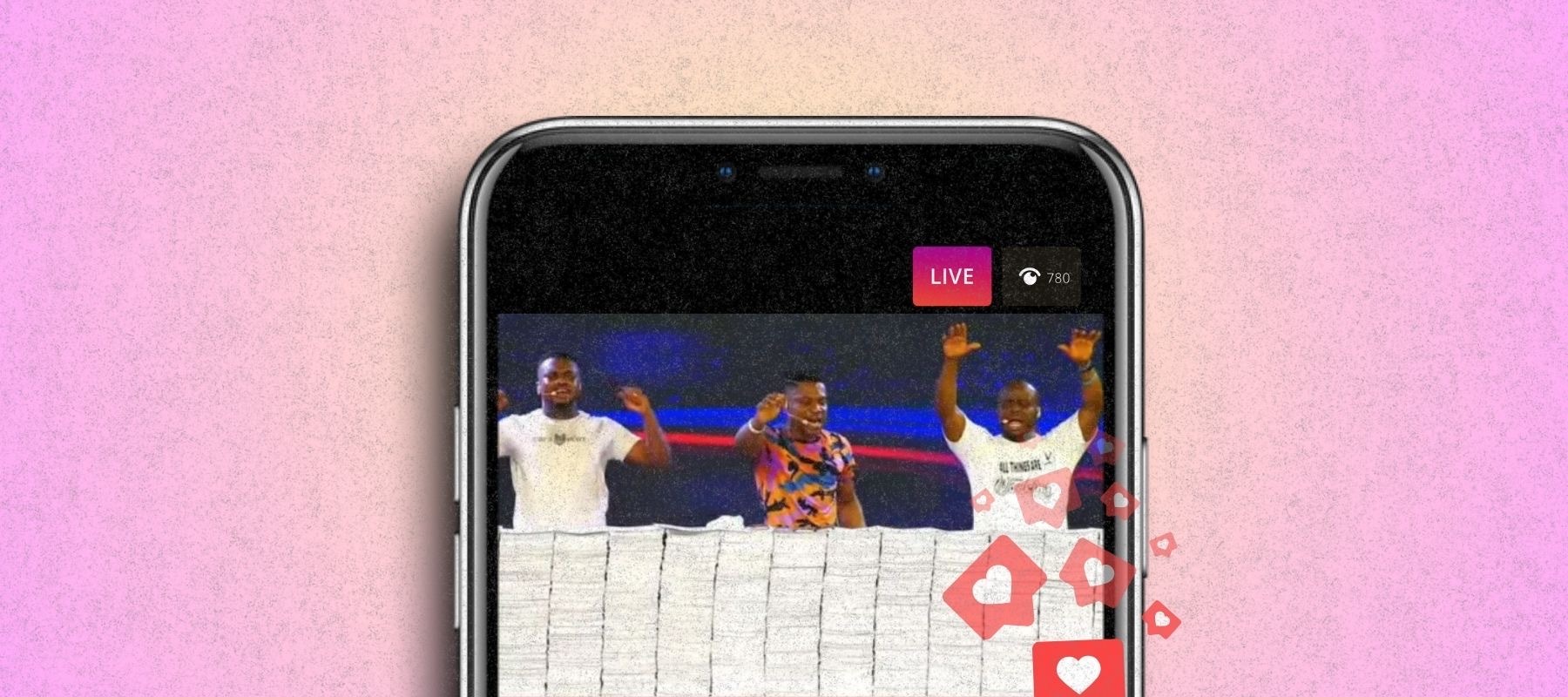
Sundays still move at a sacred, relatively unhurried pace. Physical religious gatherings still dominate, and religious structures are still being erected at places that seem to stretch the limits of reason. But the wholeness of these rituals now shares space with something digital. The sight of believers tuning in to worship via YouTube, Instagram Live, Mixlr, and other platforms might have seemed implausible decades ago. However, when COVID-19 limited physical gatherings, religious institutions were forced to adapt. Livestreamed sermons, devotional meetings, and prayer sessions became the norm. Though meant to be a temporary workaround, the return to normal post-COVID didn’t deter the rise of virtual worship as a permanent extension of believers’ gatherings.
Today, there’s a thriving community of virtual religious gatherings across Nigeria. It’s particularly common within Christian circles, with interdenominational organisations like Harvesters International Christian Centre, Koinonia Ministries and Streams of Joy’s NSPPD commanding massive digital audiences.
The Nigerian virtual religious space is now a fully grown ecosystem. This was substantiated by a February 2025 report by Semrush on Mixlr, the London-based live audio streaming platform. According to the report, Nigeria accounted for 24.05% of Mixlr’s web traffic, the highest by country. Even more striking, 94.53% of Mixlr’s 3.7 million mobile users in February were from Nigeria, over seven percent higher than the US and UK, respectively. Major organic key search terms were also Nigerian-related ones like “Koinonia,” “Covenant,” and “RCCG Radio.”
While Muslims aren’t as heavily involved in this virtual wave as Christians, they’re certainly not left out.
“It’s something we’ve adopted, though not fully,” Teslimah Abdulhafiz, a Muslim faithful, told The Grid. “Our system prioritises seeking knowledge compulsorily and to an extent that might not be fully achieved virtually. So that means doing it physically. But we now have virtual lectures and live training sessions, especially Madrasah (Islamic College). It works, and we use the means that Christians use.”
The shift to virtual spaces has particularly resonated with two factions: young Nigerians and the diaspora. For young adults who make up the largest demographic in the country and find solace in their faith for various reasons, including coping with the nation’s frustrations, the flexibility of virtual worship provides a way to balance their practice with their demanding schedules.
For the diaspora population that places Nigeria fourth on the continent, it serves as a spiritual and cultural anchor that keeps them in touch with the dynamics of the faith they were raised in.
“It’s a way to stay connected to the foundation of my faith. Sticking to Nigerian ministries is basically sticking with what I know and am familiar with,” Boluwatife Olajuwon, a Nigerian who relocated to the UK circa 2021, shared with The Grid.
Interestingly, the growth of this virtual shift hasn’t been universally accepted. Disrupting the century-old tradition of physical religious settings in favour of tech-linked alternatives is a move that some argue undermines the fundamental essence of community and bond that the traditional structures provide.
Jonathan Leeman of Cheverly Baptist Church in Washington addressed this in a 2021 article titled “There’s No Such Thing as Virtual Church.” Reflecting on the exclusive online services during the pandemic, Leeman, a church elder, argued that “When church is only online, we can’t feel, experience, and witness those truths becoming enfleshed in the family of God, which both fortifies our faith and creates cords of love between brothers and sisters. Virtual church is an oxymoron.”
There is, however, a growing acceptance of this shift’s permanence, though it comes with calls for careful moderation.
“There’s a need for balance,” cautioned Oreoluwa Erubami of The Edification House. “Though these mediums help churches reach wider audiences, they should never replace physical gatherings. Regardless of technology or modernity, Bible principles remain unshaken. [Apostle] Paul emphasised our physical gatherings. It’s where we interact, learn from one another, and strengthen our relationships as believers.
“Christianity is not something that can or should be done in proxy. So, having these tech alternatives isn’t bad in itself, given various uncertainties, but they shouldn’t replace physical gatherings.”
Ultimately, this is an era of fusion that challenges traditional norms and adapts faith to the realities of the digital age. Religion and communal worship haven’t died. It can’t, not in Nigeria. It’s evolving. In this shift, something is gained, and something, perhaps, is lost.