



Tune in to listen
Bounce FM

The infusion of AI into filmmaking is steadily and gradually permeating the scene in Nigeria.
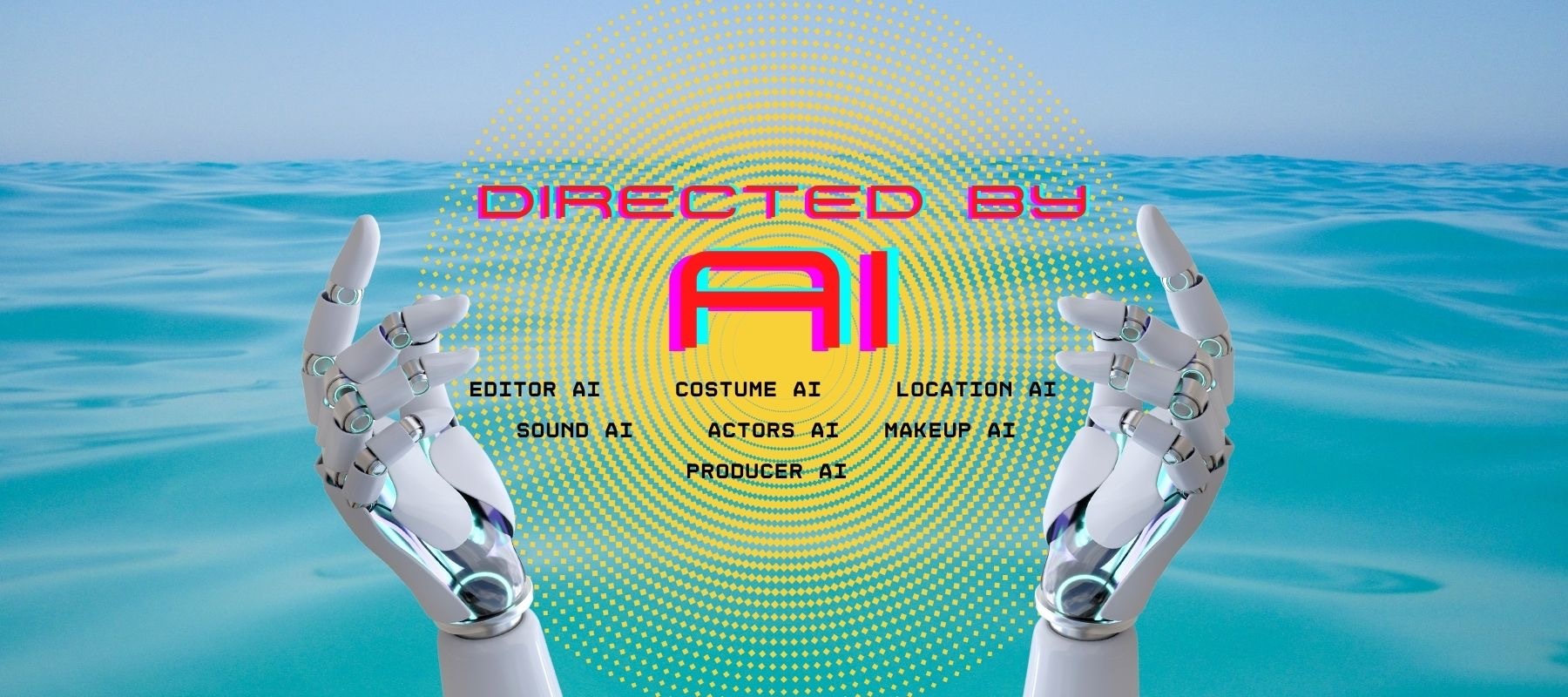
The thing about artificial intelligence is that despite its many capabilities and expected far-reaching impact on the human race, no one is quite certain what acclimating and settling to its full influence will truly look like. This is especially true in the entertainment industry, where AI is still being explored, even as the film sector has begun actively leveraging it for innovation.
Globally, the thin line between human adroitness and AI’s simulation has always been fraught with a major concern that seeks to know if it’s best deployed as an enhancer or if it’s a disruptor that’s looking to fulfil its feared prophecy of displacing people from their jobs. The debate is very much alive in Nigeria, and the country, for all its typical lateness to tech adoption and discussion, has also inserted itself into conversations of this sort.
The infusion of AI into filmmaking is steadily and gradually permeating the scene in Nigeria, with once traditional roles like script development, videography, set designing, effects, and others either being selectively or fully outsourced to AI. An early and viral example is that of emerging artist Tolibian who released a fully generated AI video for his blown-up single “Ramadan’’ during the Eid period in March. Later in April, four-time Headies Awards winner ODUMODUBLVCK also followed suit with an AI-powered futuristic visual for “Wage War” off his THE MACHINE IS COMING project.
The emergence of these videos invites a closer look at the role of AI in the future of filmmaking, as well as its so far subtle deployment and tentative acceptance within the broader Nigerian entertainment industry.
Earlier in March, Dr Ope Banwo, an attorney and a techpreneur, bucked the trend with a groundbreaking precedent in Nigeria’s creative space by becoming the first to release a full AI-generated feature film accompanied by a 14-track AI-composed soundtrack album. The film OmegaMax Conspiracy is a crime thriller that draws on the Omegapro Forex Ponzi scheme that left one of the heaviest trials of victims circa 2022. Together with Omegapro Scandemic, the AI-produced album, the project lent a bold insight into the revolutionary capacities of AI in filmmaking though it wasn’t without some flaws, as observed by critics.
Similarly, Toyosi Akerele-Ogunsiji scratched the possibilities of deploying AI in filmmaking and doubled down with a thematic focus on literacy, arguably Africa’s biggest challenge in the sector, with the production and release of Makemation in April. With a rich cast of Nollywood stars including Shaffy Bello, Richard Mofe-Damijo, Ibrahim Chatta and Toyin Afolayan, Makemation walks the line of life and its intersection with the torrent of AI showcasing young people using technology to solve immediate problems. The AI-themed movie had a heavy reliance on the tech for its script development according to Toyosi and it has enjoyed quite the international attention with teaser screenings at the 2024 Global AI Summit in Riyadh; a stakeholders’ session in Kenya; and an exclusive viewing in the U.S. Consul General’s residence in Lagos.
The widespread adoption of AI in film production across the country is undoubtedly an exciting prospect, especially for Nigerian professionals who, despite their sheer output, have largely lagged behind their international counterparts in terms of quality and the resulting global acceptance. AI holds the potential to democratize filmmaking, but the road ahead is far from straightforward.
For one, the technology still struggles to accurately capture human emotions, mannerisms, and the subtle nuances that turn a good story into a compelling one. Beyond technical limitations, AI also faces an uphill battle with public acceptance. According to a 2025 Business Day survey, Gen-Zs are more comfortable with AI being used as a creative aid rather than a full replacement for the human touch in the entertainment industry.
Additionally, as with most things AI, the question of how far can and should the deployment go in the entertainment industry is a growing debate that might not be going away anytime soon considering the many loopholes like the ethical usage of these models which have an origin of being trained on scraped data; the likelihood of copyright theft or licensing issues that may arise; and the overall insecurity that accompanies using these relatively early days models in light of leaks and hacks.
But if it’s any consolation, generative AI is already being widely used in the media space, often by untrained individuals, and sometimes for troubling purposes like the creation of deepfakes. Of course, this doesn’t erase the very real concerns surrounding its professional deployment. However, widespread adoption by industry professionals could be a necessary step, as only then can we begin to reckon with its actual potential and confront its limitations while paving the way for a much-needed regulatory framework in the country.