



Tune in to listen
Bounce FM

In Egypt, the dynamic is reinforced by a legal framework that gives authorities enough precedent to prosecute morality-related offences.
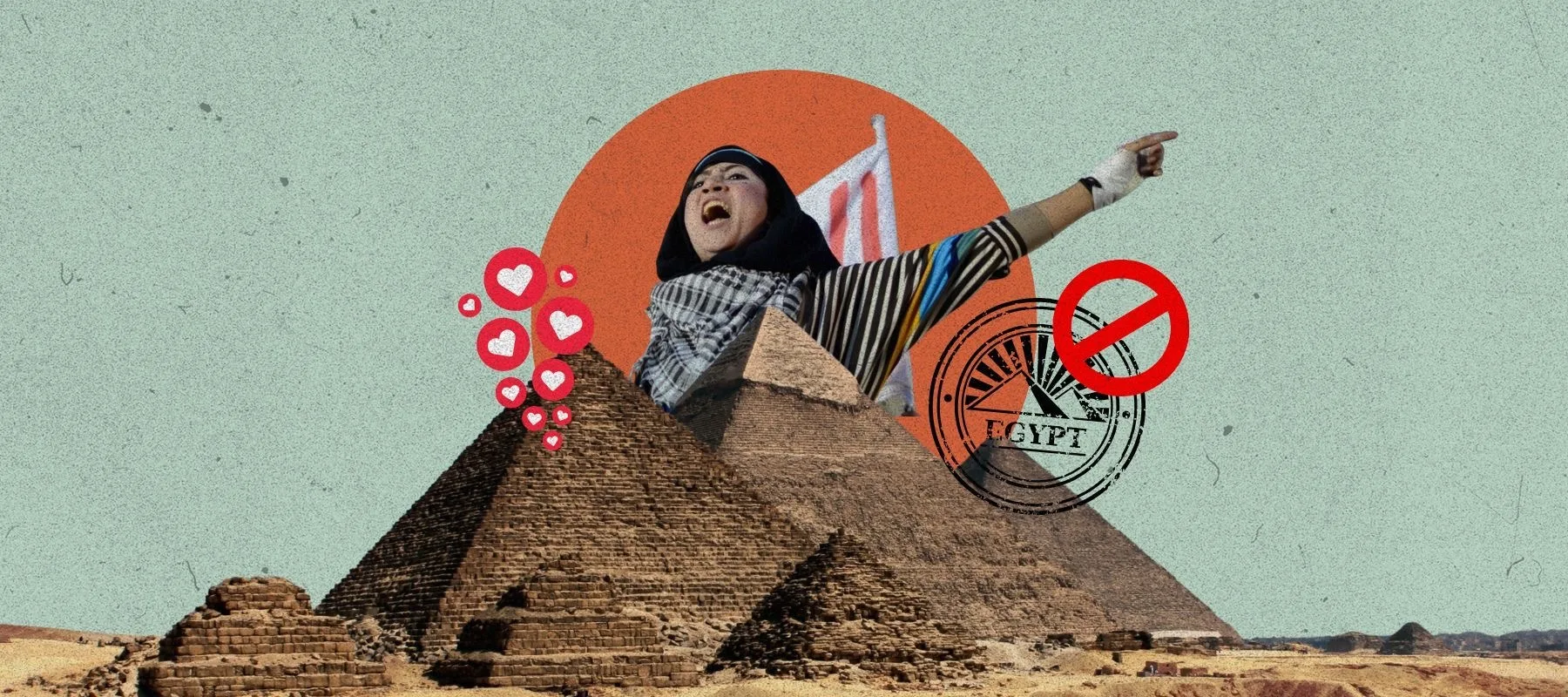
It’s not the best of times to be a content creator in Egypt. In the past few days, the Egyptian authorities have doubled down on their stance to safeguard the country’s moral and social values, deploying measures that include arresting creators found complicit and threatening to ban TikTok, which has been deemed a hotbed for such content.
As a nation in the Middle East and North Africa (MENA) region where Islamic influence runs deep, Egypt formally operates as a sovereign Arab Republic with Islam as the state religion and Sharia (Islamic law) as the principal source of legislation. Though it maintains a modern political structure, its constitution and policies draw heavily from conservative Islamic and traditional Egyptian social and cultural norms.
According to The New Arab, a fast-growing outlet covering the MENA region, no fewer than eight creators have been arrested in a recent crackdown. This follows a report by 32 Egyptian lawyers accusing content creators of violating Egyptian family values by posting inappropriate and indecent content on social media. The arrested creators, mostly women, include popular TikTokers such as Suzy al-Urduniya and Alia Qamaron. Suzy, an 18-year-old born Mariam Ayman with over six million followers on TikTok, was recently involved in a legal case where she was sentenced by the Juvenile Court to two years in prison and fined EGP 300,000 (about $6,200) for posting a video where she allegedly insulted her father and used her sister’s special needs to create viral content. Similarly, a separate incident on June 22 saw Egyptian-Italian belly dancer Linda Martinow arrested at the Cairo International Airport over violations of societal norms, having posted multiple videos dancing in skimpy attire and describing herself as “More than you can handle,’’ per reports.
Justifying the recent arrests, the Egyptian interior ministry alleged that the creators’ videos contain “obscene language,” “violate public morals,” and constitute “a misuse of social media.”
But the Egyptian Initiative for Personal Rights (EIPR), a prominent rights and advocacy group, has criticised the authorities for seeking to control public discourse. It urged them to “stop prosecuting online content creators on vague class-based charges such as ‘violating Egyptian family values.”
The EIPR maintains that the crackdown is the largest in the country since 2020 when Egyptian forces targeted women whose dancing and lip-syncing content on TikTok was alleged to be overly suggestive.
Meanwhile, on August 2, Egypt announced a three-month ultimatum to TikTok to comply with national laws and cultural norms or risk being banned from operating in the country. This was revealed by Ahmed Badawi, a member of the House of Representatives’ Telecommunications Committee, who said the ultimatum was issued during a meeting with members of the committee, the CEO of TikTok Egypt and North Africa, and the head of the National Telecommunications Regulatory Authority (NTRA).
TikTok, for its part, was proactive in the enforcement of regulations in the first quarter of the year, particularly for users that violated its Community Guidelines in the MENA region.
In a report covering January to March 2025 and published on June 26, the fast-growing video platform said it removed over 16.5 million videos violating its community rules across five MENA countries: Egypt, Iraq, Lebanon, the United Arab Emirates (UAE), and Morocco. While Iraq recorded the highest number of such cases, Egypt also saw significant removals, with over 2.9 million videos taken down for violations during the period. The platform maintained that 99.6 percent of these were proactively dealt with before complaints, while 94.3 percent were removed within 24 hours of being posted after user reports.
Live streams were also under scrutiny, with about 350,000 live hosts banned in the country and nearly 600,000 livestreams interrupted during the same period.
The Egyptian government’s prerogative to control users’ expression and activity on social media isn’t rare on the continent. Already this year, there have been instances of countries like South Sudan implementing bans across all social media platforms and Tanzania blocking access to Twitter specifically. There’s a long history of censorship across the continent, including prominent ones involving Nigeria.
In Egypt, the dynamic is reinforced by a legal framework that gives authorities enough precedent to prosecute morality-related offences like “violation of public decency,” “inciting debauchery,” and “misusing social media.’’ However, the resulting impact on the growing creator economy can be severe. The continued crackdown on creators and even the prospect of a TikTok ban altogether are troubling signs for the youthful demographic who have leveraged platforms to build massive followings, create content that fetches income through the diverse monetisation features and secure brand deals.
As of September 2024, Egypt had the most TikTok users in Africa, with an estimated 32.94 million users, over five million more than Nigeria, which trailed with 27.39 million users.