



Tune in to listen
Bounce FM

See the full list of BSide’s top 40 Afrobeats songs of all time below.

In the late 1990s and early 2000s, a new direction for African popular music began to take shape. Artists from Ghana and Nigeria began fusing West African rhythms and melodies with hip-hop, R&B, dancehall and electronic music. The hybrid sound that emerged from that experimentation would later come to be known as Afrobeats, though at the time it was simply regarded as a fresh expression of African pop. Early figures crucial to this were 2Baba, D’banj, Reggie Rockstone, P-Square, Tic Tac, and so on. Their success created the commercial and creative pipeline for a new class of superstars like Wizkid, Burna Boy, Davido, Tiwa Savage and many more who would later ascend to international stardom and firmly plant African music at the center of the global pop landscape.
Now, Afrobeats exists in a liminal space, a genre that is and isn’t. It has become a portmanteau that functions as an umbrella term for the protean sounds emanating not just from Nigeria and Ghana, but also, increasingly, from across the African continent and its diaspora. This broad usage fuels debate over what should be called Afrobeats, as its catch-all application is often criticised for overlooking other distinct sounds and genres.
This list doesn’t exactly set out to settle that debate. Instead, it gathers a curated set of songs that represent the biggest moments in African music. Our selections are based on a triangulation of cultural impact which is determined by how deeply a track shaped conversations, lifestyle, and communities; commercial success, measured by data-driven metrics like streaming and sales numbers, chart performance and industry recognition through awards and certifications; and longevity, gauged by songs that remain relevant years after release, receiving new audiences across generations.
See the full list of BSide’s top 40 Afrobeats songs of all time below.
40. “Eminado” (2013) – Tiwa Savage ft. Don Jazzy
When Don Jazzy insisted that “Eminado” be included on Tiwa Savage’s debut album Once Upon a Time, she wasn’t convinced. In fact, she hated the idea. But the veteran producer knew the market well. “Eminado” — a word he coined meaning “good luck charm” — went on to become the album’s biggest hit.
A vibrant Afrobeats love song with lush production, flirty lyrics, and groovy rhythm, it soared on charts, drove album sales, and earned widespread airplay across Africa. Following her breakout single “Kele Kele,” “Eminado” was the icing on the cake of Tiwa Savage’s rise to stardom. – Philip Ibitoye
39. “Swo” (2006) – Marvellous Benjy
Ajegunle fed so much into Afrobeats that it is impossible to trace the genre’s rise without pausing there. Marvellous Benjy’s “Swo,” released in the mid-2000s, is part of the songs that helped create space for the edgier, more grassroots sounds that would later evolve into what we now call streetpop. At the time, Marvellous Benjy was spoken of in the same breath as contemporaries like Daddy Showkey, African China, 2nd Jungilist, Professor Linkin, and Danfo Drivers, all who helped carry this sound into the mainstream. Arriving at the peak of the galala and konto wave, the track crowned its own successor: as the lyrics promised, “swo” became the reigning dance of its moment. The song’s kinetic, dancehall-infused rhythm was perfectly married to a simple, magnetic dance that everyone, everywhere, was doing. It was a street anthem through and through. – Melony Akpoghene
38. “Slow Down” (2013) – R2bees feat. Wizkid
The Tema-based duo — Mugeez and Omar Sterling — had already built their name on highlife-inflected hiplife, but “Slow Down” sharpened their Afrobeats credentials. Featuring Wizkid, then fast becoming a continental star, “Slow Down” is a silky and unhurried, mid-tempo love song. While the era’s dance floors were dictated by high-tempo Azonto-fueled tracks, this summit between Tema’s R2Bees and a stratospheric Wizkid offered a sublime alternative. On a velvety, mid-tempo Killbeatz production, the track felt like a direct command to the waistline. Mugeez’s honeyed Twi-laced vocals and Wizkid’s effortless Starboy cool combined to create a sultry, pan-African anthem. – Daniella Damilola
37. “Obianuju’’ (2010) – Duncan Mighty
Duncan Wene Mighty, self-proclaimed Port Harcourt’s first son, was more than the Indigenous Artist of the Year his 2010 sophomore project Legacy (Ahamefuna) earned him at the Nigeria Entertainment Awards. The cross-cultural soulfulness and timelessness of “Obianuju’’ made sure of that. One could argue the LP’s weight was split between the earlier released track “Port Harcourt Son” and “Obianuju,” but it was the latter’s enduring romantic appeal that contributed to making it an instant classic. Duncan’s strongest suit, his unique vocal texture and Ikwerre language’s graceful expression, shines pristinely on “Obianuju,” a track Duncan himself produced, like he did the 14 songs on the project. – Johnson Opeisa
36. “Ijoya” (2006) – Weird MC
The animated video of Weird MC’s “Ijoya” dropped at a time when broadcast TV still heavily defined pop culture and it was a television staple. If you owned a set, you likely saw it at least once. Its bright, comic, surreal visuals matched the song’s offbeat energy, pulling kids and adults alike into its orbit. This rap song is symbolic of a pivotal moment in Nigeria where a female artist used a multi-sensory approach to redefine the mainstream and prove the power of being truly and unapologetically different. Weird MC’s lyrical dexterity and easygoing delivery over the frantic, drum-heavy production created a sound that was completely fresh and innovative for its time. During this time, Nigeria’s hip-hop and pop scenes were heavily male-dominated, mirroring patterns in the United States. While Weird MC never achieved the sustained mainstream presence of peers like Sasha P, Kel, Mo’Cheddah, or Bouqui, “Ijoya” transcended its artist’s career to become a timeless bop. – Melony Akpoghene
35. “Oruka” (2003) – Sunny Neji
Sunny Neji’s “Oruka” draws from sounds that preceded Afrobeats’ loose formation in the early 2000s. Oruka, translated as “ring” in Yoruba, sees Neji infuse the gravitas of percussion, blending into local rhythms and a slow groove with foundational fidelity to highlife musicianship.
It became one of the defining songs of love and marriage, a track that has enjoyed a generational run as a popular choice in nuptial settings. As one of the lead singles from his fourth album Unchained, recorded in parts in Nigeria and Ghana before its release in late 2003, “Oruka”, along with hit tracks like “Face Me” and “Tolotolo,” established Sunny as one of highlife’s premier acts, a path that many contemporary artists are now advancing. – Johnson Opeisa
34. “Dorobucci” (2014) – Mavins
“Dorobucci” was more of a cultural event that signalled a new era for Don Jazzy and his rebranded Mavin Records. Following the dramatic dissolution of the legendary Mo’ Hits, fans were anxious about what was next for the “Don.” But with the release of this 2014 all-star track featuring Tiwa Savage, Dr SID, Korede Bello, Reekado Banks, and Di’Ja, all doubts were erased. The song’s genius lies in its simplicity and the mystique of its title; “Dorobucci” had no clear meaning, yet it became a prefix for everything aspirational. Suddenly, everyone was “doro-this” or “doro-that,” adding “doro” to their names on social media to describe anything cool or successful.
The single and its lavish music video became a showcase for Mavin’s new talents, introducing the next generation of Afrobeats stars to the world. The Doro-mania re-established Don Jazzy’s Midas touch and concretised Mavin Records as a powerhouse. – Philip Ibitoye
33. “Dem Mama” (2005) – Timaya
When Timaya first emerged, it seemed sad that a talent so stirring could have remained hidden, buried beneath Nigeria’s socio-economic cesspool, if not for a lucky break. He was celebrated for being real: a self-described plantain boy from Bayelsa who carried his truths plainly. And it made sense that his music came steeped in those realities. Timaya’s power lay in his candor, a quality he masterfully applied to his 2005 seminal debut album, True Story, a project which “Dem Mama” sat at the heart of. The track is a satiric and mournful chronicle of the Odi massacre but its upbeat dancehall tune served as a clever decoy. Over the years, Timaya has held his own as a credible Afrobeats benefactor, consistently feeding the culture with countless hits including “Ogologomma”, “Malonogede”, “Bum Bum,” “Sanko,” “Ukwu,” “Sexy Ladies,” and many, many more. – Melony Akpoghene
32. “Alobam” (2014) – Phyno
From the moment Major Bangz’s instrumentals rolled on “Alobam,” it was instantly gripping: Phyno’s infectious, commanding cadence and unapologetic Igbo, one that fused into an anthem that stamped a cultural landmark in Afrobeats history. “Alobam,” an Igbo slang for “my guy,” was a phenomenon that advanced the much-needed presence of Eastern rap in the mainstream, and an ode to brotherhood that name-checked the likes of Olamide, Flavour, Ice Prince, and P-Square. Hitting the streets in the famed Clarence Peters–directed video, Phyno’s branded Alobam tees plus gold star insignias spilled into Nigerian fashion and ran its course. – Johnson Opeisa
31. “Love Me Jeje” (1997) – Seyi Sodumu
Seyi Sodimu’s “Love Me Jeje” defined an era of Nigerian cool. Released in the late 90s, the song blended a smooth American R&B style with a sweet and simple Yoruba hook and a verse from a young Shaffy Bello. One of the track’s biggest legacy was making the word “jeje” (meaning gently, or easily) a national slang for taking things slow in love and life. With massive radio rotation, TV ubiquity, and cassette/CD sales to match, it travelled across regions and generations. A quarter-century after its release, “Love Me Jeje” experienced a powerful resurgence, with a new generation rediscovering its timeless appeal. This was most remarkably demonstrated by Tems’ Grammy-winning interpolation of the song in her 2024 hit of the same name. – Daniella Damilola
30. “Danfo Driver” (2003) – Danfo Drivers
Known individually as Mountain Black and Mad Melon (now late), the duo — both from the slums of Ajegunle in Lagos’ boisterous expanse — broke into the music scene with a debut that drew from their reality as transporters making a living shuttling passengers to and fro Ajegunle in the city’s iconic yellow-and-black striped buses. Released in 2003, the self-titled track “Danfo Driver” was a sensation that resonated with the masses, its galala-stepped rhythm and Pidgin reggae infusion striking a chord that crossed international waters. Alongside 2Face’s “African Queen”, “Danfo Driver” was one of the early sounds from Nigeria that soundtracked Hollywood, with their inclusion in the 2006 romcom Phat Girlz. – Johnson Opeisa
29. “Free Madness” (2009) – Terry G
Many may try but none may ever be like Terry G. When he burst onto the scene, he did things no one else dared to. With an impressive level of guts, he seasoned his music with a dare: to hear it and not move your body. Terry G’s sound was uniquely influenced by the Pentecostal church, evident in the bells, chants, and visuals that became his signature; his manic persona with his eccentric ad-libs only deepened his aura. His breakout, “Free Madness,” is a masterpiece of unhinged, anarchic brilliance that upended the Afrobeats soundscape. Built on a frantic, stripped-down beat and Terry G’s unique, almost nonsensical vocal outbursts, the song is really just about an exhilarating feeling. It licensed a new wave of street-certified swagger, influencing everything from slang to a more rugged, in-your-face artistic persona that would inspire a generation of artists to follow. – Melony Akpoghene
28. “Ahomka Wo Mu” (2003) – VIP
“Ahomka Wo Mu” by the Ghanaian group VIP. is a foundational classic of the hiplife movement. The musical conversation between Ghana and Nigeria has always been rich, and V.I.P. were contemporary giants in that dialogue during the formalization of Afrobeats. The group’s willingness to cross borders with landmark collaborations — like ”My Love” with Nigerian icon 2Baba and “I’m In Love With 2 Women” with Tony Tetuila — boosted their superstar status. “Ahomka Wo Mu” was so big in Nigeria that even though listeners didn’t understand the Twi lyrics, it was a jam. The track’s success was a strong contribution to the fact that Ghanaian acts could match Nigeria’s dominance in West African pop and shaped how Afrobeats would grow as a truly regional sound. – Daniella Damilola
27. “Ye’’ (2018) – Burna Boy
Lucky break or magnum opus, whatever side of the divide you’re on, one thing is irrefutable: “Ye” was a career-defining track for Burna Boy and a substantial marker of Afrobeats’ permeation on the global scale. The track surfaced as a semi-sleeper off Burna’s third studio album, Outside (2018), with its global ascendency ignited by Kanye West’s Ye EP released about six months later. Inspired by Fela’s “Sorrow, Tears and Blood,” Burna Boy’s candid expression of Nigerian struggle and self-preservation made “Ye” both a local anthem and a global phenomenon. By 2021, the song became the fastest Nigerian song to be certified Gold by the Recording Industry Association of America (RIAA) before later attaining Platinum in Canada, France, the UK, the US, and beyond. – Johnson Opeisa
26. “1er Gaou” (1999)- Magic System
The Ivorian Zouglou boy band, Magic System, released “1er Gaou” in 1999, but didn’t gain relevance until 2002, after its remix became a hit in France. “Premier Gaou” which is French for “First Fool” is a narration of a failed love experience of the group’s lead singer, Salif “A’Salfo” Traoré. While songs in this theme would rather be slow and melancholic, the pacey Zouglou style that the group sings make it differ as it is ironically livelier, diaspora. The song was a major hit across West Africa and the continent as a whole, with many English-speaking countries like Nigeria embracing it despite the language barrier. To this day, “1er Gaou” continues to be mixed, remixed and has been immortalized in parties, festivals, and TikTok videos. – Favour Overo
25. “Oleku” (2010) – Ice Prince feat. Brymo
When “Oleku” dropped in 2010, Nigerian hip hop was at a crossroads. Already popular in the underground and youth scenes but still searching for a breakout anthem to cement its place in mainstream Afropop. Ice Prince delivered it. “Oleku” blended slick rap verses with Brymo’s soulful, unforgettable hook and created a high-energy hip hop–Afrobeats fusion that felt both streetwise and radio-ready.
The song became a nationwide sensation, dominating airwaves and driving the success of Ice Prince’s 2011 debut album Everybody Loves Ice Prince. More than just a hit, “Oleku” was a cultural marker: it proved Nigerian rap could be as catchy and commercially viable as Afropop. One of Africa’s biggest rap songs of its era, it solidified Ice Prince as a continental rap icon. – Philip Ibitoye
24. “Mr. President” (2000)- African China
“Mr. President” is one of those tracks where the message overrides the need to notate its quality. African China was at his most satirical on the song. Nigeria had just adopted the ”divine” democratic system of governance, but it was far from what the people were sold. The divide was wide, things were excruciating for the people, and the authoritative bodies were visibly crooked. So, singers like African China from this era decided to use their medium to call out these travails. “Mr. President, lead us well/govern us well” was the chorus to a long list of irregularities African China pointed out across the song.
“Mr. President” was the boldest move African China could have made during that era. It’s unfortunate that Nigeria still deals with these exact ills from over two decades ago. – Favour Overo
23. “Essence” (2020) – Wizkid feat. Tems
When Afrobeats superstar Wizkid took to his X account on February 23, 2020, to post: “Tems and I created magic,” few understood the weight of what he meant. But by October 30, 2020, when the singer released his much-anticipated fourth studio album Made in Lagos, everyone understood — the 11th track, “Essence,” was indeed magic.
A sultry Afrobeats masterpiece featuring feather-light percussion and hypnotic harmonies, it shattered records as the first Nigerian song to break the top 10 on Billboard’s Hot 100. It went on to earn a 4X RIAA platinum plaque in the US, a Grammy nomination, and over a billion streams worldwide, especially boosted by a Justin Bieber remix. The track launched Tems, a then-niche artist, to global stardom. – Philip Ibitoye
22. “Bobo” (2015) – Olamide
Before the laidback, star-making veteran we have today, Olamide held a non-contestable presence at the top of Nigeria’s mainstream pop culture. The YBNL boss doubled as both the voice and the king of the streets, his reputation as a relentless hitmaker already cemented through a steady stream of mixtapes, rap anthems, and the rise of his YBNL crew. “Bobo” was an emphatic plus, and it also pushed him into a different lane. The song’s breezy mid-tempo bounce carried Olamide’s streetwise edge while sliding neatly into mainstream rotation. However, its true ignition point was the “Shakitibobo” dance and the brief Timberland spell that were both represented in the Moe Musa’s directed visuals. – Johnson Opeisa
21. “Last Last” (2022) – Burna Boy
After Burna Boy’s career took a massive global turn with “Ye” in 2018, his subsequent releases were weighted singles and albums that furthered his international superstardom. Sampling Toni Braxton’s 2000 R&B hit “He Wasn’t Man Enough,” Burna Boy’s “Last Last” arrived just weeks before his sixth album Love, Damini, and was already on everyone’s lips after he premiered it at his groundbreaking Madison Square Garden show — making his vulnerable account of heartbreak, loss, near-death experience, and escapism all the more riveting on release. The phrase “chop breakfast” was already floating through Nigerian internet culture as slang for heartbreak, but Burna’s “Last Last” awarded it a defining moment and stamped it permanently into the global lexicon. The song was also the undisputed summer and Detty December jam of 2022, leaving in its wake Gold and Platinum certifications across Europe’s central markets.
20. “Fall” (2017) – Davido
By the mid-2010s, Afrobeats was caught in the spell of pon pon. Mr Eazi lit the fuse with his 2015 hit “Skin Tight,” produced by Ghanaian-British producer Juls, before it stretched into the Nigerian mainstream with tracks like Tekno’s “Pana,” Tiwa Savage’s “Ma Lo,” featuring Wizkid, and Mayorkun’s “Mama.” Davido, who had earlier tapped into the pon pon wave with “If,” doubled down with “Fall,” — both tracks serving as lead singles for his widely acclaimed sophomore album A Good Time. The Kiddominant-produced track ran a course of milestones, becoming the first Nigerian song to be certified Gold by the RIAA and the longest-charting Nigerian record in Billboard history as of 2019. “Fall’’ gained more traction with its Daps-produced video, which went on to be the first Nigerian music video to cross 100 million views on YouTube. – Johnson Opeisa
19. “Love Nwantiti” (2019) – CKay
From CKay’s 2019 EP CKay the First, “Love Nwantiti” started slowly but exploded into a global hit two years later, thanks to TikTok virality. A tender Afrobeats track with romantic charm, it became the soundtrack to millions of short videos and turned into a worldwide phenomenon.
The record broke boundaries becoming the top-selling Nigerian song in the US, earning multiple certifications worldwide, and pushing CKay the First to become the most streamed African project on Spotify. CKay also released several international remixes, earning billions of streams and cementing his place in Afrobeats history. – Philip Ibitoye
18. “Azonto” (2014)- Fuse ODG
In 2011, Sarkodie’s dancehall track, “You No Go Kill Me” ravaged a stream of homemade dance videos on YouTube. The name of the dance was Azonto, and it was spreading faster than anything in its sort that had come out of Ghana. The whole world wanted to do the shoulder drops, feet shuffle, and hip rotation that combined to form the Azonto dance, so Fuse ODG, an English-Ghanian singer, decided to teach the world “his” Azonto.
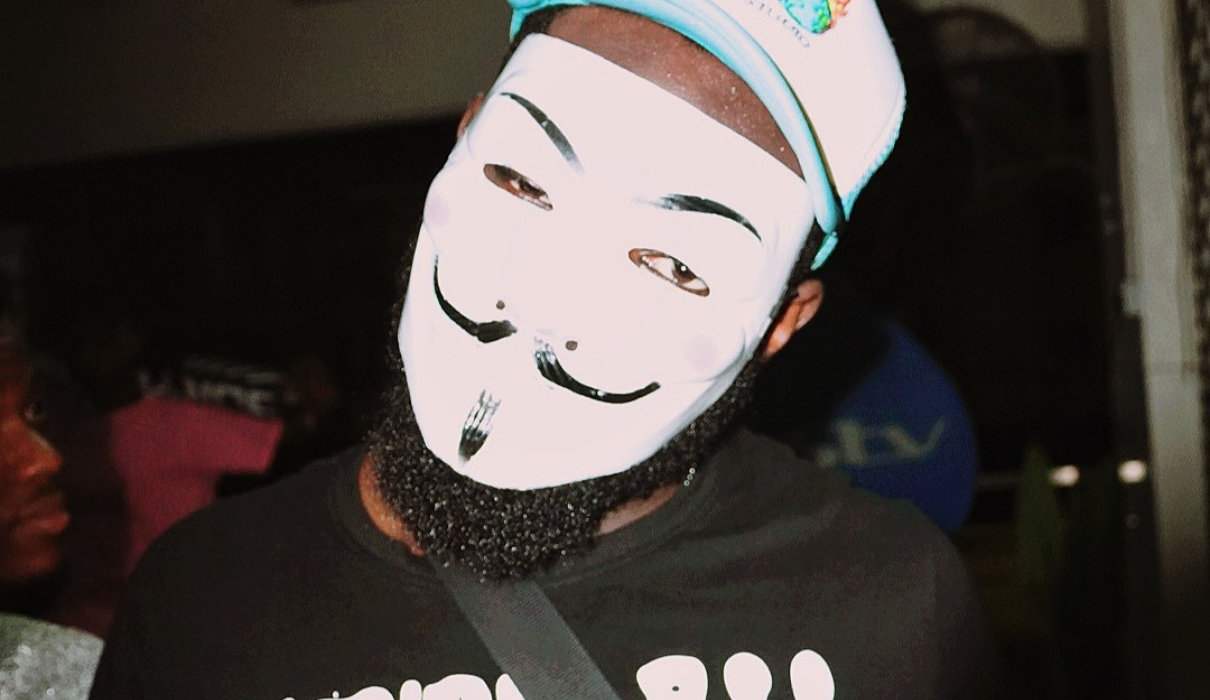
The “Azonto” track was simply a product of proper calculations and creativity. Fuse ODG saw a pocket that needed to be filled. People wanted to learn Azonto, so why not make a song about how to dance Azonto? The song’s music video also boosted its success. Filmed on the streets of London, Fuse and Itz Tiffany are seen in a white mask and blacked out clothes (that then became a recurring costume in Afrobeats music videos) teaching people how to do the dance.
Till date, “Azonto” is one of the most influential tracks to come out of Africa. It is one of the biggest and earliest crossover hits, and even reached No. 30 on the UK Singles chart. – Favour Overo
17. “Mad Over You” (2017) – Runtown
Runtown’s ”Mad Over You” was a melodic and atmospheric turning point for Afrobeats when it was released. The track’s sound, characterized by gentle, plucking guitar lines reminiscent of Ghanaian highlife and Alkayida rhythms, contributed in ushering in a new era of the “pon pon sound.” The result was a chill, romantic record that became an instant phenomenon and remains an enduring classic.
“Mad Over You” was a career-defining commercial breakthrough for its artist, dominating charts across Nigeria and Ghana and spreading widely through West Africa before gaining traction internationally. – Daniella Damilola
16. “Bumper 2 Bumper” (2008) – Wande Coal
“Bumper 2 Bumper,” Wande Coal’s smash hit from 2008, was a game-changer that catapulted him from a promising up-and-comer to a bonafide Afrobeats superstar. Under the tutelage of Don Jazzy’s Mo’ Hits Records, Wande Coal refined a new sonic identity, one that would come to define the genre’s new era. A sizzling dancehall-infused track with siren-like beats and cheeky instructions on grinding, “Bumper 2 Bumper” tells the story of Wande’s rise from Mushin to money. Its irresistibly catchy sound, however, elevated it beyond autobiography, transforming it into an instant party starter — a classic that still electrifies dance floors today.
Wande Coal became the blueprint for the modern Afrobeats sound as he impressively demonstrated a new level of vocal dexterity and production polish that raised the bar for the entire industry. – Philip Ibitoye
15. “Johnny” (2014) – Yemi Alade
From Yemi Alade’s 2014 debut album King of Queens, “Johnny” became a hit across Nigeria and abroad. An Afropop anthem with vibrant beats and playful storytelling about a cheating lover, “Johnny” buttressed Yemi Alade’s vocal agility and magnetic personality. The visuals — colourful, dramatic, comedic (featuring a Bovi cameo), and endlessly replayable — supercharged its reach, turning the song into one of the first Nigerian pop songs to truly go viral across Africa.
With nearly 200 million YouTube views and tens of millions of plays across other streaming platforms, “Johnny” remains Yemi Alade’s most popular song and a defining moment in her career, cementing her as one of Afrobeats’ leading female stars. – Philip Ibitoye
14. “Oliver Twist” (2011) – D’banj
Few Afrobeats artists embody charisma like D’banj, the self-proclaimed Kokomaster. He and producer Don Jazzy had already established themselves as a hit-making duo with anthems like “Tongolo,” “Why Me,” and “Suddenly,” so when “Oliver Twist” dropped it was no surprise that the song was an instant hit. Its cheeky lyrics were a strong nod to Charles Dickens’ character and an insatiable desire for more—more money, more fame, and specifically, more women—Omotola Jalade-Ekeinde, Genevieve Nnaji, Rihanna, Beyoncé, and Nicki Minaj.
“Oliver Twist” became a global sensation, fuelled by a viral dance challenge, topping African charts and cracking the UK Singles Top 10. This addictive anthem helped secure D’banj’s global breakthrough, arriving shortly after his signing to Kanye West’s G.O.O.D Music label. – Philip Ibitoye
13. “Sakomo“ (1999)- The Remedies
Although the Remedies’ “Sakomo” is a leading example from the era of hip-hop categorized as being an imitation of the Western’s rap style, its quality in sound and delivery opposes the belief that attempts to copy the U.S hip-hop was substandard. The 1997 track samples American rapper MC Lyte’s “Keep on Keepin’ On” that already sampled Michael Jackson’s 1987 “Liberian Girl” into a rap and R&B classic, which marked a climacteric point in the broadening of Afropop, and its cross-breeding with other genres. In addition to its cultural relevance, “Sakomo” is just astonishing to listen to. While Eedris Abdulkareem flows like his rent is overdue, the melodies from Tony Tetuila and Eddie Remedy make the track sound and feel much more than just rap. – Favour Overo
12. “Konko Below” (2000) – Lagbaja
There were children who could barely walk who were doing the “Konko Below” dance when Lagbaja, alongside singer Ego, delivered one of Nigerian music’s most enduring hits. Its saxophone line and guttural bass groove were an irresistible summons to perform its namesake dance: a deep, pelvic-centric squat that was playful and deeply communal. Released at the turn of a new millennium when Nigeria’s soundscape was still oscillating between highlife, funk, Fuji, juju, and the first wave of hip-hop influences, Lagbaja produced something unmistakably his own. The masked saxophonist had already carved out a niche as Nigeria’s most enigmatic showman, but this song turned him into a household name. – Daniella Damilola
11. “Olufunmi” (2003) – Styl-Plus
Off Styl-Plus’ 2003 EP Olufunmi/Runaway/Call My Name, it remains the group’s most iconic work. With members Shifi, Zeal, and Tunde, the trio delivered a soul-stirring R&B ballad featuring melancholic keys, harmonious vocals, and poignant lyrics about lost love. At a time when Nigerian pop was mirroring global trends, Styl-Plus became the country’s answer to America’s Boyz II Men, Jagged Edge, All-4-One, etc. “Olufunmi” dominated radio, topping charts and becoming one of the most requested songs of the mid-2000s.
More than 22 years later, “Olufunmi” still sounds fresh. As a testament to the track’s enduring influence and legacy, producer ID Cabasa reimagined it with Fireboy DML, ODUMODUBLVCK, Boj, and Joeboy in 2024. – Philip Ibitoye
10. “Raise Da Roof” (2004)- Jazzman Olofin feat. Adewale Ayuba
Between its simplicity, futurism, and extremely authentic vibes, Jazzman’s “Raise Da Roof” created an everlasting etch on Afrobeats. Yes, it’s a sure bet to get any party jumping, but what’s even more fascinating is how effortless the Nigerian duo of Jazzman and Adewale Ayuba groove through on the track. As simple as two induced friends having messing around in a recording booth, “Raise Da Roof” captures the escapism that both music listeners and creators sought during that era.
Jazzman’s sauce, OJB Jezreel’s trickily smooth production and Adewale Ayuba’s witty riff that has become a golden interpolation product all combine to form the musical morphine that is “Raise Da Roof.” – Favour Overo
9. “Do Me” (2007) – P-Square
In the mid-2000s, Afrobeats was bubbling with possibility, and P-Square’s “Do Me” felt like the sound of that future kicking down the door. You can’t talk about the Y2K pop aesthetic in Nigeria without mentioning the twin brothers. Peter and Paul Okoye built their reputation on blending American R&B and hip-hop polish in a way that felt both export-ready and deeply local and there are few songs where that formula landed harder than on 2007’s “Do Me.” The song was a smash, an earworm that bounced between radio, clubs, and living rooms, its back-and-forth hook challenging you not to whine your waist along. – Daniella Damilola
8. “Jaga Jaga” (2002) – Eedris AbdulKareem
Eedris AbdulKareem’s social consciousness found full sonic expression in his solo run after The Remedies era in the early 2000s. On his debut album P.A.S.S (Pains And Stress = Success) were songs that tackled societal issues, and he followed it up with the hit single “Mr. Lecturer,” which addressed the sexual harassment prevalent across Nigerian tertiary institutions. However, it wasn’t until “Jaga Jaga” that Eedris really came alive. A slang for shambles in Nigerian parlance, “Jaga Jaga” saw Eedris unapologetically address the politically induced disarray that had set the country and its people on the back foot. The song found instant national resonance and drew the ire of President Olusegun Obasanjo’s administration who banned it from airwaves. Twenty-three years on, “Jaga Jaga” hasn’t lost its edge, with its message still reflecting Nigerians’ realities, if not worse. – Johnson Opeisa
7. “Calm Down” (2022) – Rema
Since bursting onto the scene, Benin-born star Rema has cemented his reputation as a hitmaker and this quality shines through on “Calm Down,” the standout track from his debut album Rave & Roses. A mesmerising Afrobeats gem with ambient grooves, infectious hooks, and lyrics of instant infatuation, its remix with Selena Gomez elevated it to historic heights: it became the first African-led track to surpass one billion streams in the US, the most streamed Afrobeats song in the country, and the most certified African song in US history. – Philip Ibitoye
6. “Nwa Baby (Ashawo Remix)” (2010) – Flavour
Before “Nwa Baby (Ashawo Remix),” there was the gentler original “Nwa Baby” from Flavour’s debut album, N’abania. The 2010 remix from the singer’s sophomore album Uplifted transformed “Nwa Baby” into a faster, harder-hitting highlife anthem that quickly became a party staple.
At that point, Flavour was a key figure in a powerful cluster of Eastern artists — including Mr. Raw and the late MC Loph — who were leading a regional resurgence and reshaping the mainstream. A remake of the 1960s classic “Sawale” by Cardinal Rex Lawson, “Nwa Baby (Ashawo Remix)” revitalised highlife heritage, influencing modern Afrobeats and inspiring reinterpretations elsewhere. Fourteen years on, the song remains a guaranteed dance-floor favourite. – Philip Ibitoye
5. “My Car” (2001) – Tony Tetuila
When Tony Tetuila released “My Car” in 2001, he subverted a personal misfortune into one of the biggest songs of early Nigerian pop. The former Remedies member had reportedly lost his car in an accident, and instead of sulking, he immortalised the incident in song. The video is a prime example of the era in Nigerian music when music videos were interested in being fun complements to the subject matter of the songs. Shot like a short film, “My Car” humorously retraces Tetuila’s merry-go-round, starting with a trip to his debtor’s home, then having his car hit by Abdulkareem, and finally by the convoy of Bola Tinubu, which ended on a good note as he was compensated by the then Lagos state governor. The song eventually served as the lead single and title track for Tony’s debut LP, My Car. – Johnson Opeisa
4. “Gongo Aso” (2008) – 9ice
“Gongo Aso” emerged as the crown jewel from 9ice’s sophomore album Gongo Aso, released in 2008. The album’s title track saw 9ice, riding off the hook of main producer and label boss ID Cabasa, meld his characteristic Yoruba folk adages, Fuji-inflected melodies, and vivid Hip-Hop influences into a song that remains a party starter till today. The song’s momentum was amplified by a grand industry co-sign that saw Mo’Hits visionaries Don Jazzy and D’Banj feature in the video. It was inarguably the biggest Nigerian song of the year, winning Song of the Year, Best R&B/Pop Album, and Artist of the Year at the 2009 Hip Hop World Awards. “Gongo Aso’’ remains an essential Afrobeats track today, with its EDM-inspired beat recently sampled for Darkoo’s “Your Number” off her latest project $exy Girl $ummer (Vol. 1). – Johnson Opeisa
3. “Yahozee” (2007) – Olu Maintain
Over the years, Olu Maintain has offered several narratives to absolve himself and his hit track “Yahozee” from associations with cyber fraud, but the lyrics and the accompanying video leaned so heavily on its imagery that the association continues to be unavoidable. None of that slowed its rise, though. “Yahooze” was an instant jam and has remained a classic. The soundtrack of Nigeria’s new money era, the song captured the aspirational mood of a generation intoxicated by sudden wealth, both real and imagined. Its electronic siren-layered opening, courtesy of Puffy Tee, and Olu Maintain’s giddy hooks formed a beguiling combo that can still send the dance floor of any era into a frenzy. The song rose to become arguably the biggest Nigerian song of the late 2000s, aided by the video which featured flashy Hummers and drop-top Benzes and the relatively simple two-fingered dance Olu Maintain debuted in the video. – Johnson Opeisa
2. “Ojuelegba” (2014) – Wizkid
From Wizkid’s sophomore album Ayo (2014), “Ojuelegba” propelled the megastar to international stardom while deepening Afrobeats’ global reach. A raw, uplifting anthem with gritty beats and heartfelt lyrics chronicling Lagos street hustles, it underscored Wizkid’s status as one of the finest stars of the 2010s.
But what truly made “Ojuelegba” seismic was timing. Released in an era when streaming and social media were collapsing borders, the song spread organically through digital networks, resonating with listeners far beyond Nigeria. Its brilliance attracted heavyweight remixes with Skepta and Drake, accelerating its crossover into the US and UK markets. Today, “Ojuelegba” remains one of the most streamed Nigerian classics worldwide, with billions of plays across platforms. – Philip Ibitoye
1. “African Queen” (2004) – 2Baba
Before 2Baba (formerly known as 2Face Idibia) quit his boyhood band Plantashun Boiz, his talent was never in doubt. But the Jos-born Afrobeats star shattered all expectations with the release of “African Queen” as the lead single from his debut solo album Face 2 Face. “African Queen” was a radical departure from the upbeat dancehall of its time, a soulful, acoustic-driven ode to the beauty and strength of the African woman. The song received such warm reception and consequently exploded beyond the shores of Nigeria and Africa. Its success created international industry recognition for 2Baba represented by an MTV EMAs for Best African Act. It also wasn’t long before the song found its way into the soundtrack of the 2006 American romantic comedy Phat Girlz. More than two decades later, “African Queen” remains a staple in Nigerian music. – Philip Ibitoye