


Tune in to listen
Bounce FM

Bounce Sports examines Rwanda’s F1 deal amid claims that its sporting partnerships deflect attention from its contested role in the DRC’s instability.
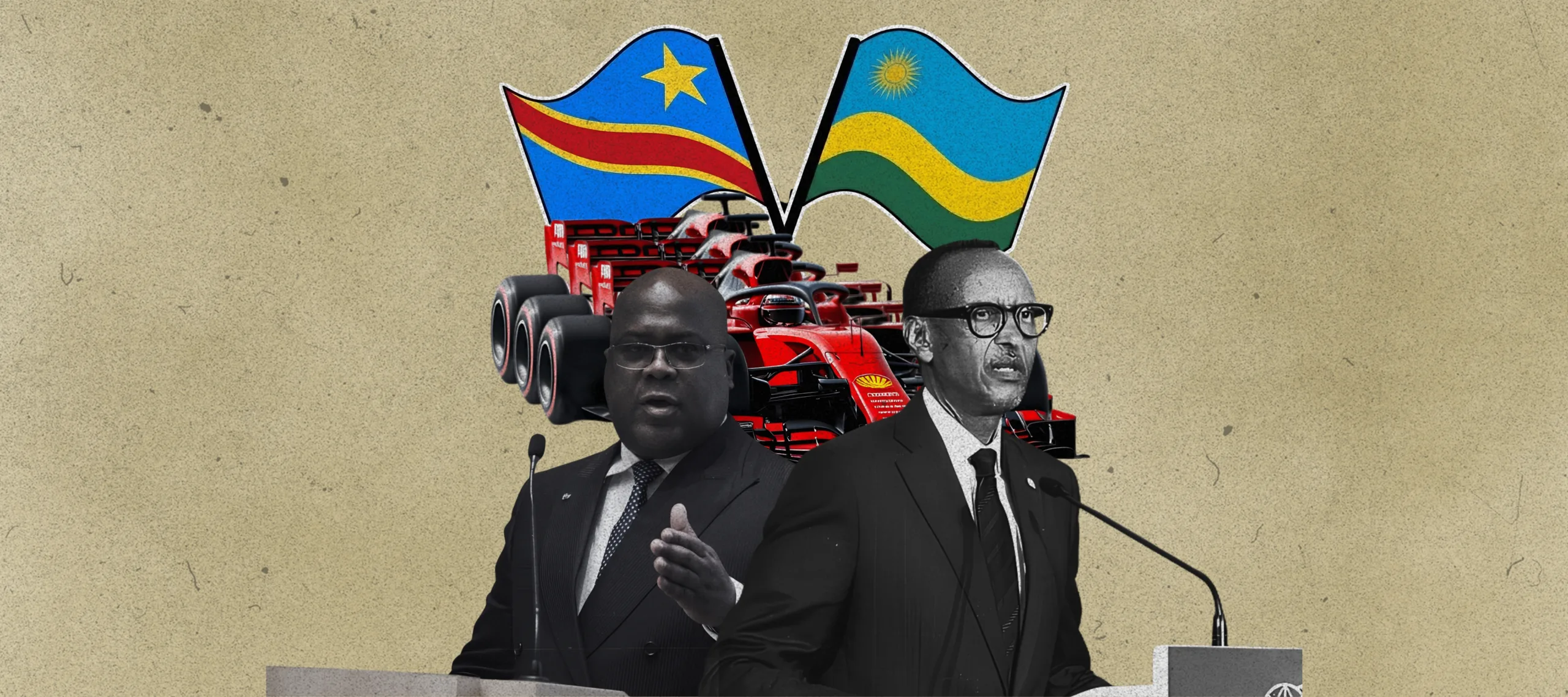
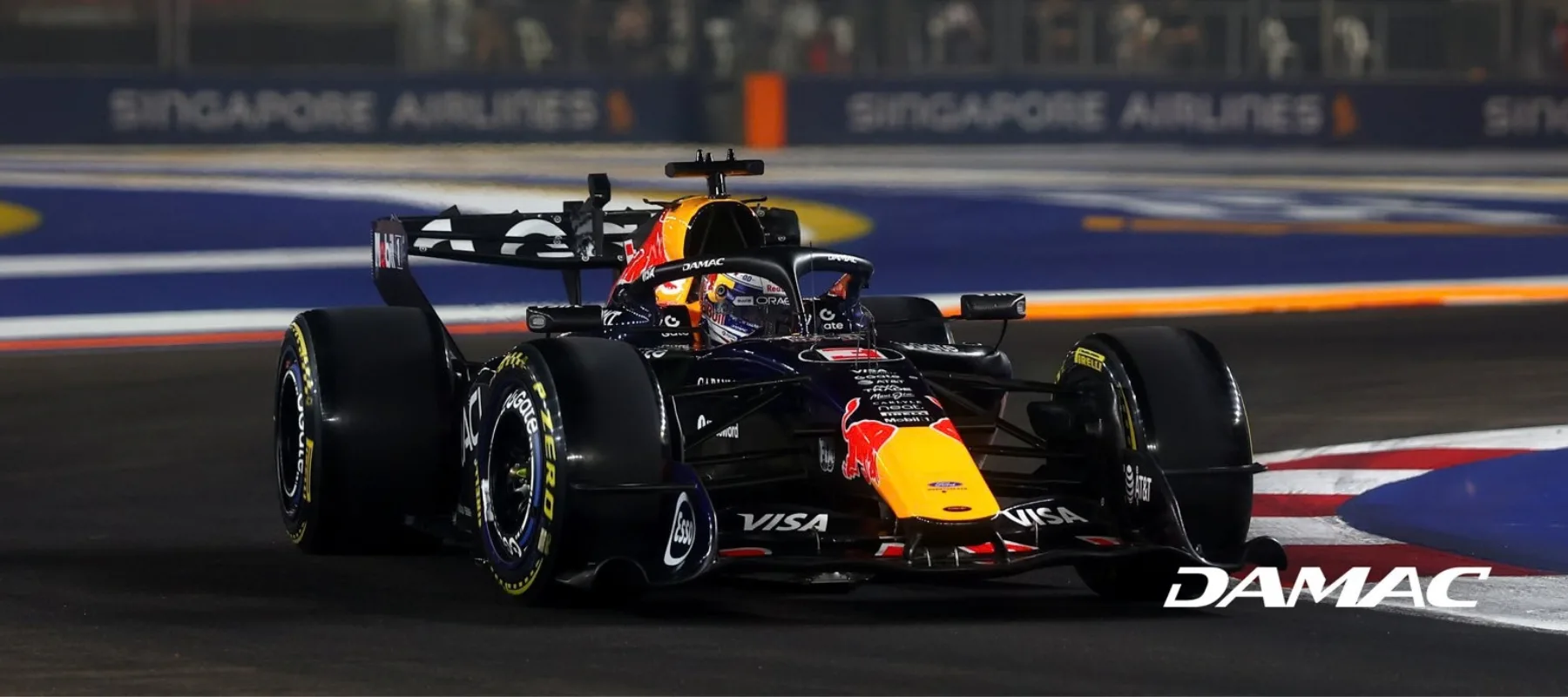
Earlier this month, Formula One announced plans to return to Africa for the first time since 1993, marking a landmark moment for Rwanda, the host nation, and the continent’s motorsport ambitions.
It’s a development that effectively ends F1’s long road back to Africa, with the race scheduled to begin in the early 2030s. Despite South Africa’s existing circuit and Grand Prix history, Rwanda somehow beat South Africa and Nigeria, which has also been lobbying, to win the hosting rights for the return of Formula 1 to Africa. Presented by Visit Rwanda, the African Grand Prix will take place at the new purpose-built circuit in Bugesera, 40 kilometres south of Kigali.
“Africa has always been part of Formula 1’s future, and from the beginning we were determined to return in the right way, with the right partner, a long-term commitment and a clear vision for creating meaningful impact,” F1 President and CEO Stefano Domenicali said of the deal.
However, despite the many opportunities this might portend for Rwanda and the continent at large, the agreement is being mired in humanitarian crime claims against the host nation over its alleged involvement in the unrest in neighbouring Democratic Republic of Congo (DRC).
“The DRC welcomes Formula 1’s return to Africa, but giving Paul Kagame this platform would help polish the image of an authoritarian leader whose government has helped fuel a devastating war in our country,” said Therese Kayikwamba Wagner, the foreign minister of neighbouring Democratic Republic of Congo.
Here, Bounce Sports examines the controversy surrounding the Rwanda-F1 deal as the latest in the country’s alleged use of high-profile sporting partnerships to manage its global reputation and deflect attention from its alleged involvement in the unrest in the DRC.
View this post on Instagram
Bounce Sports examines Rwanda’s F1 deal and the wider controversy over its sporting partnerships as tools to shape its global image and deflect attention from its contested role in the DRC’s instability.
The war in the DRC, particularly in its mineral-rich eastern region, has been dogged by more than three decades of conflict involving numerous armed groups vying with the central authorities for control of its fortunes. These groups have fuelled instability across the region, committing widespread human rights violations in the struggle over the Congo’s vast mineral wealth, which continues to be plundered to power several global industries, including consumer technology.
More recently, M23, a prominent rebel group led by ex-Rwandan military officer Sultani Makenga, who is Congolese Tutsi, holds a significant level of sway over Congo and has claimed several lucrative mining areas in the region. According to Amnesty International, a UK-based international human rights advocacy group, M23 has been responsible for committing “horrific human rights abuses (…) while facilitating the trafficking of gold and coltan to neighbouring Rwanda with the help of Rwandan authorities.” These anti-humanitarian acts from M23 and other rebel factions have claimed thousands of lives and displaced seven million people, the third-highest total in the world after Sudan and Syria, according to the United Nations (UN).
The DRC has always held an unequivocal position on neighbouring Rwanda’s complicity in the destabilisation that has taken renewed force with M23. This has been supported by several investigations by the UN, UK and US, which have alleged that the government in Kigali holds de facto control of M23 operations. Additionally, a 2025 UN report documented 3,000 to 4,000 Rwandan troops fighting directly alongside M23 inside Congolese territory.
However, President Paul Kagame’s Rwanda has relentlessly denied the allegations and held that his government, which has been in power for about three decades now, has always acted in the interest of defending its territory. However, President Paul Kagame’s Rwanda has relentlessly denied the allegations, maintaining that his government, which has been in power for about three decades, has always acted in the interest of defending its territory. Essentially, this has been a war of narratives as much as it has been an armed conflict, and where it concerns perception, Rwanda’s government has been said to be tirelessly influencing the narrative through Visit Rwanda, its national tourism initiative. This has taken various forms of partnerships, particularly through European sporting deals and, more recently, Formula One, which is its biggest yet since it declared its interest in expanding into new markets and sports last year, much to the continued dismay of the Congolese government.
Established in 2009, Visit Rwanda is the country’s national tourism brand, spearheaded by the Rwanda Development Board (RDB), with a mandate to promote Rwanda as a leading destination for tourism and investment. By most indications, the effort has been successful. According to the World Travel and Tourism Council (WTTC), tourism contributed Rwf1.9 trillion ($1.5 billion) to Rwanda’s economy in 2024, accounting for 9.8% of GDP and exceeding its 2019 peak by 17.7%. Separately, the RDB reported that tourism revenue reached $685 million (about Rwf1 trillion) in 2025, a 6% increase from the previous year.
This is partly made possible by Visit Rwanda’s exploits in international sport. In football, it currently sponsors some of Europe’s biggest clubs, including Aston Villa, for whom it has been the multi-year front-of-shirt sponsor since July 2026. It is also on a three-year Official Training Partner and Official Tourism Destination Partner agreement with Atletico Madrid, a deal that began in April 2025 as the brand’s first entry into Spanish La Liga.
French giant PSG renewed their deal with Visit Rwanda in April 2025, set to run until 2028, with the brand as Official Training Partner and a broader agreement that sees PSG operate a free-to-play academy in Kigali. English champions Arsenal and German champions Bayern Munich are also among the clubs that have previously inked deals with the brand.
Outside football, Visit Rwanda’s influence is by no means insignificant, with partnerships across the NBA (with LA Clippers), the NFL (with LA Rams) and the Basketball Africa League.
The sums involved are substantial. Per multiple reports, the Villa deal, for one, is the most lucrative in the club’s history, with a 20 per cent increase over their previous front-of-shirt sponsor, Betano.
To the Congolese government, these partnerships, including the latest F1 deal, are “morally indefensible” exercises in reputation management, helping Rwanda cultivate an amiable international image despite its involvement in the conflict in eastern DRC and the exploitation of the region’s mineral wealth.
“This is also an opportunity for F1 to show its audiences and supporters what the sport truly stands for. It should require credible, independent guarantees that no money used to host the race comes from conflict-linked minerals or the exploitation of Congolese resources,” foreign minister Therese Kayikwamba Wagner’s statement added.
The answer, by most indications at this point, is no. While the controversy is still fresh, the Africa Grand Prix, set to be staged at a new track outside Rwanda’s capital from the early 2030s, remains on track.
Visit Rwanda’s sporting partnerships have always drawn staunch criticism from various quarters, including fans, and in some cases that backlash might have resulted in their discontinuation. Arsenal, for instance, ended its eight-year shirt-sleeve sponsorship with Visit Rwanda at the end of last season, presumably due to mounting pressure from supporters. The Gunners were said to have a fruitful and lucrative relationship with the brand and had even hoped for a longer commercial partnership, but their fanbase did not share that enthusiasm. A survey by the Arsenal Supporters’ Trust at the time showed that more than 90 per cent of respondents wanted the partnership to end, with 67 per cent voting to negotiate an immediate exit.
A more telling factor, as The Athletic surmised, may have been Arsenal’s fear of looming international sanctions against Rwanda.
In a different turn of events earlier in 2025, Paris Saint-Germain (PSG) fans campaigned for an end to the club’s commercial partnership with Visit Rwanda through a “Stop Visit Rwanda” petition that attracted more than 75,000 signatures. The club, however, renewed the deal later that April.
The takeaway from both cases is that sporting institutions like F1 will insist on maintaining a widely morally acceptable ethos, but are hardly averse to murky optics or geopolitical tension if it’s not likely to damage commercial interests and other long-term prospects in a more consequential way.
So, barring sanctions or more significant action against Rwanda over its alleged role in the DRC’s instability, the newly agreed F1 deal, like the other ongoing partnerships, will hardly be affected.