



Tune in to listen
Bounce FM

Netflix as now embraced a strategy that makes playing a game almost as frictionless as streaming a film.
Netflix hasn’t had the best of fortunes with its gaming ambitions, but the streaming giant has remained persistent, and right now, that persistence finally appears to be heading somewhere meaningful for the first time since it fully embraced gaming in 2021.
Per The Verge’s account, Netflix first dabbled in games through interactive titles such as Black Mirror: Bandersnatch and experiences tied to Carmen Sandiego. But in 2021, the company shifted from experimentation, making moves like hiring gaming executives, acquiring studios, and bundling mobile games into its subscriptions at no extra cost, but even all of that execution didn’t quite translate into meaningful engagement. By 2023, reports had it that less than 1% of Netflix subscribers were actually playing the games.
The poor numbers, as they were, would not deter a company like Netflix, not when there is a substantial financial motivation behind the gaming ambition. The global gaming market is worth around $150 billion, even outside major markets like China and Russia. “At the highest level, we really see this as a significant market opportunity,” co-CEO Greg Peters said during a recent earnings call.
As the streaming market has become increasingly saturated and platforms face stagnation in subscriber growth, Netflix has been pushed to find new ways to maintain a competitive edge. Consumers are no longer satisfied with passive viewing alone; they want interactive, immersive experiences. Consider the fact that casual gaming accounted for over 50% of all gaming revenue in 2023, and you understand why a company sitting on hundreds of millions of subscribers would take gaming seriously.
The early stumbles, it turns out, were mostly a problem of fit. Mobile-first gaming on a subscription television platform is a bit like attaching a bicycle wheel to a sports car. The infrastructure was there, but the experience never matched where people actually were. Subscribers sitting in front of their TVs were not interested in downloading games to their phones. Netflix has since figured that out.
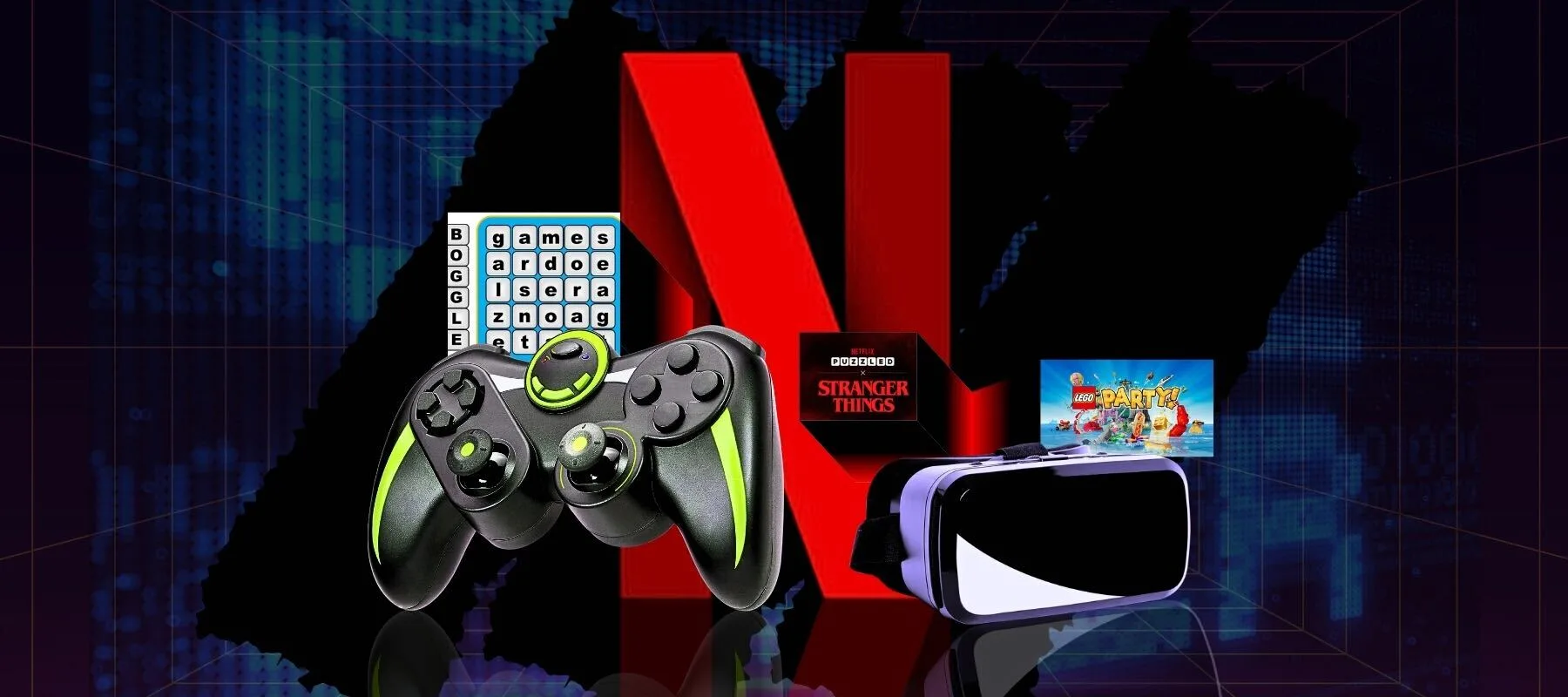
The company is now embracing a strategy that makes playing a game almost as frictionless as streaming a film, with no extra fees or external downloads. The pivot is built around cloud gaming delivered directly through the Netflix app on a television or web browser, games that anyone in the house can pick up and play without a tutorial, a controller, or a second thought. Netflix has pointed to recent releases such as Boggle, Pictionary, and LEGO Party as early positive indicators for TV-based gaming, noting increased uptake following the launch of its game pack.
That choice of titles is not accidental. Netflix is not trying, or rather cannot, compete with premier gaming brands on their turf. Rather, it is doing something much more fitting for its audience: creating a relatively zero-entry barrier experience. Anyone can start playing Boggle today and quickly get the hang of it. Everyone understands LEGO. Peters himself has described this vision as “a successor to family board game night or an evolution of what the game show on TV used to be.” Netflix is applying the same logic to gaming that made it dominant in streaming: remove every possible reason not to engage.
Around 10% of eligible members have tried the new party games like Boggle and Pictionary, which reads modestly until you account for the scale involved. Netflix has hundreds of millions of subscribers worldwide. Even a small percentage represents a significant number of people who are now spending additional time inside the Netflix ecosystem doing something other than watching. That is exactly what the company is after.
There is, however, a structural problem that Netflix needs to address if this momentum is to be sustained. According to the Netflix help page, not every subscription tier or region grants access to the full games offering. A streaming service that prides itself on global reach cannot credibly build a gaming strategy that excludes large parts of its own audience. Peters has acknowledged this directly, pledging to roll out cloud games to more customers and countries, but the pace of that rollout will determine whether the gaming ambition scales or stalls.
If it does scale, the upside is considerable, and not only in the obvious financial sense. Peters has spoken about the synergy that gaming creates within the broader Netflix ecosystem, and he is right to frame it that way. Getting subscribers to engage with games extends overall user engagement and improves the performance of both the interactive titles and the traditional TV and film library. In the long run, that may prove to be the real win for Netflix, not necessarily becoming a gaming giant in the conventional sense, but becoming an entertainment platform where their subscribers always have one more reason to stay.