



Tune in to listen
Bounce FM

The National Theatre is no longer just a historical monument that people drive past. It is gradually becoming a place where people want to gather, experience and create something.
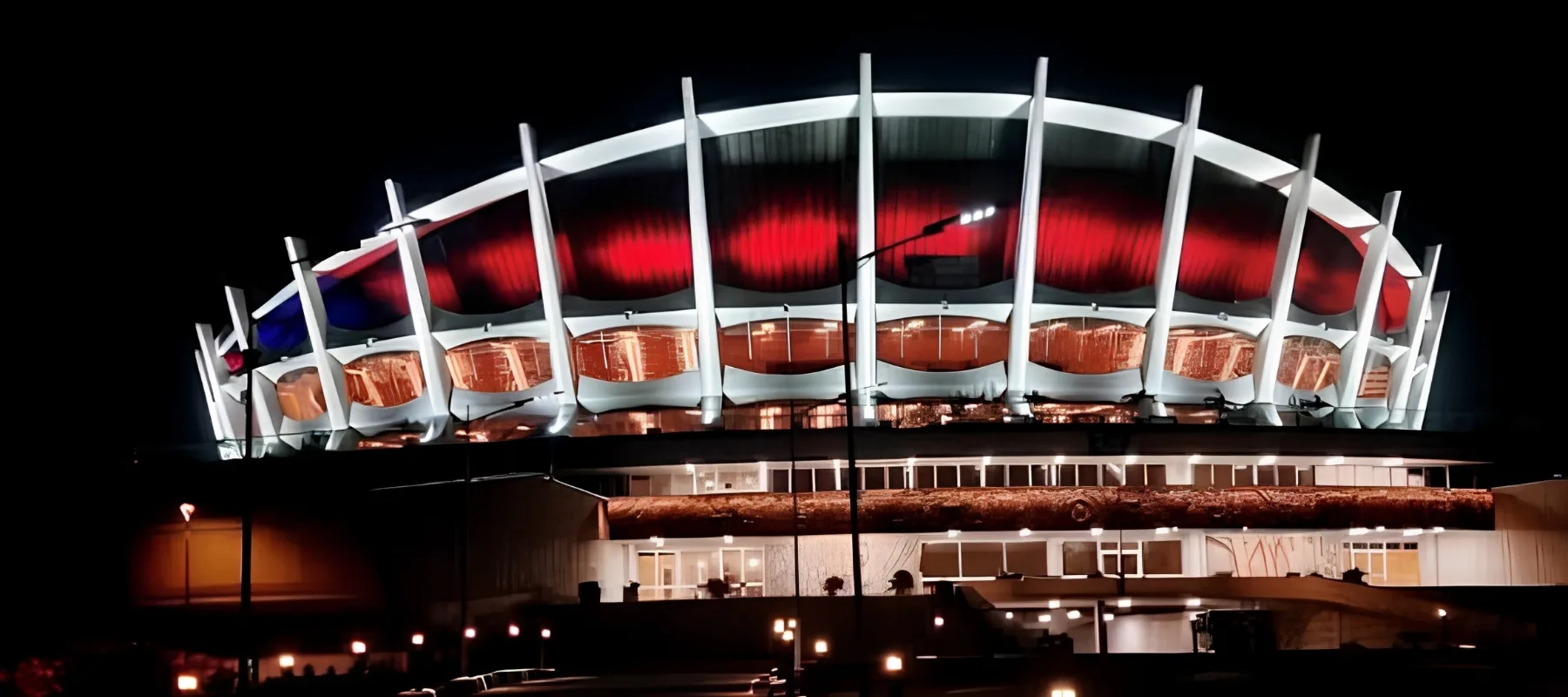
Over the past month, the National Theatre in Lagos has witnessed a steady stream of events across different sectors. From entertainment and music to technology, politics and the arts, different industries are beginning to take advantage of the facility, with more events expected in the coming weeks.
The growing interest in the venue is interesting, particularly considering its history and the condition it was in just a few years ago. For a long time, the National Theatre was a shadow of the magnificent structure it was designed to be. What was once a major cultural landmark had deteriorated, with parts of its premises becoming a shortcut for motorists navigating adjoining roads. Its surroundings also became associated with street thugs (agbero) and general neglect.
Today, however, the story is different. The National Theatre is gradually becoming one of the preferred destinations for event organisers in Lagos. But how did we get here?
The National Theatre was built during the military administration of General Yakubu Gowon, with its construction beginning in 1973 ahead of the Second World Black and African Festival of Arts and Culture (FESTAC ’77).
The project was handled by Bulgarian construction company Technoexportsroy, while its architectural design was inspired by the Palace of Culture and Sports in Varna, Bulgaria. The building was completed in 1976, during the administration of General Olusegun Obasanjo.
Just pausing your scrolling to drop a random fact. Did you know that the National Theatre in Iganmu is a direct copy of the Palace of Culture and Sports in Varna, Bulgaria. Built in 1968 while ours was completed in '77, both buildings were designed by the same architect, Stefan… pic.twitter.com/wwq0nwRFf0
— SB (@seyedele) March 21, 2025
The timing of its construction was significant. The country was preparing to host FESTAC ‘77, a major cultural gathering that brought together artists, musicians, writers and cultural representatives from across Africa and the diaspora. The National Theatre served as one of the festival’s major venues, providing a platform for the celebration of African culture, heritage and creativity.
Its distinctive exterior, with a structure resembling a military hat, made it one of the most recognisable buildings in Lagos. Beyond its appearance, it was designed to accommodate major performances and cultural activities, with the ambition of making Nigeria an important destination for the arts.
Unfortunately, the years that followed did not reflect that ambition.
Over the years, inadequate maintenance and poor management gradually affected the facility. Its infrastructure deteriorated, essential equipment became outdated, and the building lost much of the appeal it once had.
The situation became so bad that the National Theatre could no longer comfortably fulfil the purpose for which it was built. Its once-busy halls became largely inactive, while parts of the surrounding premises were left to deteriorate.
For a city like Lagos, which has continued to experience growth in entertainment and cultural activities, the condition of such an important facility was a significant loss.
The turning point came in 2020 when the Federal Government handed the National Theatre over to the Central Bank of Nigeria and the Bankers’ Committee for restoration.
The Bankers’ Committee committed approximately $100 million (reported at the time as about ₦68 billion) to the project, which commenced in 2021. The restoration went beyond giving the building a facelift, involving improvements to its structural facilities, performance equipment, security systems and general infrastructure.
The project was completed in 2024, and the facility was subsequently renamed the Wole Soyinka Centre for Culture and the Creative Arts in October 2025.
The difference between the old and renovated National Theatre is quite noticeable. What used to be a largely neglected facility has been transformed into a modern complex with facilities designed to accommodate different activities.
The renewed centre now boasts performance halls, cinema spaces, art galleries, an African literature library, rehearsal studios, medical facilities and modern outdoor gardens.
Its road network has also been improved, with multiple entrance and exit gates, internal access roads and dedicated parking spaces. These are important additions, particularly for a venue expected to accommodate large audiences and different events at the same time.
Another interesting development is its integration with the Lagos Blue Line rail system. This gives visitors another transportation option and makes the facility more accessible to people travelling from different parts of Lagos.
These improvements are important because choosing an event venue goes beyond the building itself. Organisers have to consider accessibility, parking, security, available facilities and the overall experience they can offer their audience.
The National Theatre now provides several of these requirements in one location.
One of the major attractions of the facility is the Main Bowl, its principal auditorium, with a seating capacity of approximately 3,500 to 4,000 people.
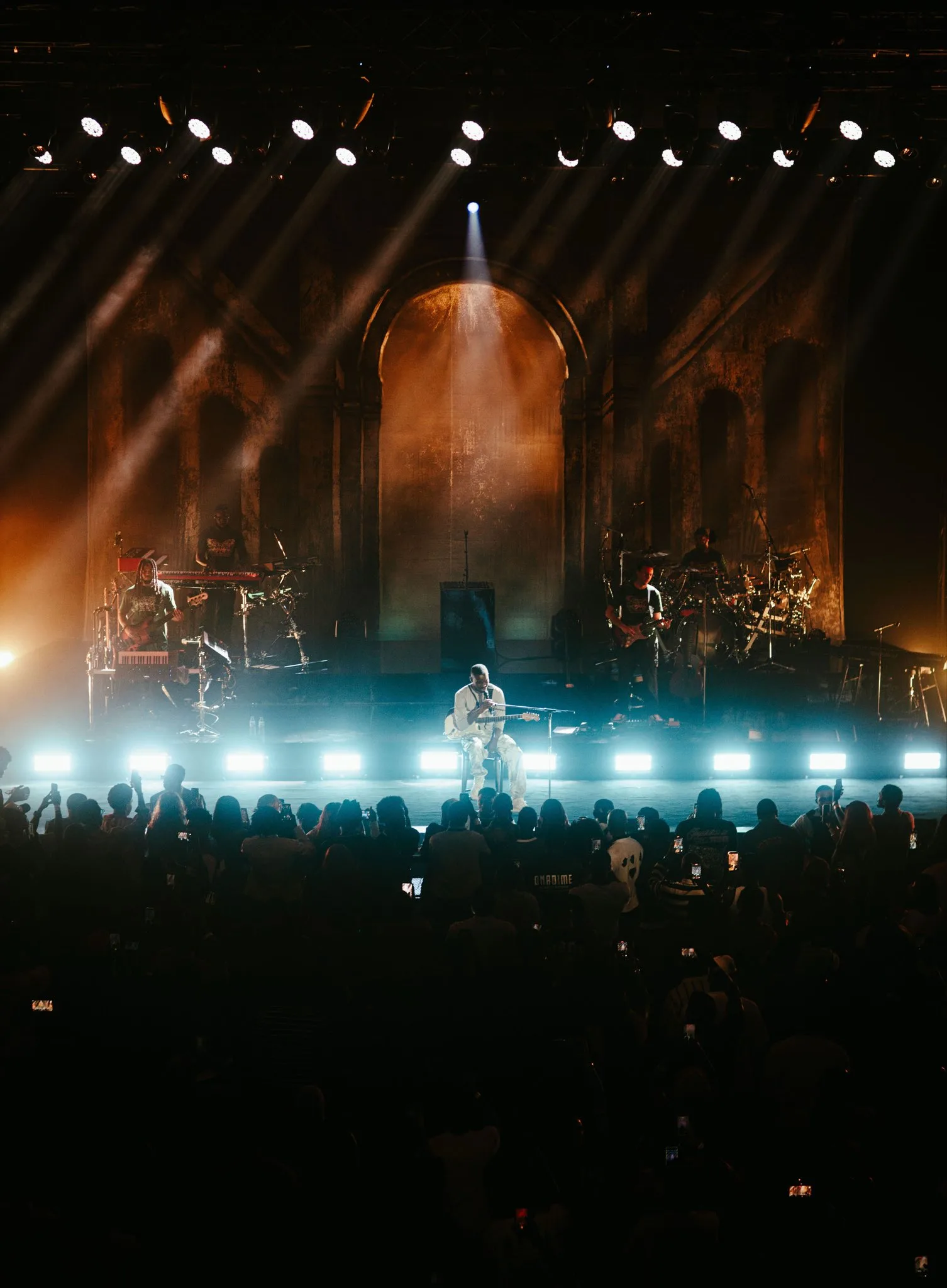
The hall is an impressive structure, particularly when you consider the years the building spent in disrepair. Its upgraded stage, audiovisual facilities, sound systems and air-conditioning provide an experience that makes you momentarily forget some of the usual infrastructure challenges associated with venues in Nigeria.
For concerts, theatrical productions, award ceremonies and other large gatherings, the Main Bowl offers organisers a sizeable indoor space without having to compromise too much on the audience experience.
The air-conditioning in the main bowl is particularly worth mentioning. Anyone who has attended large events in Lagos understands how important temperature control can be, especially when a hall is filled with hundreds or thousands of people.
Can we talk about the cooling at the National Theatre? Because that AC deserves its own award! 😂
One thing people haven't mentioned enough about Moonshot is how chilled the entire venue was. I barely saw anyone reaching for a hand fan.
Kudos to the management of the National…
— Tosin.X (@Dontee___) November 3, 2026
Beyond the Main Bowl, the availability of other halls and outdoor spaces means organisers can also consider the complex for events that do not necessarily require a large concert auditorium.
The renewed National Theatre is arriving at a time when Lagos’ entertainment and events industry is growing rapidly.
However, the available venues have not always matched this growth. Organisers are often left with limited options, particularly when planning events that require large capacities, modern technical facilities and a comfortable experience for attendees.
The National Theatre is one of the first major solutions to this challenge, but it certainly cannot solve the problem alone.
There are other developments to look forward to, including the proposed 12,000-capacity Lagos Arena, backed by Live Nation and other partners, as well as Landmark Africa’s proposed 20,000-capacity Dream Theatre.
If these projects materialise, they could significantly expand Lagos’ capacity to host larger concerts, international productions and other major events.
The National Theatre has come a long way from the years when its condition made it difficult to imagine the facility returning to its former glory.
Its growing use by different sectors suggests that event organisers are beginning to recognise what the renovated complex has to offer. More importantly, it gives Lagos another venue where entertainment, technology, business and the arts can come together.
However, the real test will be how consistently the facility is maintained and how well it continues to attract events beyond the current wave of interest.
For now, one thing is becoming clear: the National Theatre is no longer just a historical monument that people drive past. It is gradually becoming a place where people want to gather, experience and create something.
And with more event infrastructure projects on the horizon, Lagos might finally be moving towards addressing a problem that has existed in its events industry for years.